Markets Jitter, Oil Rises
Asian Markets Retreat, Led by Kospi's 5.2% Drop, While Oil Prices Jump on Supply Concerns
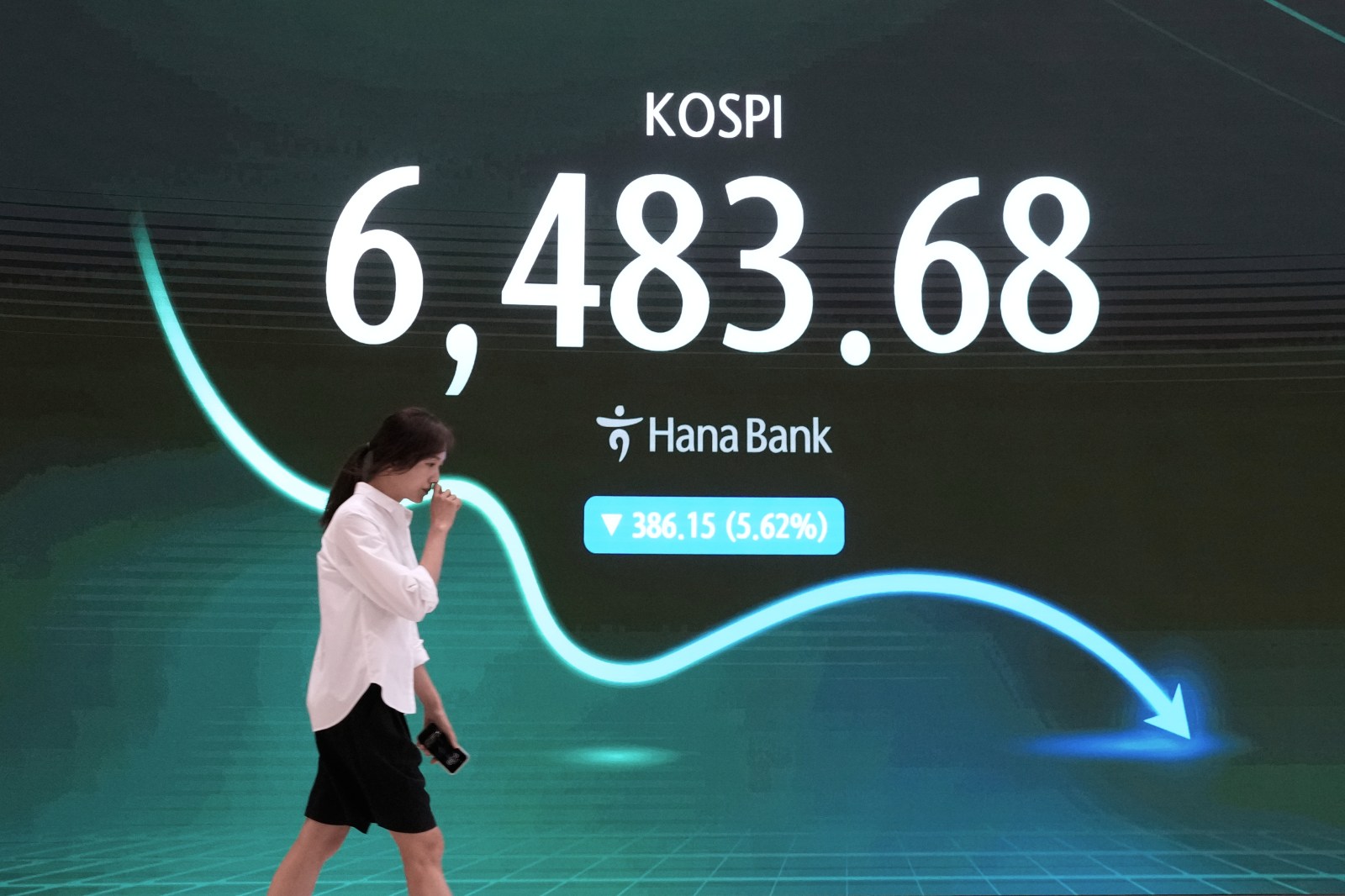
Asian markets sold off sharply on Wednesday, with South Korea's Kospi tumbling 5.2% to 6,515.97 — the steepest drop in the region. The sell-off followed Wall Street's third straight day of losses, driven by a continued retreat in artificial-intelligence stocks, according to Winnipeg Free Press.
At the same time, oil prices surged as traders grew nervous about a possible disruption to tanker traffic through the Persian Gulf. Uncertainty over whether the United States and Iran can reach a deal kept markets on edge, pushing Brent crude up 0.9% to $91.83 per barrel, The Independent reported.
South Korea and Japan Lead Asia's Sharp Retreat
South Korea's Kospi bore the worst of the damage, dropping 5.2% in a single session. Major tech firms were hit hard, with Samsung Electronics and SK Hynix both posting losses. Tokyo's Nikkei 225 fell 2.6% to 65,703.78, adding to the regional pain, Daily Item reported.
Losses spread across the broader region. Hong Kong's Hang Seng slipped 0.4% to 25,382.66. Shanghai's Composite index shed 1.5% to 3,927.70. No major Asian market escaped the sell-off, according to Click On Detroit.
AI Stocks Drive Wall Street's Third Straight Loss
The slide in Asia followed a rough day on Wall Street. The S&P 500 fell 0.7%, marking its third consecutive loss. The Nasdaq composite sank 1.3%, led lower by AI-related stocks. The Dow Jones Industrial Average dipped a smaller 0.2%, according to Beaumont Enterprise.
High bond yields added to the pressure. The 10-year Treasury yield edged down slightly to 4.70% from 4.72%, but remains elevated. Analysts warn that sustained high yields could raise borrowing costs for Big Tech companies and slow growth across the broader U.S. economy, Journal-News reported.
Iran Tensions Send Oil Prices Jumping at the Pump
Brent crude climbed 0.9% to $91.83 per barrel as fears grew over Persian Gulf shipping. The key worry: if the U.S. and Iran cannot agree on terms, oil tankers may not be able to move freely through the region. That could choke off a major supply route, Corsicana Daily Sun reported.
The Persian Gulf is one of the world's most critical oil corridors. Any disruption there can send energy prices higher fast. Higher oil prices add costs for businesses and consumers alike, putting more strain on an economy already dealing with tight credit conditions, according to News4Jax.
Bond Yields and AI Doubts Rattle Investor Confidence
Investors are wrestling with two big concerns at once. First, AI stocks have pulled back sharply after a long run-up. Many investors now question whether valuations had climbed too high, too fast. Second, bond yields near 4.70% make borrowing expensive for the large tech firms that powered recent market gains, Dayton Daily News reported.
Together, these forces are shaking confidence. When Big Tech borrows more to fund growth, higher rates eat directly into profits. If growth slows, it puts further pressure on stock prices. Markets may stay volatile until there is more clarity on both AI valuations and U.S.-Iran negotiations, according to HJ News.
Sentiment
NeutralPublishers
12
Articles
12
Reach
12


