Humanoid Robot IPO Soars
Unitree Robotics Stock Soars Over 600% on Shanghai Debut, Signaling Boom for China's Humanoid Robot Sector
Key Points
The IPO proceeds will be allocated to expanding Unitree's AI capability and manufacturing footprint, specifically funding AI model research for robots, new product development, and expanded production facilities.
Founder Wang Xingxing holds about a one-third stake (33.35%), with a background that includes mechanical engineering degrees from Zhejiang University and Shanghai University, a stint at DJI, and the development of the xDog quadruped robot before founding Unitree in 2016.
Intraday momentum: by 9:33 a.m. the stock was around 1,011 yuan, roughly 570% above the IPO price of 150.8 yuan, illustrating strong early trading enthusiasm.
Unitree posted impressive 2024 growth metrics prior to the IPO: revenue of 1.7 billion yuan, up about 335% year over year, with net profit of 287.6 million yuan, up about 204%.
Valuation context: the IPO valued Unitree at about 60.99 billion yuan, roughly 35.9 times forward earnings, signaling a strong early-valued benchmark for China’s humanoid-robot sector.
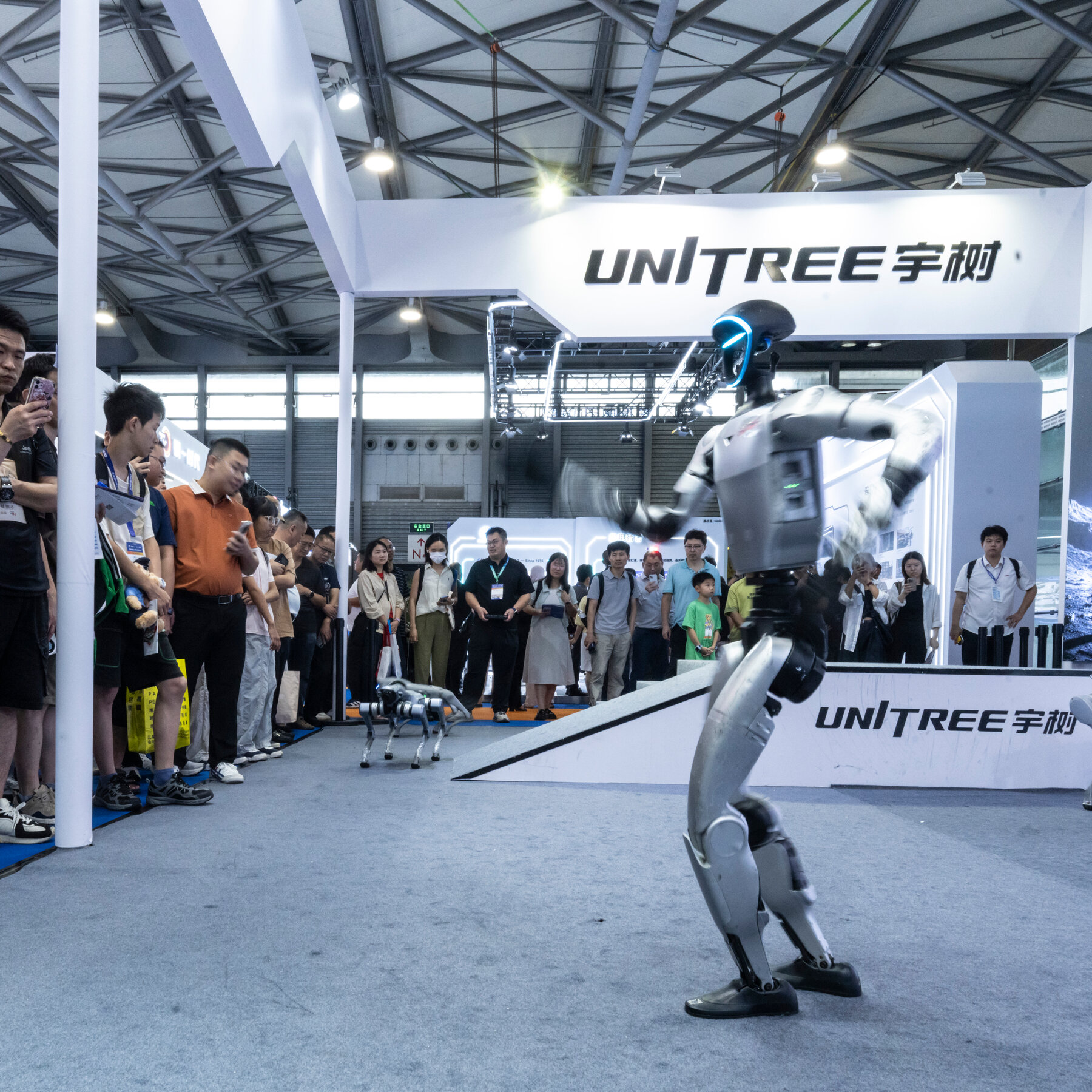
Chinese humanoid robot maker Unitree Robotics exploded onto Shanghai's STAR Market on August 19, with shares opening at 1,100 yuan — a 629% jump from its IPO price of 150.8 yuan, according to Finance Biggo. The surge gave the company a market cap of nearly 445 billion yuan, or about $62 billion, more than seven times its IPO valuation of 60.99 billion yuan.
Retail investors scrambled to get in. The offering was oversubscribed more than 8,000 times, and the lottery win rate hit a record low for China's A-share market, according to China.org.cn. The IPO raised about 6.1 billion yuan, and by 9:33 a.m. on debut day, shares were already trading around 1,011 yuan — roughly 570% above the IPO price.
A Record-Breaking Debut on Shanghai's STAR Market
Unitree's listing is now the talk of China's financial world. China Daily reported the opening price of 1,100 yuan valued the company at close to 445 billion yuan — roughly seven times what it was worth at IPO. That kind of first-day gain is rare even by STAR Market standards, where high-growth tech companies often debut strong.
The lottery win rate for retail investors set an all-time low for A-shares, reflecting extraordinary demand, according to Finance Biggo. Unitree is now widely called China's "first humanoid robot stock," a label that carries enormous weight as the country bets big on AI-driven automation.
Revenue Up 335%, Profit Up 204% Before the IPO
Unitree's finances back up the hype — at least in part. The company posted 2024 revenue of 1.7 billion yuan, a 335% jump year over year. Net profit came in at 287.6 million yuan, up 204%. Head Topics noted the company also guided for mid-year 2025 revenue of roughly 1.05 to 1.13 billion yuan, pointing to continued rapid growth.
At its IPO price, Unitree was valued at about 35.9 times forward earnings. That is a rich multiple, but investors clearly expect far more growth ahead. The robotics and AI-automation sectors are booming, and Unitree sits at the center of both.
Founder Wang Xingxing: Engineer Turned Robotics Pioneer
Behind the company is founder Wang Xingxing, who holds about 33.35% of Unitree's shares. Wang studied mechanical engineering at Zhejiang University and Shanghai University. He then worked at drone giant DJI before building the xDog quadruped robot — a four-legged machine — and founding Unitree in 2016.
His one-third stake signals strong founder alignment, meaning his financial interests are closely tied to the company's long-term success. IPO proceeds will fund AI model research, new product development, and expanded production facilities, according to China.org.cn.
Unitree Sets a Valuation Anchor for China's Robot Industry
The New York Times described Unitree as developing technology "at the forefront" of artificial intelligence, noting shares rose roughly sixfold in their debut. The listing is seen as a defining moment — not just for Unitree, but for China's entire humanoid-robot sector. It establishes a benchmark that other robotics startups can now be measured against.
China is pushing hard to lead the world in robotics and AI automation. Unitree's blockbuster IPO reflects that national ambition. Investor enthusiasm, record oversubscription, and a 629% opening pop all point to one thing: the market believes humanoid robots are no longer a distant idea — they are a near-term business reality.
Sentiment
Mostly PositivePublishers
13
Articles
13
Reach
26


