Autonomous Combat Drone
Anduril Unveils Thunder, An Autonomous Tiltrotor Drone Boosting Helicopter Firepower
Anonymous
Key Points
1
Thunder features modular internal bays in the main fuselage and nose capable of carrying ten air-to-ground missiles or seventy-six 70mm rockets, with potential to host electronic warfare payloads, counter-drone effects, and cargo.
2
The design includes a transportability advantage: Thunder can be packed into a standard shipping container for movement by air, road, rail or sea, enabling global self-deployment or rapid redeployment.
3
UK involvement and commercial development: Anduril is among four companies selected for UK Project Nyx; GKN Aerospace has joined the programme, and Archer plans a commercial variant with first customers to be announced.
4
There is a discrepancy on Thunder’s first flight timeline: some reporting indicates the first flight is planned for next year, while other sources cite 2027.
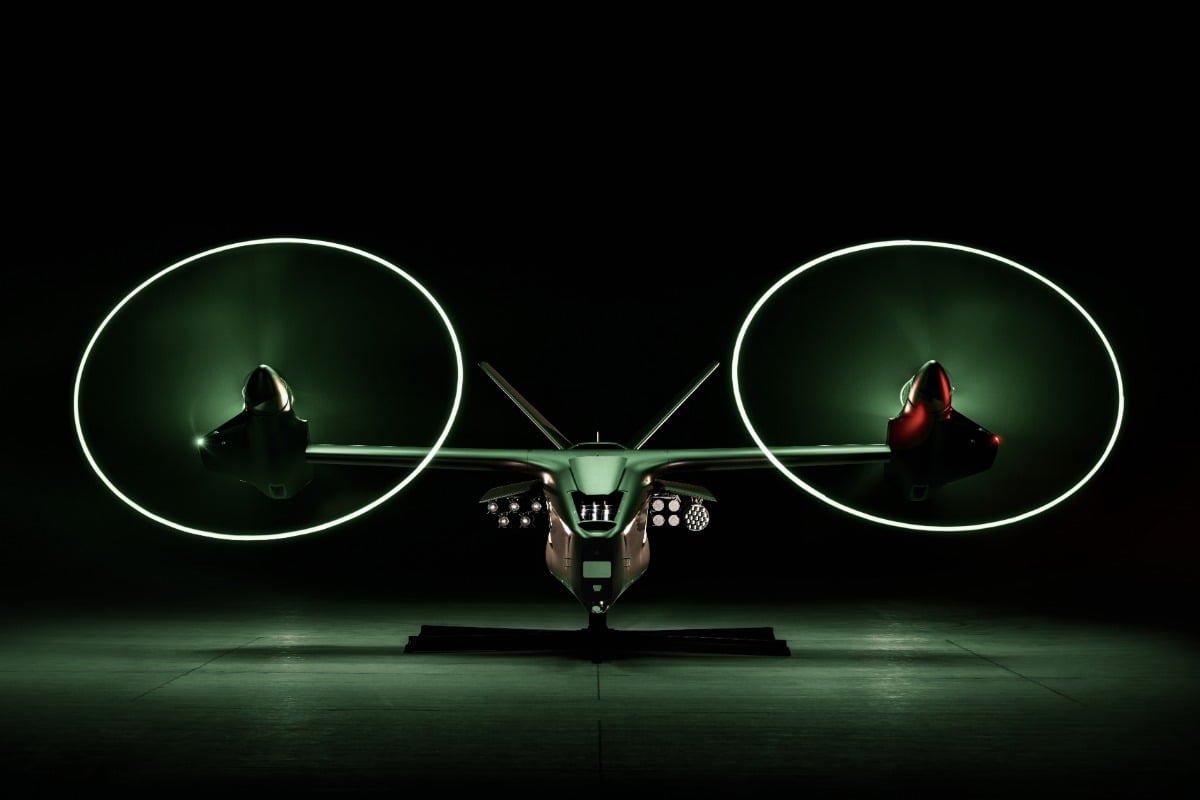
Anduril Industries has unveiled Thunder, an autonomous attack drone designed to fly alongside crewed helicopters like the Apache as a robotic wingman. The aircraft was revealed at the Farnborough International Airshow and is built to carry missiles or rockets into high-risk combat zones — so human pilots don't have to, according to Defence Blog.
Thunder is a joint project with Archer Aviation and uses a hybrid-electric tiltrotor design. Three Thunders can fly with a single Apache, tripling its firepower. Anduril says the near-surface battlefield has become a deadly kill zone for helicopters, thanks to drones, loitering munitions, and modern air defenses, according to Tectonic Defense.
A Robotic Wingman Built for the Modern Kill Zone
Thunder is designed to do the dangerous jobs crewed helicopters once handled. Defence Blog reports the aircraft can carry ten air-to-ground missiles or seventy-six 70mm rockets in modular bays in its nose and fuselage. It can also carry electronic warfare gear, counter-drone systems, or cargo.
Anduril argues helicopters are now too vulnerable to fly low over the battlefield. Thunder takes that risk instead. The drone flies autonomously, guided by Anduril's Lattice AI software. Pilots in crewed aircraft stay at safer distances while Thunder pushes forward, according to Tectonic Defense.
Hybrid-Electric Tiltrotor Enables Speed and Long Range
Thunder uses a series-hybrid powertrain, meaning it generates electricity onboard to power its motors. This design gives it both the vertical takeoff of a helicopter and the speed of a fixed-wing plane. Crypto Briefing reports the aircraft is a tiltrotor, meaning its rotors tilt forward for fast, efficient flight.
The aircraft fits inside a standard shipping container. That means it can be moved by air, road, rail, or sea and then self-deploy to a conflict zone. Design Development Today says Archer also plans a commercial version of the platform, with first customers expected to be announced soon.
UK Project Nyx and US Army Interest Signal Broad Demand
Thunder has already attracted military interest on both sides of the Atlantic. Tectonic Defense reports Anduril UK is one of four companies selected for Project Nyx, the British Army's autonomous rotorcraft program. GKN Aerospace has joined the UK effort as an industrial partner.
In the United States, the Army is watching closely as it shifts doctrine toward autonomous systems. The Thunder concept fits that push — a low-cost, scalable drone that can multiply the firepower of existing crewed helicopters without adding more pilots or more risk, according to Tectonic Defense.
First Flight Timeline Unclear — 2026 or 2027?
Anduril says Thunder's first flight is coming soon, but sources disagree on when. Some reporting points to next year, while others cite 2027 as the target date. Guru Focus notes the aircraft was introduced at Farnborough in 2026, suggesting a first flight within the next one to two years.
Either way, the program is moving fast. Anduril and Archer are pitching Thunder as a production-ready concept — not just a prototype. The companies say it is designed from the start to be built at scale and deployed across multiple military forces around the world, according to Crypto Briefing.
Sentiment
Mostly PositiveNEGATIVENEUTRALPOSITIVE
Publishers
14
Articles
4
Reach
18
A
AnonymousAuthor