Williams Powers Up
Williams Secures $5.34 Billion Blackstone-Led Investment to Fuel Five Power Innovation Projects
Anonymous
Key Points
1
The five Power Innovation projects have specific names: Socrates, Apollo, Aquila, Socrates the Younger, and Neo.
2
Williams has a buyout right between years 7 and 14 that is valued at Blackstone's outstanding investment balance, preserving Williams' long-term upside.
3
The deal targets Williams' long-term leverage to stay in a range of 3.5x to 4.0x.
4
Williams expects 2026 Adjusted EBITDA to be in the upper half of its range of $8.05 billion to $8.35 billion.
Williams Companies has secured a $5.34 billion investment led by Blackstone Credit & Insurance, with Apollo and KKR-managed insurance vehicles joining as partners, to fund five major Power Innovation projects, according to The Wall Street Journal. The deal gives Blackstone a 49% noncontrolling stake in the projects while Williams keeps 51% and full operational control.
The funding will advance Williams' Power Innovation backlog, which could exceed 6 gigawatts of capacity. Morningstar reported that the deal includes $4.4 billion representing 49% of expected growth capital costs, plus about $0.9 billion in additional payments directly to Williams.
Five Named Projects Get Billions in Backing
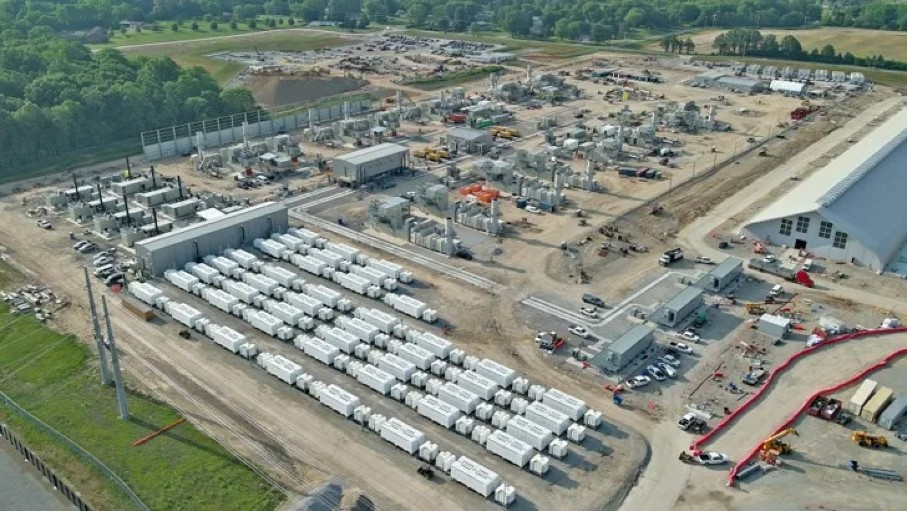
The investment targets five specific projects: Socrates, Apollo, Aquila, Socrates the Younger, and Neo, according to TradingPedia. These are behind-the-meter Power Innovation facilities, meaning they generate power directly for industrial or data center customers rather than feeding the public grid.
Williams retains commercial and operational control over all five projects. ConnectMoney reported that distributions from the projects will flow to each party in line with their ownership share. Any returns to Blackstone that exceed its targets will reduce Blackstone's investment balance, protecting Williams' long-term upside.
Williams Keeps Debt Low and Leverage in Check
A key goal of the deal is to limit how much Williams has to borrow. By bringing in outside investors, Williams avoids adding corporate debt to fund these projects. ConnectCRE reported that the arrangement lets Williams fund growth efficiently without stretching its balance sheet.
Williams is targeting long-term leverage — a measure of debt relative to earnings — in a range of 3.5x to 4.0x. The company also expects its 2026 Adjusted EBITDA, a measure of operating profit, to land in the upper half of its $8.05 billion to $8.35 billion guidance range, according to The Wall Street Journal.
Blackstone Buyout Window Preserves Williams' Long-Term Upside
Williams has a buyout right starting in year 7 and running through year 14 of the partnership. If Williams exercises that right, it pays Blackstone's outstanding investment balance — not a premium. That structure means Williams can reclaim full ownership without overpaying if the projects perform well.
The Blackstone investment will be counted as a noncontrolling interest for accounting purposes, meaning it stays off Williams' main debt ledger. TradingPedia noted that this structure allows Williams to advance a growing power backlog while keeping its financial targets intact.
Big Three Private Equity Firms Bet on Power Demand
The deal brings together three of the largest private investment firms in the world. Blackstone leads the group, joined by Apollo and KKR through their insurance investment arms. All three are betting that demand for reliable, large-scale power will keep growing, driven by data centers and industrial customers.
Morningstar reported that Williams views this deal as a way to accelerate its Power Innovation pipeline. The company says its backlog could surpass 6 gigawatts — enough power for millions of homes. With major capital now committed, Williams appears set to move quickly on all five named projects.
Sentiment
Mostly PositiveNEGATIVENEUTRALPOSITIVE
Publishers
17
Articles
36
Reach
53
A
AnonymousAuthor


