Kenya's Tuition-Free Universities
Kenya Announces Universal State Funding for University Tuition Starting 2026
Anonymous
Key Points
1
Kenya’s universal funding plan dismantles the earlier five-band Means Testing Instrument (MTI) and its predecessor models, including the Differentiated Unit Cost (DUC) and the 2023 Student-Centred Funding (VSLF) approach, which faced criticism over misclassification, funding delays, and affordability concerns that led to court challenges.
2
The shift comes amid a high level of informality in the Kenyan economy; roughly 83% of the workforce operates in the informal sector, complicating income verification and contributing to prior misclassification under MTI.
3
"It will not matter the background of any child in Kenya, but how good they are," a key framing remark by President Ruto that underlines the equity mandate of the universal funding reforms.
4
Implementation is expected to hinge on funding mechanisms such as higher per-student capitation or expanded scholarship/HEB-type programs, with Parliament required to pass enabling legislation before the policy can take effect.
5
Analysts warn that the universal funding model will expand the government’s fiscal exposure and require strong fiscal discipline as deficits widen; the 2026/27 budget will need recalibration to absorb the higher costs.
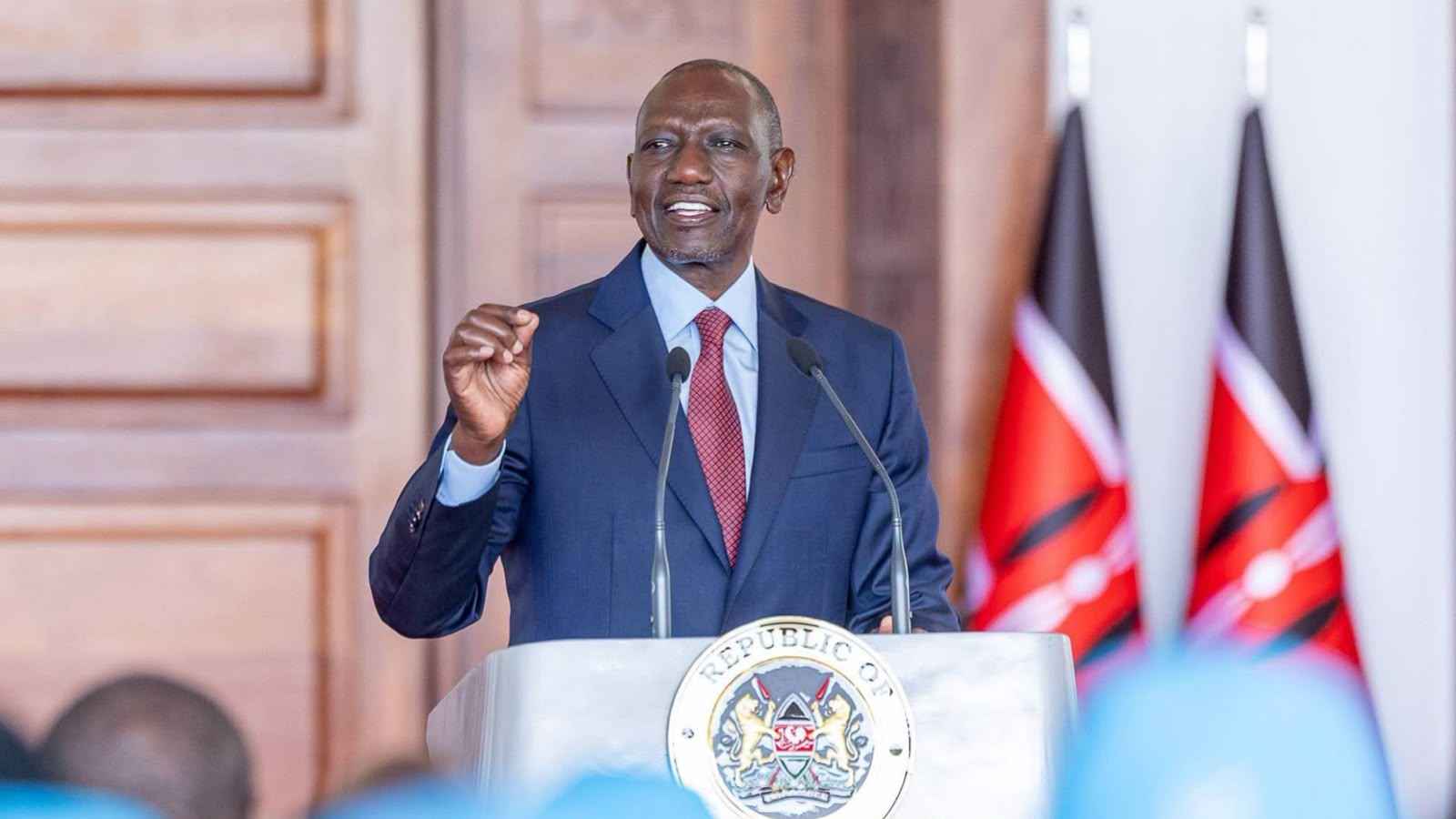
Kenya's President William Ruto has promised to fully fund university and college education for every student who qualifies, starting September 2026. The government will pay all tuition costs through the national budget, with no financial test required, according to Capital FM and People's Daily.
"It will not matter the background of any child in Kenya, but how good they are," Ruto said. The plan scraps the old system that ranked families by income and replaces it with a single, universal scholarship for all admitted students, Tuko reported.
Old Funding System Failed Millions of Students
Kenya has tried several funding models in recent years. The most recent was the Means Testing Instrument, or MTI. It sorted students into five bands based on family income. The band determined how much the government would pay. The system quickly drew fierce criticism, Capital FM reported.
The core problem was income verification. About 83% of Kenyan workers are in the informal sector. They have no payslips or tax records. That made it nearly impossible to check a family's true income. Many students were placed in the wrong band and received too little funding. Some took the government to court over the errors, according to Streamline Feed.
Universal Model Covers Universities, TVETs, and KMTC
The new policy covers more than traditional universities. It extends to Technical and Vocational Education and Training colleges, known as TVETs, and Kenya Medical Training Colleges, or KMTCs. Any student who passes the Kenya Certificate of Secondary Education exam and wins placement will qualify, Tuko reported.
Parents can still contribute voluntarily if they wish. But no student will be turned away or under-funded because of family wealth. The government will pay the full tuition bill directly to institutions through the national Exchequer, according to Nairobi Leo.
Parliament Must Act Before Policy Can Launch
The plan is not yet law. Ruto acknowledged that Parliament must pass new legislation before the policy can take effect. The government also needs to rework its budget to cover the higher cost. The 2026/27 national budget will need to be recalibrated, Streamline Feed noted.
Economists warn the shift will sharply expand what the government owes each year. Kenya already runs a budget deficit. Paying full tuition for every qualifying student means higher per-student capitation rates and more money for campus infrastructure. Strong fiscal discipline will be critical, People's Daily reported.
Ruto Frames Reform as a Generational Equity Shift
Ruto has positioned the policy as a fairness fix. He argued that a student's talent, not their parents' bank account, should determine access to higher education. The announcement was made at State House and repeated in several government briefings, according to Capital FM and Nairobi Leo.
If enacted, the shift would mark the biggest change to Kenya's higher education funding in decades. The previous Differentiated Unit Cost model and the 2023 Student-Centred Funding approach both fell short. Analysts say the universal model's success will depend entirely on whether the government can find and sustain the money to back it, People's Daily reported.
Sentiment
Mostly NegativeNEGATIVENEUTRALPOSITIVE
Publishers
15
Articles
9
Reach
24
Topics
A
AnonymousAuthor


