Florida Bacteria Alert
Florida Reports Dozen Flesh-Eating Bacteria Cases; Survivor Urges Caution After Leg Loss
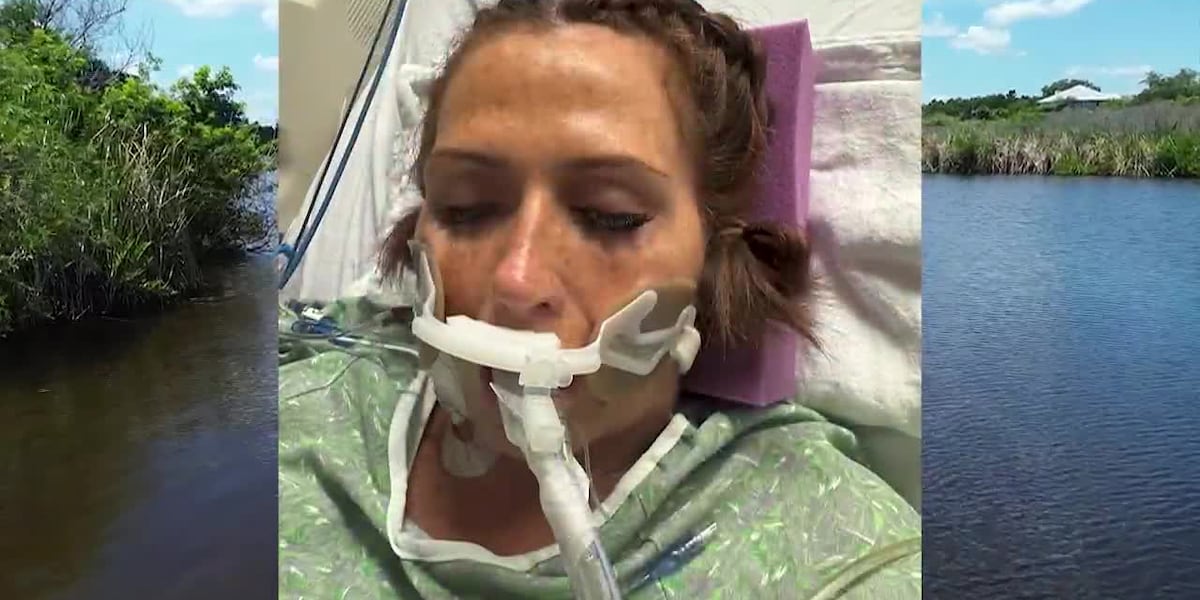
A Florida woman who lost most of her left leg to flesh-eating bacteria is now urging beachgoers to stay out of the water with any open wounds. Genevieve Gallagher, 49, contracted Vibrio vulnificus last year after wading into the Santa Rosa Sound near Pensacola Beach with a minor scratch on her leg. Three days later, her leg turned black, blistered, and swelled. She was rushed to the hospital in septic shock. KAIT8 reported that Florida has confirmed 14 cases of the bacteria so far this year, including two deaths.
Vibrio vulnificus is a bacterium that lives naturally in warm, salty coastal waters. It is rare but deadly. Roughly 1 in 5 people who get a serious wound infection from it will die — often within 24 to 48 hours of the first symptoms. If it reaches the bloodstream, the death rate climbs to 50%.
Gallagher's Leg Went Black Within Three Days
Gallagher was on a family boat trip with her husband Dana and their young daughter when she entered the water with what seemed like a harmless scratch. Within 72 hours, the infection had taken over. "It feels like somebody took gasoline, poured it on my leg, and lit my leg on fire," she said, according to WILX. Doctors at Ascension Sacred Heart Hospital in Pensacola put her on a ventilator for six days.
Surgeons had to strip her leg down to the muscle and bone below the kneecap to stop the tissue from dying. Gallagher lost a major portion of her left leg. She has since spoken out to warn others. "Going to the beach for a day of fun is not worth it," she said. "If you have a cut on your leg, stay out of the water." KCRG reported that she is still recovering.
14 Cases Confirmed in Florida, Including a Child
The Florida Department of Health has confirmed 14 Vibrio vulnificus cases in the state this year. Two people have died. One death was in Palm Beach County in June, involving a person aged 80 to 84. A second death occurred in Marion County and involved someone aged 60 to 74. WLFI reported that Brevard County's only case this year involves a child between the ages of 10 and 14 — a rare occurrence for the bacteria.
Next door in Louisiana, the situation is even more alarming. The state has recorded 9 cases and 5 deaths in the same period. Dr. Autumn Barnes, a family medicine doctor with Health First, told KGNS that the bacteria can spread two ways: through an open wound exposed to warm saltwater or brackish water, or by eating raw or undercooked shellfish, especially oysters.
Warm Water and Climate Trends Are Fueling More Cases
Vibrio vulnificus thrives when water temperatures rise. Florida has seen dramatic spikes during hurricane seasons. In 2022, after Hurricane Ian, the state recorded 74 cases and 17 deaths. After Hurricanes Helene and Milton in 2024, cases jumped to 82 with 19 deaths. Warm, shallow floodwaters create ideal conditions for the bacteria to multiply fast.
Researchers at the University of Florida are now using NASA satellite data and AI tools to try to predict dangerous conditions up to four weeks in advance. The project is funded by a $3.6 million grant from the National Institutes of Health. Dr. Antarpreet Jutla, who leads the research, said, "We are seeing an increase over the last several years" in cases nationwide, according to WITN.
Who Is Most at Risk and How to Stay Safe
Most healthy people can fight off the bacteria. But people with weakened immune systems face extreme danger. Those with liver disease, diabetes, cancer, or kidney problems are up to 80 times more likely to die from a bloodstream infection. Dr. Barnes said the term "flesh-eating bacteria" is a bit misleading. What it really causes is necrotizing fasciitis — a fast-moving infection that destroys tissue quickly, WVVA reported.
Doctors say the rules are simple. Cover any cut or open wound before entering coastal water. Avoid raw oysters if you have a health condition. And if a wound near the ocean starts to swell, burn, or turn dark, go to an emergency room immediately. Speed matters. Vibrio can become life-threatening within hours of the first symptoms.
Sentiment
NeutralPublishers
39
Articles
38
Reach
39