Academic Freedom Battle
Professors Federation Sues Texas Tech Over Memos Restricting Race and Gender Identity Content
Anonymous
Key Points
1
Creighton previously authored Senate Bill 37 in the Texas Senate, a measure requiring curricula to align with workforce preparation and stating that classes may not endorse specific public policies, ideologies, or legislation.
2
A Texas Tech Health Sciences Center professor was told medical students could not participate in or observe care for transgender patients, even when unrelated to the patient’s primary condition, illustrating a concrete impact of the memos.
3
The policies are described as applying system-wide across the five-institution TTU System, not just at Texas Tech University, affecting TTU Health Sciences Centers as well as Angelo State University and Midwestern State University.
4
AI-driven syllabus scanning reportedly contributed to removing Plato's Republic from a philosophy course and restricting discussion of race in landmark cases such as Dred Scott v. Sandford, including contexts in healthcare education.
5
Creighton is a former Republican lawmaker who championed anti-diversity, equity and inclusion legislation in Texas, a background that journalists describe as contextualizing his higher-education directives.
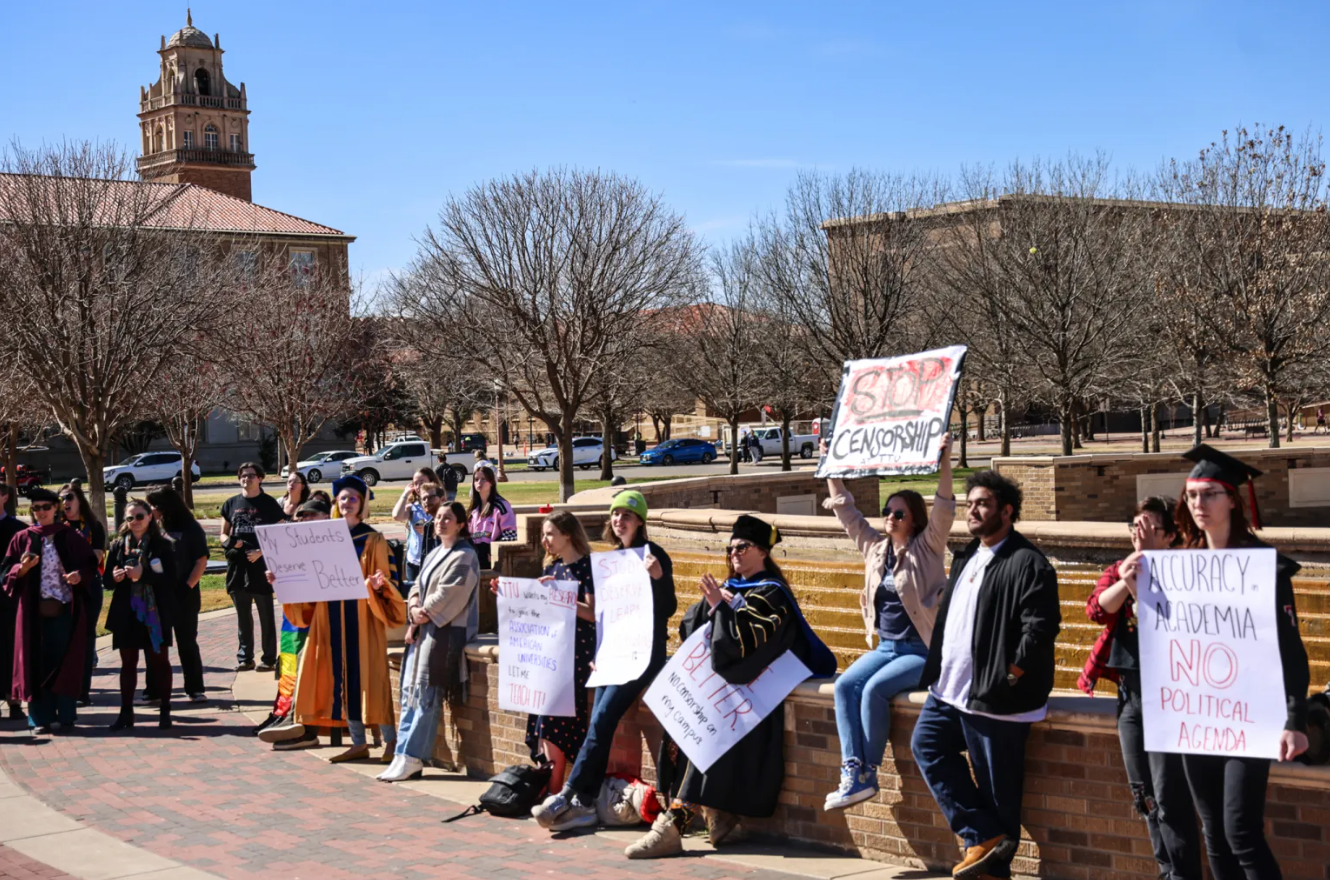
Faculty groups led by the American Association of University Professors filed a federal lawsuit against Texas Tech University System Chancellor Brandon Creighton and the Board of Regents, challenging two memos that restrict classroom instruction on race, gender identity, and sexual orientation, according to Lubbock Avalanche-Journal. The suit asks a federal court to declare the memos unconstitutional and block their enforcement.
Creighton, a former Republican state senator, issued a December 1 memo requiring instructors to disclose course materials touching on prohibited subjects. A second memo, issued April 9, ordered programs centered on sexual orientation and gender identity to be phased out, according to KVUE.
Two Memos Freeze Courses and Flag Syllabi
The December memo barred instructors from teaching any flagged content until regents reviewed and approved it. AI-driven scans of course syllabi contributed to real restrictions, according to Times Record News. One scan led to the removal of Plato's Republic from a philosophy course. Discussions of race in landmark cases like Dred Scott v. Sandford were also restricted.
The April memo went further. It ordered the phase-out of programs focused on sexual orientation and gender identity. It also required lower-level courses to swap in alternative materials. The policies apply across all five institutions in the Texas Tech system — including Angelo State University, Midwestern State University, and two health sciences centers, according to Reporter-News.
Medical Students Blocked From Transgender Patient Care
The memos reached beyond the classroom into clinical settings. A Texas Tech Health Sciences Center professor was told that medical students could not participate in or observe care for transgender patients — even when the patient's visit had nothing to do with gender-related treatment, according to KVUE. The restriction applied regardless of the patient's primary medical condition.
The plaintiffs say this is direct harm caused by vague policy language. When a rule is unclear, professors and staff overenforce it out of caution. That chilling effect, the lawsuit argues, silences teaching that goes well beyond any intended scope of the memos.
Lawsuit Argues Memos Target Black Faculty and Students
The plaintiffs argue the memos violate the First Amendment by restricting protected speech and the Fourteenth Amendment by creating vague standards. They also contend the policies discriminate against Black faculty and students. Limiting instruction on race, Black history, and racial inequality disproportionately harms those who study and teach those subjects, according to Lubbock Avalanche-Journal.
The mandatory disclosure and review system delays or halts course materials while regents decide whether content is allowed. Professors say they cannot plan or teach effectively under that process. The AAUP called this Texas' first major legal challenge to higher-education content restrictions — and a warning sign for universities nationwide.
Creighton Defends Rules as Workforce Preparation
Creighton argues the memos protect students by aligning curricula with workforce needs and academic rigor. He says the rules apply equally across the system and are not aimed at any group. Creighton previously authored Senate Bill 37 in the Texas Senate, which stated that classes may not endorse specific public policies, ideologies, or legislation, according to Yahoo News.
Critics say that framing obscures the real effect. The lawsuit argues that restricting instruction on race and gender is not neutral policy — it targets specific viewpoints. The case now moves to federal court, where a judge will decide whether to block the memos while the suit proceeds.
Sentiment
Mostly NegativeNEGATIVENEUTRALPOSITIVE
Publishers
13
Articles
17
Reach
30
A
AnonymousAuthor


