China's Reusable Rocket Breakthrough
China Achieves Historic First with Successful Sea Recovery of Orbital Rocket Booster
Anonymous
Key Points
1
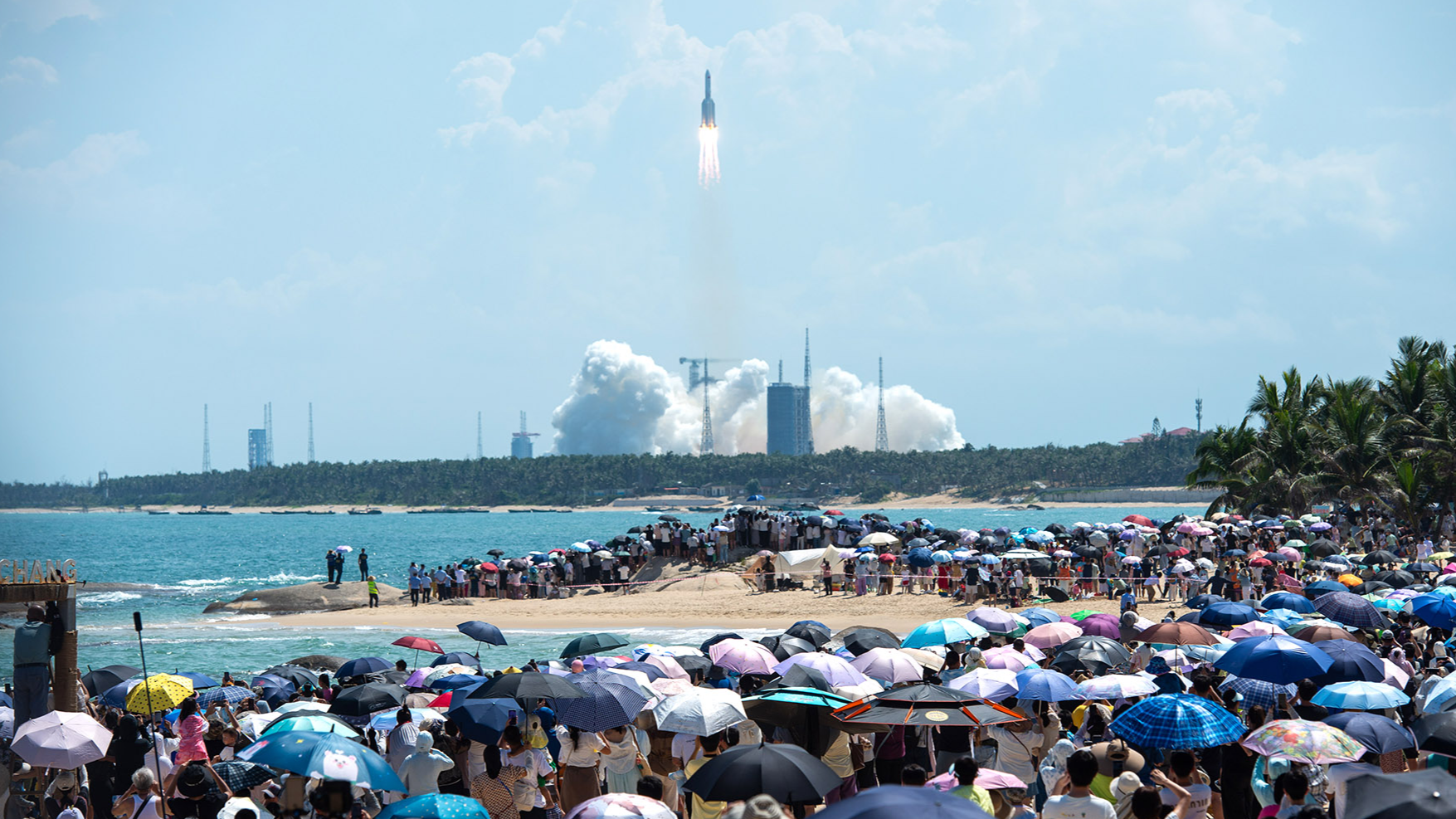
Launch took place at the Wenchang Spacecraft Launch Site in Hainan Province, marking the Chinese test from a southern coastal site specifically used for carrier rockets.
2
The first stage employed landing hooks to catch a net on a sea-based recovery platform, with the Linghang Zhe recovery vessel handling the net capture during a powered descent.
3
The flight included the insertion of a payload into orbit, but the satellite’s name and specific orbital parameters were not disclosed by CASC.
4
Technical specs shown in the coverage indicate the Long March 10B is about 63 meters long, 5 meters in diameter, with a liftoff mass around 760,000 kilograms, and a reusable-mode payload capacity of roughly 16 metric tons to low Earth orbit.
5
Industry reporting frames the achievement as making China the second country to recover an orbital-class booster after the United States, signaling a significant milestone in global reusable-rocket development.
China has become the second country in history to recover an orbital-class rocket booster, a major leap in its push to build reusable rockets. The Long March 10B lifted off from the Wenchang Spacecraft Launch Site in Hainan Province, delivered a payload to orbit, and then returned its first stage to a waiting ship at sea — all in a single flight, according to Space News.
Roughly six minutes after stage separation, the booster made a controlled, powered descent and was caught in a net aboard the recovery vessel Linghang Zhe. China Daily Asia called it the country's "first-ever controlled rocket recovery." Only the United States, through SpaceX, had pulled off this kind of sea-based booster catch before.
How the Long March 10B Booster Came Back
The first stage did not splashdown in the ocean like older rockets. Instead, it flew itself back down under rocket power. Landing hooks on the booster grabbed a net mounted on the offshore platform. The whole return trip took about six minutes from the moment the first stage separated from the upper rocket, according to Space News.
The Long March 10B is a large rocket. It stands about 63 meters tall — roughly a 20-story building — and has a diameter of 5 meters. At liftoff it weighs around 760,000 kilograms. In reusable mode, it can carry about 16 metric tons to low Earth orbit, according to Zamin.
China Now Sits Alongside SpaceX in Booster Recovery
Before this flight, only SpaceX had recovered an orbital-class booster. Blue Origin has caught its New Shepard booster, but that rocket does not reach orbit. China's achievement puts it in rare company. Space News reported that China is now the second country to recover an orbital booster, a milestone that took SpaceX years of trial and error to reach.
The China Academy of Launch Vehicle Technology, known as CASC, called the net-capture system the world's first of its kind for an orbital booster. Analysts see the flight as proof that China's commercial and military space programs are moving fast. The country is closing the gap with American launch companies in a technology race that matters for cost, speed, and strategic reach.
Why Reusable Boosters Cut Costs and Change the Game
Rocket boosters are expensive. A first stage can make up more than half of a rocket's total cost. If you throw it away after one flight, that money is gone. SpaceX showed that catching and reusing boosters can drop launch prices sharply. China wants the same advantage, according to Head Topics.
CASC said reusing the Long March 10B's first stage could lower costs for future launches. That matters for two big Chinese goals: building a large commercial satellite network to rival Starlink, and flying astronauts to the Moon. Cheaper launches mean more launches. More launches mean faster progress on both fronts, Zamin reported.
Payload Details Kept Secret, But Mission Declared a Success
The rocket did carry a real payload to orbit. But CASC did not say what the satellite was called or where exactly it ended up. The specific orbital parameters were not shared with the public. That kind of secrecy is common for Chinese space launches, even ones that are celebrated openly, according to China National News.
Despite the mystery around the payload, state media and CASC praised the full mission as a breakthrough. China Daily Asia reported that the flight marked the country's first successful controlled recovery of a carrier rocket first stage. Chinese officials framed it as a turning point in the country's space program — and in global reusable rocket development.
Sentiment
Mostly PositiveNEGATIVENEUTRALPOSITIVE
Publishers
105
Articles
216
Reach
321
A
AnonymousAuthor


