Former Grand Mufti Sentenced
Syria’s Former Grand Mufti Sentenced to Life for Inciting Civil War
Key Points
He publicly endorsed, in his official capacity as Grand Mufti of the Republic, officers and figures implicated in war crimes, including Issam Zahreddine and Qassem Soleimani.
Hassoun was arrested at Damascus airport in March 2025 after coming out of hiding about a month earlier, with his trial beginning on June 25, 2026.
In addition to inciting civil war, Hassoun faced charges of inciting violence, justifying killings, and abusing his office, alongside incitement of sectarian strife.
The sixth-session hearing occurred with the attendance of the National Commission for Transitional Justice and representatives from international legal and humanitarian organizations, underscoring institutional and international interest in Syria’s transitional-justice process.
A separate report notes that, around the same period, Bashar al-Assad and Maher al-Assad were sentenced to death in absentia by a Damascus court, illustrating the broader scope of punitive actions within Syria’s transitional-justice landscape.
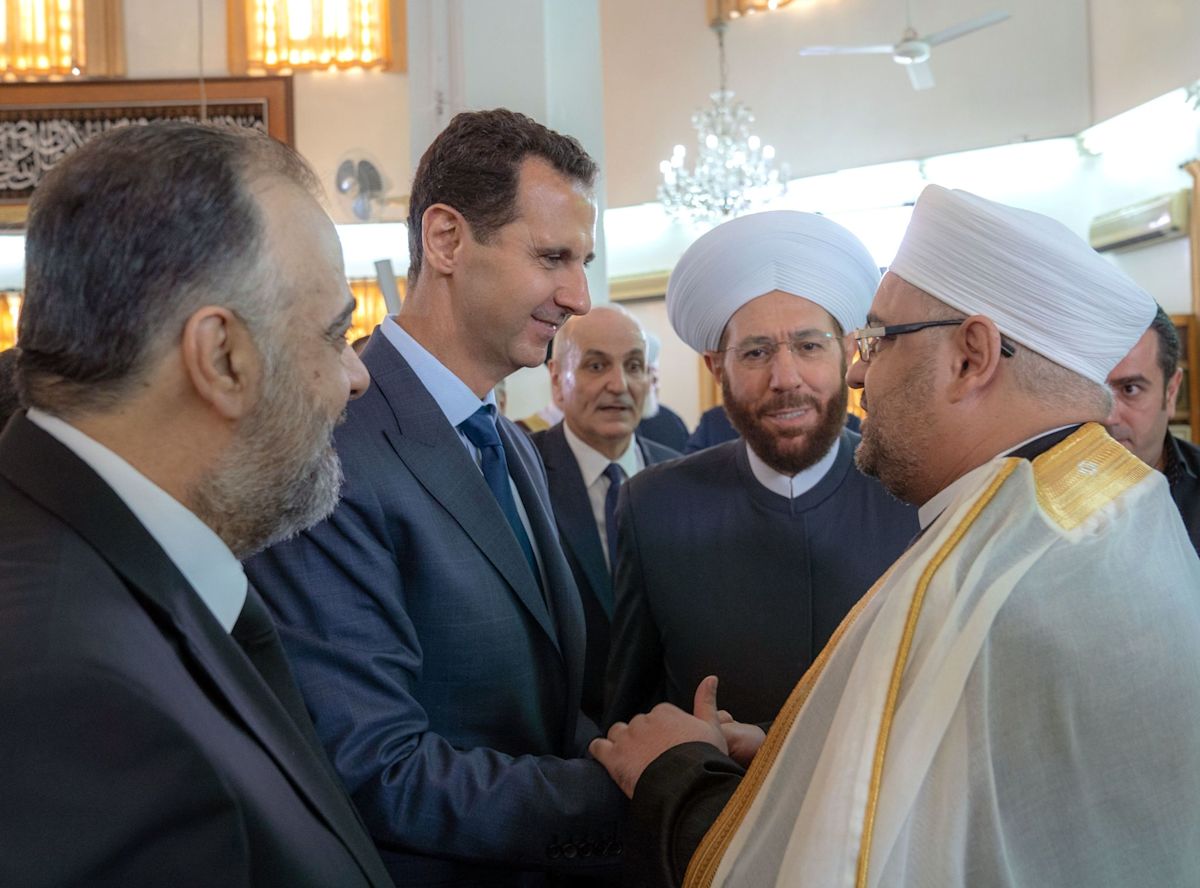
A Damascus court sentenced Ahmed Hassoun, Syria's former Grand Mufti, to life imprisonment for inciting civil war and exploiting his religious authority under Bashar al-Assad Yahoo News. Hassoun, who served as the regime's top Muslim cleric for 16 years, was convicted of delivering speeches that urged support for the government and incited violence against civilians in eastern Aleppo and Idlib Washington Post.
The conviction marks the 10th Assad-era official held accountable by Syria's new transitional-justice system 24 News HD. Prosecutors argued that Hassoun's official position amplified his rhetoric and gave religious cover to regime crimes, undermining protections for civilians during the conflict Fine Day Radio.
From Regime Cleric to Courtroom Defendant
Hassoun publicly endorsed military officers and figures implicated in war crimes, including Issam Zahreddine and Qassem Soleimani The Intelligencer. His visible alignment with Assad gave legitimacy to government actions during Syria's 11-year conflict. Authorities arrested him at Damascus airport in March 2025 after he emerged from hiding about a month earlier Washington Post.
The trial began on June 25, 2026, and reached its sixth hearing with attendance from the National Commission for Transitional Justice and international legal observers Fine Day Radio. This international participation signals Syria's commitment to transparent accountability for high-ranking regime figures.
Multiple Charges Reflect Scope of Alleged Abuses
Beyond inciting civil war, Hassoun faced charges of inciting violence against specific populations, justifying unlawful killings, and abusing his official office Yahoo News. Prosecutors also alleged he incited sectarian strife by using his religious authority to divide Syrians along religious lines 24 News HD. Each charge carries significant weight in Syria's transitional-justice framework.
The Fourth Criminal Court in Damascus weighed evidence that Hassoun's sermons specifically targeted civilians in conflict zones Washington Post. His case demonstrates how authorities are holding non-military actors accountable for their role in enabling and perpetuating regime violence.
Assad Siblings Sentenced to Death in Absentia
Around the same time as Hassoun's conviction, the Damascus court sentenced Bashar al-Assad and his brother Maher to death in absentia The Intelligencer. Both remain outside Syria, making execution impossible, but the rulings formalize accountability measures for top regime leaders. This parallel prosecution underscores the broader scope of transitional justice in post-Assad Syria.
Hassoun's life sentence and the Assads' death sentences illustrate how Syria is pursuing accountability across multiple levels of the former regime Fine Day Radio. From high officials to religious figures who provided ideological cover, the system aims to document and punish those responsible for the conflict's brutality.
Sentiment
Mostly NegativePublishers
12
Articles
37
Reach
49