Fed Rate Hike Impact
Silver Falls After Federal Reserve Rate Hike and Projected 2026 Increases
Anonymous
Key Points
1
Saudi Arabia reportedly plans to restore about half of its East-West pipeline capacity within days and fully repair it within six weeks after drone attacks damaged the alternative export route, helping ease crude prices.
2
The Fed’s updated projections also raised expected 2026 headline PCE inflation to 3.7% and core PCE inflation to 3.4%, while placing the federal-funds rate at 4.1% at the end of both 2026 and 2027.
3
Silver’s technical indicators remained soft: prices were below the nine- and 50-period exponential moving averages, while the 14-day RSI stood at 47.3, signaling a consolidative to mildly bearish setup.
4
The Fed said economic activity was expanding at a solid pace, domestic spending remained resilient and unemployment had changed little; separate data showed U.S. retail sales rose 1.2% month over month in August, above the 0.8% forecast.
5
Silver’s sharp reversal also reflected momentum-related positioning: the active COMEX contract had gained 15.9% in August despite relatively light historical positioning, and Wednesday’s $2.715 intraday range represented a $13,575 move on one standard 5,000-ounce contract.
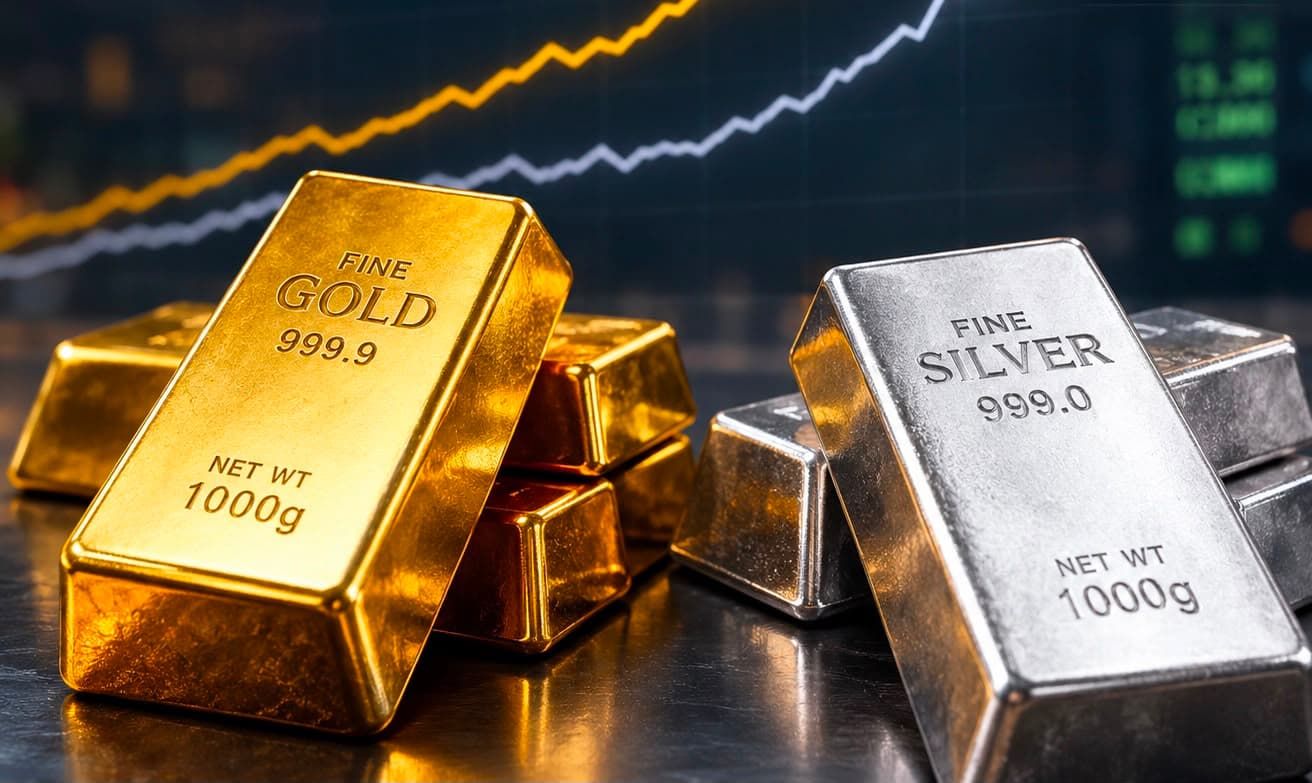
Silver fell sharply after the Federal Reserve raised interest rates by 25 basis points to 3.75%–4.00% on September 16, but recovered to around $63.75–$63.80 an ounce as markets reassessed the Fed's long-term outlook. HDFCSky reported that precious metals initially sold off heavily following the announcement, but the bigger shock came when policymakers' projections signaled another rate hike was likely and that rates would stay high through 2026 and 2027.
The Fed also raised its inflation forecast for 2026 to 3.7% for headline prices and 3.4% for core prices, while crude oil prices eased after Saudi Arabia said it would restore most of its damaged East-West pipeline within days. This mixed picture left silver traders cautious, with support levels at $62 and $60, but also seeing potential resistance near $66 and $73.
Fed Signals Rates Will Stay High Longer Than Expected
The Fed raised its target rate range by 25 basis points, marking its first increase in three years. Chair Kevin Warsh said the move was "sober" and "responsible" because "inflation is too high and has been for too long." The bigger surprise came from updated projections showing policymakers expect the federal funds rate to remain at 4.1% through the end of both 2026 and 2027.
Money markets are pricing in roughly even odds—about 49.8% to 51%—for another 25-basis-point increase at the October meeting. Forbes noted that this forward guidance from the Fed lifted 10-year Treasury yields to 5.04%, the highest level since July 2007, and strengthened the U.S. dollar. Higher Treasury yields make non-yielding assets like silver less attractive to hold.
Saudi Pipeline Repair Eases Oil Prices and Inflation Worries
A drone strike on September 10 damaged pumping stations on Saudi Arabia's vital East-West oil pipeline, which normally carries 4 to 5 million barrels per day. The 745-mile pipeline provides a crucial bypass around the Strait of Hormuz. Saudi authorities shut it down as a precaution, pushing crude toward four-month highs near $108.59 per barrel.
On September 17–18, Saudi Arabia announced plans to restore about half the pipeline's capacity within days and achieve full repair within six weeks. As crude prices pulled back toward $102 per barrel, this news eased immediate inflation concerns and helped lift silver prices back toward the $63.75–$66.50 range after the sharp initial drop.
U.S. Retail Sales Beat Forecasts Despite Rate Hike
On the morning of the Fed's decision, the Commerce Department reported that U.S. retail sales jumped 1.2% month-over-month in August, beating the forecast of 0.8%. This strong consumer spending data justified the Fed's inflation concerns and supported the rate increase. Forbes highlighted that robust retail activity continues to drive demand-pull inflation.
The Fed's statement emphasized that "economic activity was expanding at a solid pace," domestic spending remained resilient, and unemployment had changed little. This backdrop of strong demand and persistent inflation left investors nervous about how long the Fed will keep rates elevated, pressuring silver's near-term outlook.
Silver's Technical Setup Remains Cautious After Sharp Reversal
Silver's intraday range on September 16 was $2.715 per ounce, translating to a $13,575 move on one standard 5,000-ounce COMEX contract. The sharp price swing reflected position squaring after the metal had surged 15.9% in August. Prices remain below the nine-period and 50-period exponential moving averages, signaling weakness.
The 14-day relative strength index stands at 47.3, indicating a consolidative to mildly bearish setup. Traders see support at $62 and $60 per ounce, with a potential downside toward $55 if that level breaks. Resistance sits near $65–$66 and $73. HDFCSky reported the rebound was partly driven by traders reassessing that the Fed's dot plot was less aggressive than the market's worst-case scenario of multiple hikes in 2027.
Sentiment
Mostly NegativeNEGATIVENEUTRALPOSITIVE
Publishers
47
Articles
26
Reach
73
A
AnonymousAuthor