Gaspé Copper Potential
Osisko Metals Uncovers 320 Metres of Copper at Gaspé, Boosting Resource Conversion Potential
Anonymous
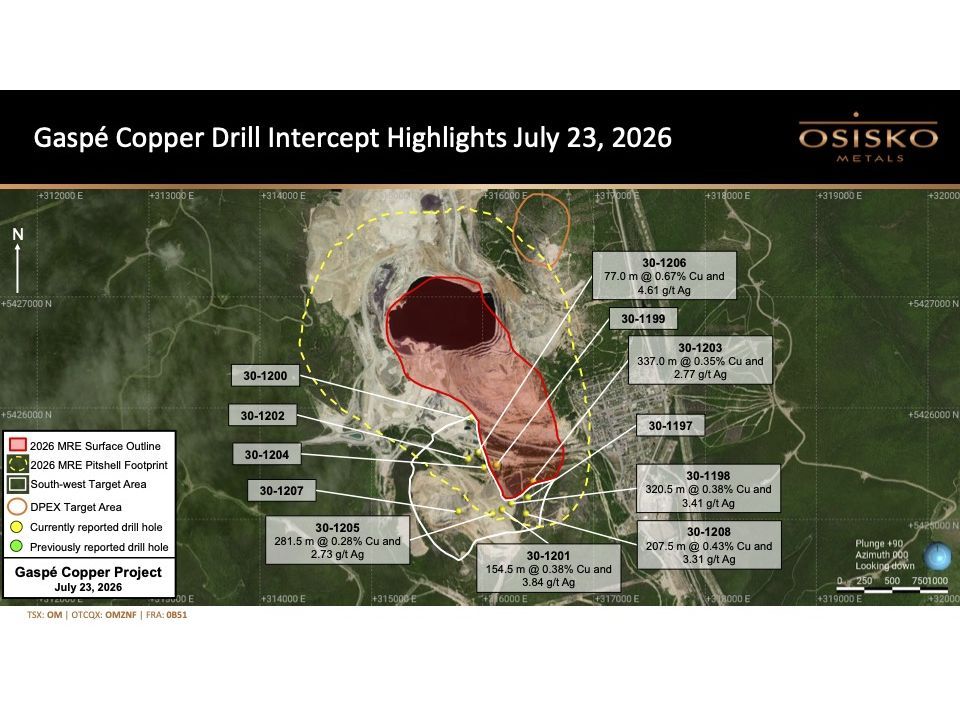
Osisko Metals has announced a standout drill result at its Gaspé Copper Project in eastern Quebec: 320 metres averaging 0.38% copper in a single intercept. The company reported 25 mineralized intercepts in total from 12 new drill holes as part of its 2026 drill program, according to Ottawa Sun.
The results focus on upgrading Inferred Mineral Resources — the least certain category — to the higher-confidence Measured or Indicated categories. CEO Robert Wares said the drilling shows "excellent potential for conversion of currently categorized in-pit waste rock to new mineralized zones," according to Toronto Sun.
What the 320-Metre Intercept Actually Means
A 320-metre intercept averaging 0.38% copper is a thick, continuous zone of mineralization. For context, many copper mines operate profitably at grades between 0.3% and 0.5%. The length of this intercept suggests a large, coherent body of copper-bearing rock beneath the Gaspé site, according to Brantford Expositor.
The 12 drill holes were sited within the existing 2026 Mineral Resource Estimate, or MRE, model. Drilling inside an existing model is a deliberate strategy. It aims to tighten the confidence level on known rock, not just find new deposits, Goderich Signal Star reported.
Turning Waste Rock Into a Potential Resource
One of the most significant aspects of the program is what Osisko calls "in-pit expansion." This means rock currently classified as waste inside the planned open pit could be reclassified as ore. That would boost the resource without requiring any new land or deeper drilling, according to Cochrane Times Post.
CEO Wares specifically highlighted this angle. Converting waste to mineralized zones directly improves the project's economics. It means more copper could be recovered from the same pit footprint, lowering the effective cost per tonne of copper produced, Woodstock Sentinel Review reported.
Out-of-Pit Drilling Opens Door to New Resources
Beyond the existing pit boundary, Osisko is also drilling exploration targets outside the current Whittle pit shell. These out-of-pit intercepts could define entirely new resource zones. They would not replace the existing MRE but add to it, according to Clinton News Record.
The Whittle pit is an industry-standard computer model that defines the most economically viable open-pit shape. Any mineralization found outside that shell requires its own economic assessment before it can be counted as a formal resource, Hanna Herald noted.
Gaspé Copper Project's Place in Canada's Copper Pipeline
The Gaspé Copper Project sits on the Gaspé Peninsula in eastern Quebec. It is one of Canada's largest undeveloped copper deposits. Osisko Metals trades on the TSX under the ticker OM and also on the OTCQX and Frankfurt exchanges, according to Ottawa Sun.
Copper demand is rising sharply due to the global energy transition. Electric vehicles and power grids both require large amounts of copper. Projects like Gaspé are drawing closer attention from investors as supply from existing mines tightens, Toronto Sun reported.
Sentiment
NeutralNEGATIVENEUTRALPOSITIVE
Publishers
8
Articles
8
Reach
8
A
AnonymousAuthor


