Unvalued Carbon Sinks
Natural carbon sinks absorb 40 percent of human emissions but lack climate model valuation.
Anonymous
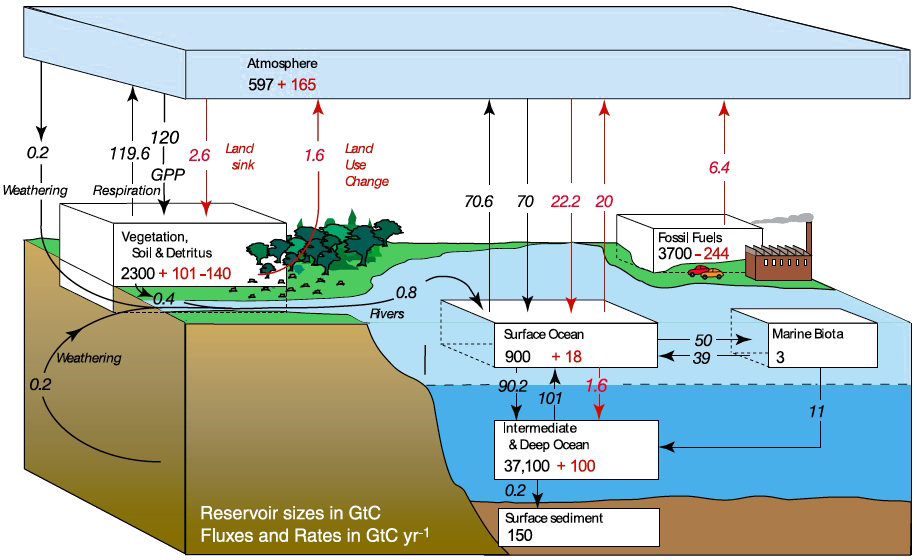
The Natural Carbon Sinks, which absorb nearly half of all CO2 produced by human activities, are under increasing stress and are not being valued in most climate models, according to a report by Wood Mackenzie. The report suggests that the policies and financial frameworks designed to protect these natural systems are not keeping pace. In 2025, oceans accounted for approximately 12 GtCO2 of annual absorption, while forests contributed an additional 6 Gt CO2. The study also reveals that carbon prices in compliance markets range from US$5 to US$90 per tCO2, which do not accurately reflect the true cost of sink degradation. Since 1990, global forest area has declined by 1.5 million km2, with deforestation contributing 5 to 6 GttCO2 annually. Since 2024, the land-use sector has had near-neutral net emissions since 2024, losing its role as a net sink. The majority of CO2 removal has historically depended on natural systems. The findings suggest that protecting forests could deliver 3 to 6GtCO3 of mitigation annually. However, current policy frameworks treat natural sinks as free infrastructure while pricing only emissions. The most ambitious climate scenario suggests that even under the most ambitious scenario, around 11 Gtco₂ of emissions remain under the net zero scenario, rising to around 14 GtCo₉ under the country pledges scenario, where net emissions reach zero by 2060.
Sentiment
NeutralNEGATIVENEUTRALPOSITIVE
Publishers
7
Articles
6
Reach
7
Topics
A
AnonymousAuthor


