Paris Tower Struck
Video captures moment lightning strikes Eiffel Tower during strong Paris storm
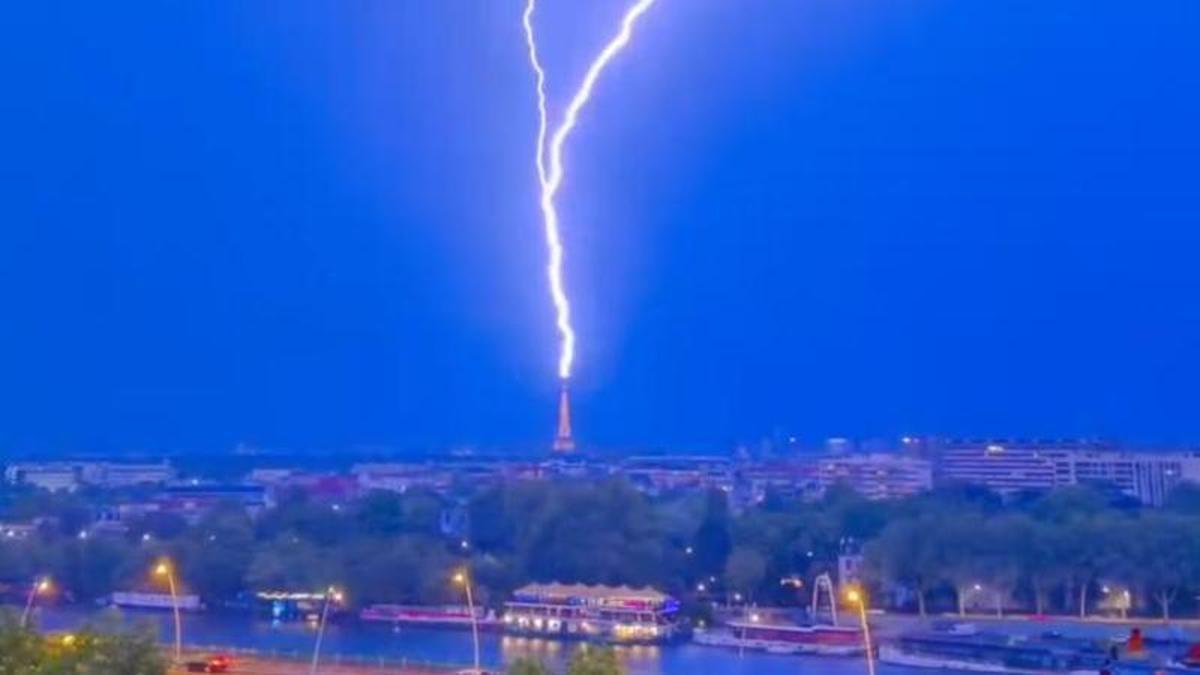
A powerful lightning bolt struck the summit of the Eiffel Tower in the early hours of June 28, 2026, capping a brutal week of extreme weather in Paris. A photographer captured the moment on high-definition video, and the footage spread rapidly across social media La Opinion de Zamora.
The strike was not random bad luck. It came at the end of a historic heatwave that pushed temperatures in Paris to 39.6°C and killed more than 1,000 people across France in just four days, according to Sante Publique France. The storm that brought the lightning also brought some relief — but at a violent cost.
A Week of Record Heat Before the Storm
The heatwave began June 20 and quickly broke records. By June 24, France logged its hottest June average temperatures in history, according to Météo-France. The Paris-Montsouris weather station recorded 39.6°C. Some regions hit 43.3°C. On June 23, the Eiffel Tower and the Louvre both closed early at 4:00 PM due to "oppressive and exhausting heat."
The human toll was severe. Sante Publique France counted over 1,000 excess deaths between June 24 and June 27, mostly among people over 65 living alone in cities. Across Europe, the episode killed an estimated 1,352 people in France, Spain, and the UK combined, according to El Periódico de Aragón. The WHO warned that "once-in-a-generation" heatwaves are now happening almost every year.
Storms Erupt After Météo-France Issues Orange Alert
On June 27 at 5:00 PM, Météo-France issued an Orange Storm Alert for 38 departments. The City of Paris ordered all parks, gardens, and the Canal Saint-Martin swimming area to close immediately. Officials warned of violent gusts and falling branches. By nightfall, severe thunderstorms moved over the capital, according to Diario de Ibiza.
The storms were intense. Meteorologists said they were "heat-driven" — caused by a low-pressure system moving over land that had been baking for a week. Some regions saw hailstones up to 8 centimeters wide. Flash flooding hit Paris basements. Then, near midnight, multiple lightning bolts hit the city, according to Información.
The Eiffel Tower Gets Struck — and Stays Standing
The 330-meter iron tower is actually built to handle this. Lightning hits it an average of 5 to 10 times per year, according to La Opinión de Murcia. The tower has four lightning rods at its summit and copper grounding cables at its base. When lightning strikes, the current travels through the outer metal frame and into the earth within milliseconds. No one inside gets hurt.
Photographer Sylvain Leser captured the June 28 strike on video. AFP photographer Dimitar Dilkoff also caught it in still images. Both went viral fast. On social media, many people cheered the footage as a stunning end to a terrible week, according to Diario de Mallorca. But others saw it as a warning sign — a violent image of what extreme weather looks like up close.
Political Fallout and the Bigger Climate Warning
Paris Deputy Mayor Emmanuel Grégoire called the situation in the capital "quite critical" during the peak heat. He cited an "increase in mortality" and called for a "complete paradigm shift" in how cities cool themselves. Prime Minister Sébastien Lecornu held crisis meetings to address the strain on infrastructure, according to Diario Córdoba.
The week's events cost real money too. SNCF cancelled 71 long-distance trains to stop rails from buckling in the heat. Thousands of Eiffel Tower and Louvre ticket holders got automatic refunds. WHO Director-General Tedros Adhanom Ghebreyesus said on X that events like this are "now occurring nearly annually," according to El Correo Gallego. The lightning strike was spectacular. What came before it was far worse.
Sentiment
NeutralPublishers
17
Articles
0
Reach
17


