High-Altitude Life Discovered
New Mouse Species Found Thriving at 7,000 Meters Challenges Biological Limits
Anonymous
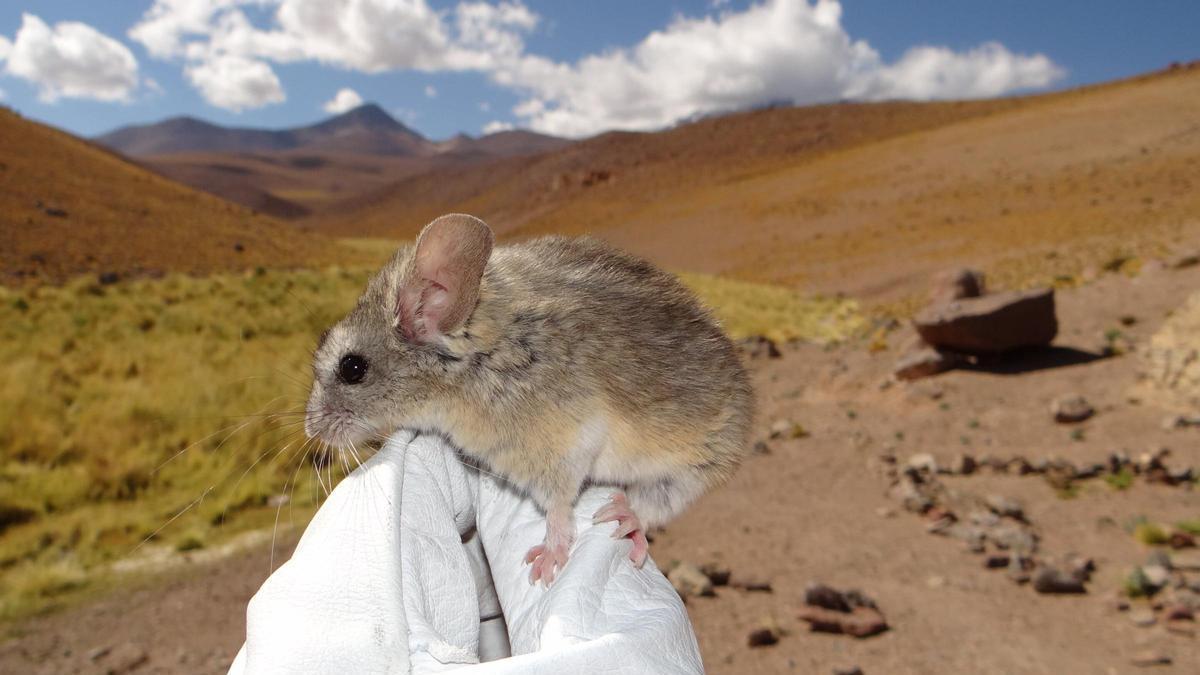
Scientists have found a living mouse at 7,000 meters above sea level — the highest altitude ever recorded for a wild mammal. The tiny rodent was discovered on a volcano in the Andes mountain range, in a zone so extreme that virtually nothing grows there. According to El Periódico, the find forces researchers to completely rethink the biological limits of life in harsh environments.
The species belongs to the genus Phyllotis, a group of small Andean mice. At 7,000 meters, temperatures drop far below freezing, oxygen levels are critically low, and food is almost nonexistent. No mammal was previously known to survive permanently at such heights.
A Mouse Where No Animal Should Survive
The discovery was made on the summit of Llullaillaco, a volcano on the border between Argentina and Chile. At 6,739 meters, it is one of the highest volcanoes on Earth. Researchers captured and confirmed a live specimen of Phyllotis at this extreme elevation. Levante EMV reported that the animal was found during a scientific expedition specifically searching for signs of life at altitude extremes.
At that height, air pressure is less than half of what it is at sea level. The body struggles to absorb enough oxygen to simply stay alive. Yet this mouse not only survived — it appeared to be living there permanently, not just passing through.
How the Mouse Eats With Almost Nothing Around It
One of the biggest puzzles is how the animal feeds itself. Above 5,000 meters, plant life becomes extremely scarce. Above 6,000 meters, it is practically zero. Scientists believe the mouse may rely on tiny organisms like algae, mosses, or insects blown up by wind currents. La Opinión de Murcia noted that researchers are still studying the animal's exact diet and metabolic strategies.
The mouse likely has a highly efficient metabolism. Its body must extract maximum energy from minimum food. It also needs to resist freezing temperatures that can drop below -30°C at night. Scientists call this kind of survival adaptation a form of extreme physiological resilience.
Previous Records Shattered by This Discovery
Before this find, the highest confirmed habitat for a wild mammal was around 5,000 to 6,000 meters. This new record adds roughly 1,000 meters to that ceiling. LNE reported that the discovery breaks a long-standing assumption in biology: that mammals simply cannot sustain themselves above 6,000 meters due to oxygen and food limitations.
Mummified mice were previously found at similar heights on Andean volcanoes, but scientists assumed they had died after wandering too high. This live specimen changes everything. It suggests these animals may have colonized the high peaks intentionally and adapted over generations.
What This Means for the Science of Extreme Life
The finding has big implications beyond mice. It pushes scientists to reconsider which environments can support vertebrate life. Información highlighted that the study could help understand how animals might adapt to climate change as habitats shift to higher and colder zones. It also raises questions about life on other planets with thin atmospheres.
Researchers plan further expeditions to confirm whether the species maintains a stable population at these heights. If confirmed, it would mean an entire ecosystem — however tiny — exists where science said none could. As La Opinión de A Coruña put it, the discovery obliges biology to redraw its maps of the possible.
Sentiment
NeutralNEGATIVENEUTRALPOSITIVE
Publishers
13
Articles
0
Reach
13
A
AnonymousAuthor


