Surgical Robotics Milestone Reached
Teleoperated Humanoid Robots Successfully Perform Live Surgery, Marking Global Surgical Robotics Milestone
Anonymous
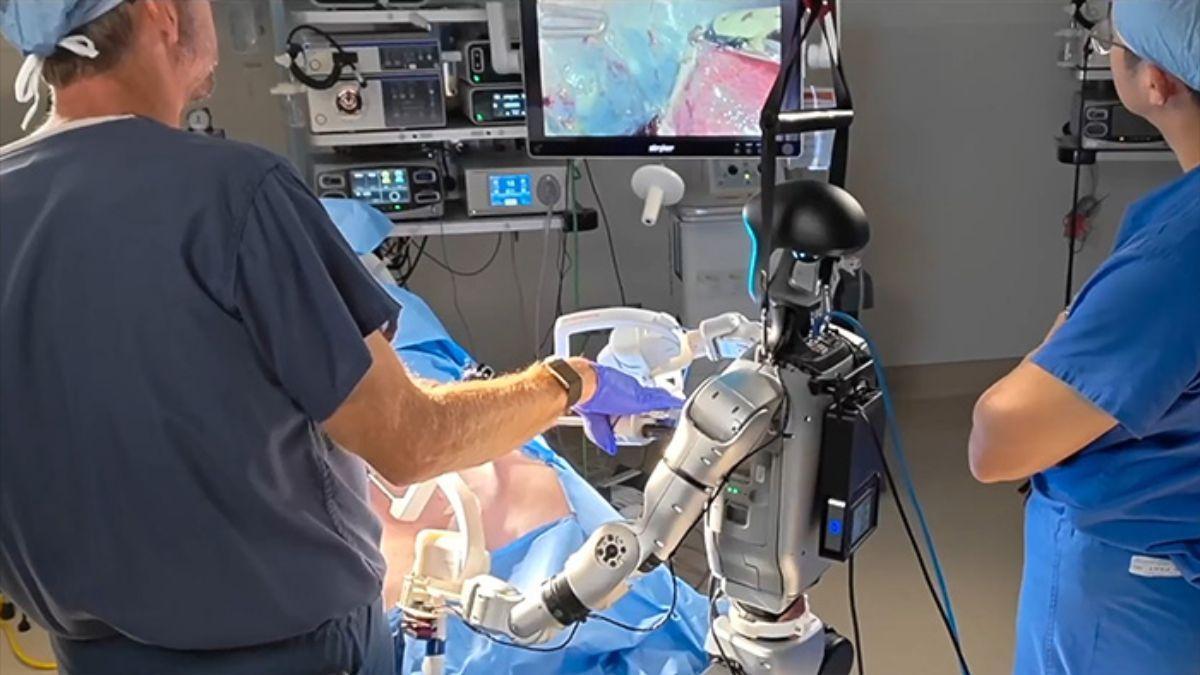
For the first time in history, teleoperated humanoid robots have performed live surgery on a human patient, marking what experts call a turning point in surgical robotics. Levante-EMV and more than a dozen Spanish outlets reported the milestone simultaneously, describing it as a before-and-after moment for medicine and technology.
The procedure was carried out by humanoid robots controlled remotely by surgeons — meaning the operating hands were machines, but the decisions came from human doctors at a distance. No further details about the patient, the type of surgery, or the location have been confirmed yet.
What Made This Surgery Different From Earlier Robotic Procedures
Robotic surgery is not new. Systems like the da Vinci robot have assisted surgeons for over two decades. But those robots are tools — they do not have a human-like body, and they cannot move freely. What happened here is different. These were humanoid robots: machines shaped like people, with arms, hands, and joints that move the way a human body does.
The key word is "teleoperated." A surgeon controlled the robot from a remote location, sending commands in real time. The robot then carried out the precise physical movements of the operation. This is the first confirmed case of a humanoid robot — not a fixed surgical arm — performing a live procedure on a person, according to Diario de Mallorca.
Why Teleoperation Changes the Future of Remote Surgery
Teleoperation means a surgeon does not need to be in the same room — or even the same country — as the patient. This could transform healthcare in rural areas, conflict zones, or places with few specialists. A top surgeon in a city could operate on a patient hundreds of kilometers away, in real time.
The challenge has always been precision and latency — the tiny delay between a command and the robot's movement. Any lag could cost a patient their life. Achieving a live surgery with humanoid robots suggests those technical barriers are now low enough to attempt on a real human, according to El Periódico de Aragón.
Spain's Media Unites Around a Global First
The story broke across at least 15 Spanish regional outlets at the same time, from La Provincia in the Canary Islands to LNE in Asturias. The uniform headline — "World first: teleoperated humanoid robots perform live surgery" — suggests the news came from a single coordinated announcement or press release tied to the event.
The breadth of coverage signals how significant the scientific community considers this milestone. Diario Córdoba and El Día were among the outlets calling it a landmark moment not just for robotics, but for the entire future of medicine.
What Comes Next: Risks, Regulations, and Real-World Rollout
A single successful procedure does not mean humanoid surgical robots will be in hospitals tomorrow. Regulators in Europe and the United States require extensive clinical trials before any new surgical technology can be used widely. Dozens — sometimes hundreds — of test cases are needed to prove safety.
Still, this first live operation opens the door. Researchers and companies working on humanoid robots now have proof that the concept works in the highest-stakes environment possible: inside a human body. The next steps will likely focus on expanding the types of surgery attempted and shrinking the margin for error even further, according to La Opinión de Zamora.
Sentiment
NeutralNEGATIVENEUTRALPOSITIVE
Publishers
16
Articles
0
Reach
16
Topics
A
AnonymousAuthor


