Korean Presidency Reform
South Korea's President Lee Proposes Four-Year Two-Term Presidency, Expanding National Assembly Power
Key Points
Beyond a four-year, two-term presidency, officials floated a broader reform package that could include a presidential runoff, a National Assembly role in nominating the prime minister, and transferring the Board of Audit and Inspection to the legislature.
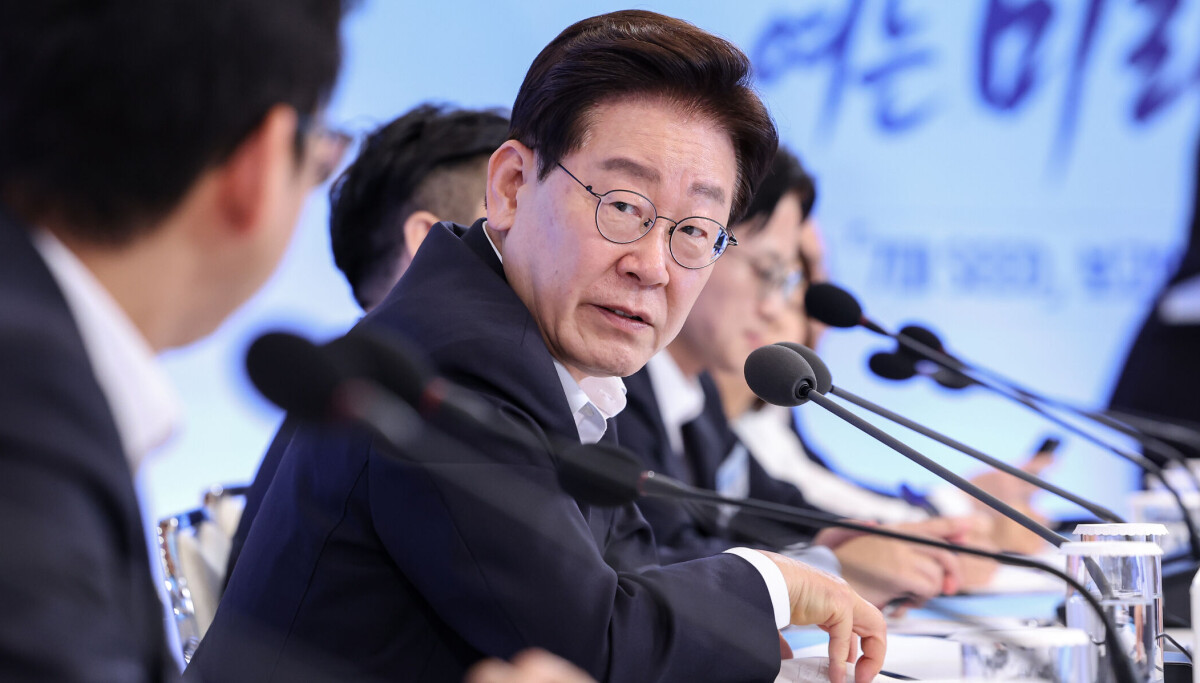
Lee reportedly told senior People Power Party lawmakers in a closed-door golf meeting that he would shorten his own term 'if that’s what it takes to amend the Constitution,' signaling a willingness to trade time in office for reform.
Blue House officials clarified that the proposed four-year, two-term framework is not a parliamentary or cabinet system, and that any discussion of a decentralized power structure remains undefined and not tied to a specific alternative model.
The presidential office argues the four-year, two-term model with strengthened parliamentary powers has the broadest public acceptance among reform options.
South Korea's presidential office has publicly backed a four-year, two-term presidency paired with stronger National Assembly powers, sparking a fresh debate over constitutional reform. The announcement came after reports that President Lee Jae Myung told opposition lawmakers he would shorten his own term 'if that's what it takes to amend the Constitution,' according to Korea JoongAng Daily.
The Blue House framed the proposal as the option with the 'broadest public acceptance' among reform choices, according to SE Daily. But critics are already asking whether a term shortcut is really about fixing the system — or extending Lee's grip on power.
What the Reform Package Actually Proposes
South Korea currently has a single five-year presidential term with no re-election. The proposed reform would cut that to four years but allow a president to serve two terms — a total of eight years. Korea JoongAng Daily reports the presidential office says this model, paired with a stronger National Assembly, has the widest support among the public.
The broader package on the table goes further. Officials floated giving the National Assembly the power to nominate the prime minister. They also discussed moving the Board of Audit and Inspection — South Korea's top financial watchdog — from the presidency to the legislature. A presidential runoff system is also under consideration, according to SE Daily.
Lee's Golf Meeting and the Term-Shortening Offer
President Lee reportedly made his boldest move in a closed-door golf meeting with senior People Power Party lawmakers — the main opposition bloc. He said he was open to cutting his own term short to get constitutional changes passed. That offer signals he may trade time in office for a legacy-defining reform.
Constitutional amendments in South Korea require approval from at least 200 of the 300 National Assembly members. That is a two-thirds majority — a very high bar. To reach it, Lee needs buy-in from the People Power Party, which makes the golf meeting significant, according to Korea JoongAng Daily.
Blue House Draws a Hard Line on System of Government
Despite talk of decentralizing power, Blue House officials were firm on one point: this is not a move toward a parliamentary or semi-presidential system. In a parliamentary system, the legislature — not voters — picks the head of government. Officials said any shift away from a directly elected president is off the table, according to SE Daily.
The presidential office also said the reform discussion should start in the National Assembly, not the Blue House. Officials stressed the need for 'broad consensus' before any amendment moves forward. That framing puts the political weight — and the risk — on lawmakers rather than the president himself.
Critics Warn of Power Play Behind Reform Language
Not everyone sees this as good-faith reform. Some critics argue that shortening the current term could actually reset the clock — giving Lee a fresh shot at re-election under the new two-term rule. The suspicion is that reform language is cover for a longer stay in office, a charge Lee has pushed back against directly.
Lee has insisted he is not backing a parliamentary system and that changes must be seen as structural reform, not personal gain. The debate now moves to the National Assembly, where getting 200 votes will require unusual cross-party cooperation. Whether that is possible — or whether distrust sinks the effort — remains the central question, according to Korea JoongAng Daily.
Sentiment
Mostly NegativePublishers
11
Articles
0
Reach
11