Falcon Strike Launched
CENTCOM Launches Falcon Strike, New Multinational Drone Task Force for Middle East
Key Points
Scorpion Strike included the deployment of the Low-cost Unmanned Combat Attack System (LUCAS) against Iran in December 2025, marking the first time the U.S. Navy launched a one-way attack drone from a ship at sea; in July 2026, drones were used in strikes on Iranian port facilities as part of ongoing operations.
The Falcon Strike initiative is unfolding amid a broader U.S.-led campaign in the Iran conflict (Epic Fury) with tens of thousands of troops and more than 20 warships deployed to the region and a naval blockade of Iranian ports, signaling an expanded use of unmanned systems in a high-tension environment.
The DoD is creating Joint Interagency Task Force 401 (JTIAF 401) to coordinate counter-drone efforts across multiple agencies, replacing the Joint Counter-small Unmanned Aircraft Systems Office; the effort is overseen by a Direct Reporting Portfolio Manager for Unmanned Systems (DRPM-UxS) and is tied to a sizable drone and counter-drone capability push, including a proposed $74 billion budget.
Taiwan is planning a dedicated UAV unit focused on swarm attacks using inexpensive drones, including Chien Hsiang loitering munitions designed to neutralize radar systems, with drills (Tien Lung) testing the concept for potential long-range operations.
SOCCENT, which established Scorpion Strike, will lead the Falcon Strike staff and is headquartered at MacDill Air Force Base in Tampa, Florida, overseeing CENTCOM’s 21-country AOR and coordinating regional partner participation in the new task force.
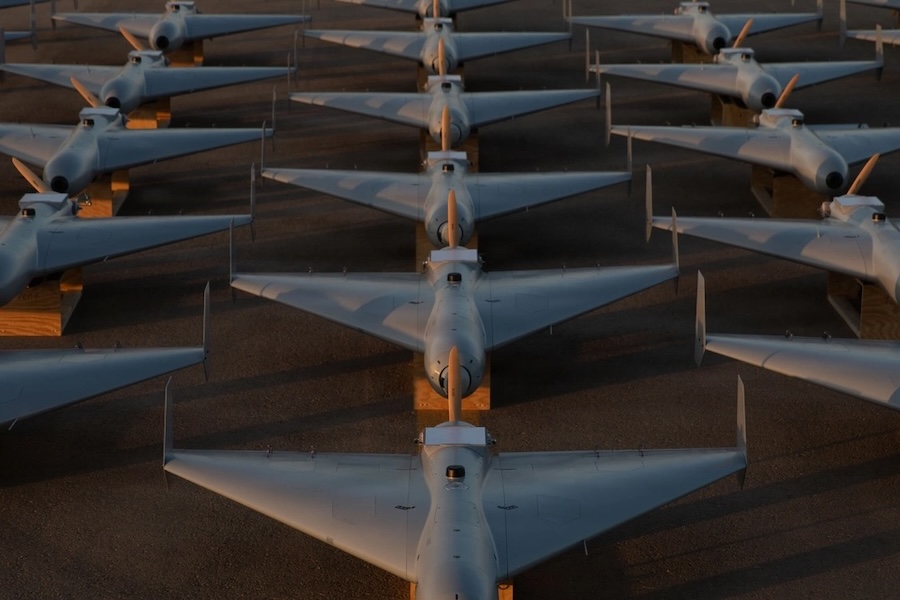
U.S. Central Command has launched Task Force Falcon Strike, its first-ever multinational, multi-domain attack drone unit, Seapower Magazine reported. The task force will deploy one-way attack drones — also called kamikaze drones — operating in the air, on the sea surface, and underwater, pulling in both U.S. personnel and regional partner nations.
The announcement builds on Task Force Scorpion Strike, CENTCOM's earlier drone squadron. Scorpion Strike hit historic milestones, including the first-ever launch of a one-way attack drone from a U.S. Navy warship and strikes on Iranian port facilities in July 2026, according to Stars and Stripes.
Falcon Strike Expands on Scorpion Strike's Combat Record
Task Force Scorpion Strike laid the groundwork for Falcon Strike. It fielded the Low-cost Unmanned Combat Attack System, known as LUCAS. In December 2025, LUCAS was fired from a U.S. Navy ship at sea — a first in naval history. By July 2026, drones from the task force struck Iranian port facilities, according to Stars and Stripes.
Admiral Brad Cooper said Falcon Strike will "build on regional innovation" to strengthen partner capabilities and deploy new unmanned technologies together, according to Seapower Magazine. SOCCENT — the Special Operations Command for Central Command — will lead the task force staff. SOCCENT is based at MacDill Air Force Base in Tampa, Florida.
Multinational Design Brings Regional Partners into Drone Network
Falcon Strike is explicitly multinational from the start. CENTCOM has already begun consulting with regional partners and plans to invite more nations to join, according to JNS. The task force will cover drones that fly through the air, move on the water's surface, and operate below the sea — a three-domain approach not seen before in the region.
CENTCOM's area of responsibility spans 21 countries across the Middle East and parts of Central and South Asia. By weaving partner nations into one unified drone force, the U.S. aims to create a shared, drone-enabled strike capability across that entire region, according to Defence Industry.
Falcon Strike Launches Amid Active Iran Conflict and Blockade
The task force is taking shape during a high-stakes conflict. Tens of thousands of U.S. troops and more than 20 warships are deployed to the region under Operation Epic Fury. A naval blockade of Iranian ports is currently in effect, according to Stars and Stripes. That environment makes fast, low-cost drone strikes especially valuable.
The Pentagon is also building Joint Interagency Task Force 401 to coordinate counter-drone efforts across multiple agencies. It replaces the existing Joint Counter-small Unmanned Aircraft Systems Office. A proposed $74 billion drone and counter-drone budget signals how central unmanned systems have become to U.S. military strategy, according to JNS.
Global Momentum Builds Around Swarm and One-Way Attack Drones
The Falcon Strike launch fits a wider global trend. Taiwan is building a dedicated UAV unit focused on swarm tactics using cheap drones, including the Chien Hsiang loitering munition — a drone designed to destroy radar systems. Taiwan has already run drills, called Tien Lung, to test long-range swarm concepts, according to JNS.
One-way attack drones are cheap to build, hard to stop, and require fewer sailors or soldiers to operate than traditional weapons. As Falcon Strike grows, it could become a model for how the U.S. and its allies fight future wars — not just in the Middle East, but anywhere unmanned systems can reach, according to Seapower Magazine.
Sentiment
Mostly PositivePublishers
17
Articles
27
Reach
44


