Tornado Confirmed in Detroit After Severe Storms
Tornado Confirmed in Detroit After Severe Storms
Anonymous
Key Points
1
The previous confirmed Detroit tornado, on July 2, 1997, was an F2 storm that also traveled through Highland Park and Hamtramck, according to National Weather Service records.
2
Detroit firefighters responded to 65 storm-related incidents, including downed wires, structure fires and trees falling onto homes.
3
The hardest-hit areas included Concord Avenue and East Vernor Highway, as well as Jefferson Avenue and East Grand Boulevard near the entrance to Belle Isle; Rouge Park also sustained major damage.
4
National Weather Service meteorologist Steve Considine said confirming a tornado can take longer in an urban area because surveyors must assess damage to numerous buildings and structures, while distinguishing tornado damage from damage caused by straight-line winds.
5
At Belle Isle, cleanup crews encountered an unusual scene: the rowing scull “Spirit of Detroit” was left hanging from a tree near the historic Detroit Boat Club, while Michigan Department of Natural Resources crews cleared fallen trunks and limbs.
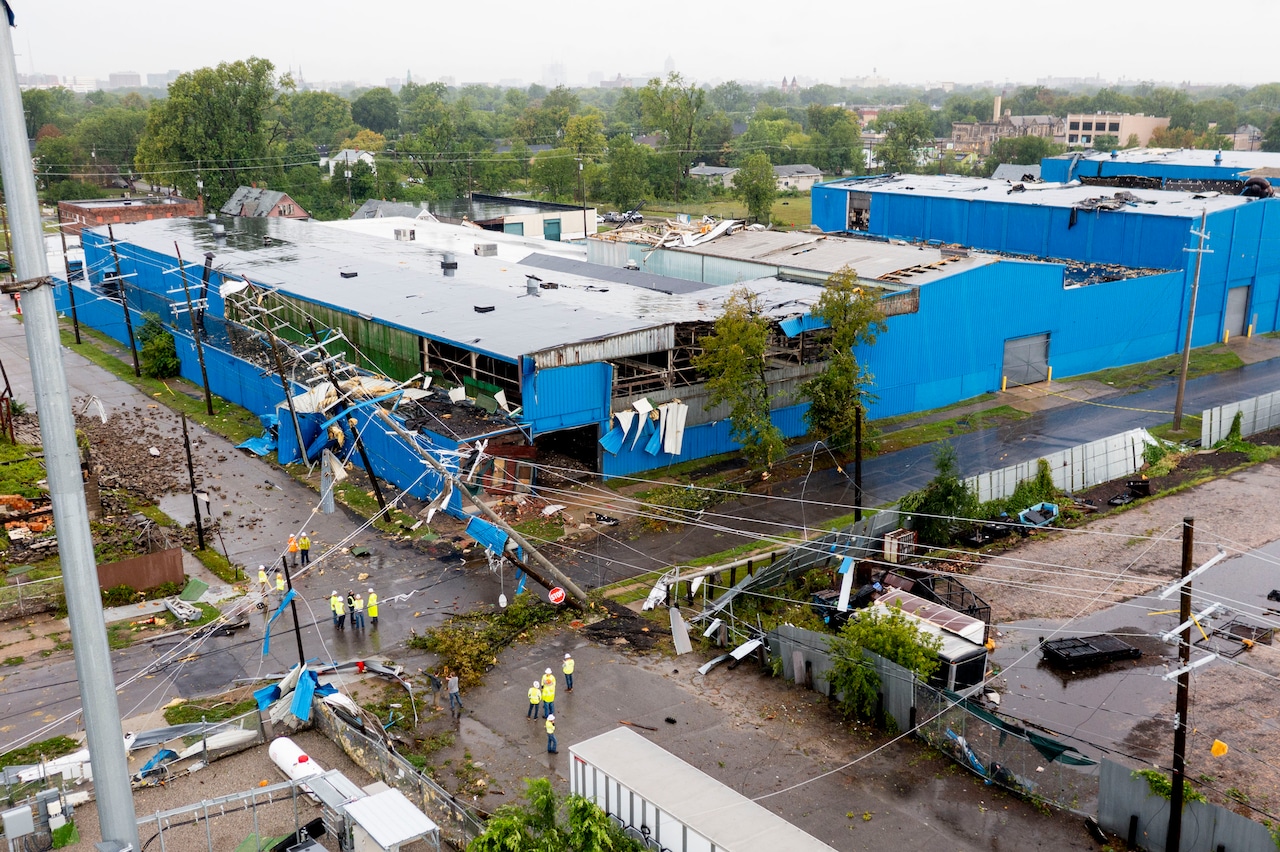
A tornado struck Detroit's lower east side on September 3, the city's first confirmed tornado since 1997. National Weather Service confirmed the storm touched down near Mt. Elliott Street and East Vernor Highway, then moved southeast toward Belle Isle. At least 20 properties suffered damage, roughly 80 trees fell, and more than 250,000 customers lost power across the region.
A man dislocated his shoulder protecting his newborn when a tree collapsed on his home, but officials reported no deaths or serious injuries in the tornado's path. The storm's strength and full extent of destruction were still under review as Detroit city departments and utility crews worked to clear debris and restore power.
First Detroit Tornado in 26 Years Tracks Across East Side
The tornado formed near Mt. Elliott Street and East Vernor Highway around midday on September 3. It carved a path southeast through the Islandview neighborhood toward Belle Isle, damaging homes and businesses along Concord Avenue, East Vernor Highway, Jefferson Avenue, and East Grand Boulevard. WHMI reported the storm was Detroit's first confirmed tornado since July 2, 1997, when an F2 tornado passed through Detroit, Highland Park, and Hamtramck.
Tree Damage and Power Outages Cripple Urban Infrastructure
Approximately 80 trees were uprooted or snapped by the tornado, bringing down power lines across the city. More than 250,000 customers in the Detroit region lost power initially, with severe storms contributing to roughly 530,000 outages across the broader Midwest and mid-Atlantic. MLive reported Detroit firefighters responded to 65 storm-related incidents, including downed power lines, structure fires, and trees crushing homes.
Why Urban Tornadoes Take Longer to Confirm
National Weather Service meteorologist Steve Considine explained that confirming a tornado in a city is harder than in rural areas. Surveyors must examine damage to many buildings and structures. They must distinguish tornado damage—which rotates and swirls—from damage caused by straight-line winds. Dense urban environments with interconnected infrastructure make this assessment complex and time-consuming.
Cleanup Reveals Bizarre Damage at Belle Isle
As Michigan Department of Natural Resources crews cleared debris at Belle Isle, they discovered the rowing scull "Spirit of Detroit" hanging from a tree near the historic Detroit Boat Club. Rouge Park also sustained major damage. City and utility workers focused on clearing fallen trunks and limbs, removing debris, restoring power, and assessing the full scope of property damage caused by the rare storm.
Sentiment
Mostly NegativeNEGATIVENEUTRALPOSITIVE
Publishers
21
Articles
9
Reach
30
A
AnonymousAuthor


