Floyd Lake Tornado Relief
Becker County Tornado Causes Extensive Damage Near Floyd Lake; Aid Efforts Continue for Residents
Anonymous
Key Points
1
Timeline and touchdown details: A funnel cloud was observed north of Lake Park around 7:30 p.m. before a tornado touched down in the Oakland Beach area along Floyd Lake at about 8:14 p.m., causing extensive damage to homes, trees, and power lines.
2
Geographic scope of damage: The hard-hit area was in Detroit Township, north of Detroit Lakes, including the corridor between U.S. Highway 59 and County Highway 21, with downed trees, power lines, and debris reported.
3
Assistance to residents: As of the reporting, 31 residents had received assistance through coordinated efforts among local, state, and nonprofit agencies, including the American Red Cross and The Salvation Army.
4
Shelter and debris management: An emergency shelter was set up at Minnesota State Community and Technical College, with the Becker County Landfill opened for demolition and tree debris and the Detroit Lakes compost site opened for smaller tree debris.
5
Agency response details: The incident response involved a wide array of agencies, including Becker County Sheriff's Office, multiple police departments (Detroit Lakes, White Earth, Callaway, Lake Park, Audubon), Minnesota State Patrol, Minnesota DNR Conservation, several fire departments, and EMS providers.
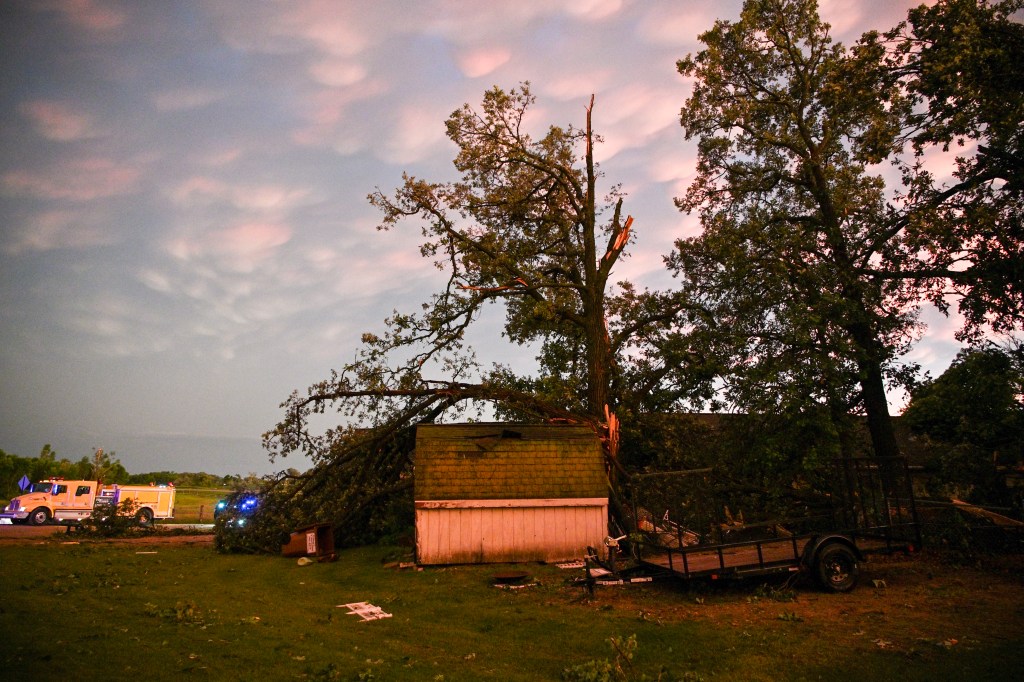
A tornado touched down near Floyd Lake in Becker County, Minnesota, on Monday, July 6, injuring three people and causing widespread damage to homes, outbuildings, and trees. The storm struck the Oakland Beach area at about 8:14 p.m., just minutes after a funnel cloud was spotted north of Lake Park at around 7:30 p.m., according to Ingstad Media.
The National Weather Service confirmed the tornado, which tore through Detroit Township, north of Detroit Lakes. Twin Cities reported that the damage corridor ran between U.S. Highway 59 and County Highway 21, where downed trees, power lines, and debris blanketed the area.
Tornado Cuts Through Oakland Beach Neighborhood Near Floyd Lake
The tornado carved a path of destruction through the Oakland Beach area along Floyd Lake. Homes, outbuildings, and trees suffered extensive damage. Power lines were knocked down across a wide stretch of the neighborhood. KARE 11 reported that two people were transported to a hospital with non-life-threatening injuries, while a third person sought care on their own.
Aerial footage showed the scale of the destruction. FOX 9 captured aerials of the Floyd Lake area revealing widespread debris fields and damaged rooftops across the neighborhood. Emergency crews moved door-to-door to check on residents and account for anyone still in the affected zone.
Dozens of Agencies Mobilized for Emergency Response
The response drew a broad coalition of agencies. The Becker County Sheriff's Office led coordination alongside the Detroit Lakes, White Earth, Callaway, Lake Park, and Audubon police departments. The Minnesota State Patrol, Minnesota DNR Conservation officers, multiple fire departments, and EMS providers all responded to the scene.
Access to the damaged areas was restricted to residents and those working on behalf of property owners. Officials organized the response quickly to keep the area safe while cleanup began. CBS News reported that the storm injured several people and caused significant damage to homes across the region.
31 Residents Receive Aid as Shelter and Cleanup Sites Open
As of the latest reporting, 31 residents had received assistance through coordinated relief efforts. The American Red Cross and The Salvation Army worked alongside local and state agencies to deliver that aid. An emergency shelter was set up at Minnesota State Community and Technical College for displaced residents.
Debris removal was organized across two sites. The Becker County Landfill opened to accept demolition waste and large tree debris. The Detroit Lakes compost site opened for smaller tree debris. Residents were directed to use both locations as cleanup efforts got underway across the damaged neighborhood.
Storm Confirmed as Tornado After National Weather Service Review
The National Weather Service officially confirmed that a tornado struck just north of Detroit Lakes. Ingstad Media reported that the confirmation came after survey teams assessed the damage pattern left by the storm. The funnel cloud was first seen north of Lake Park at 7:30 p.m., with touchdown confirmed at 8:14 p.m. in the Oakland Beach area.
Officials said relief efforts and damage assessments remained active in the days after the storm. Aid continued to reach affected residents through the network of local, state, and nonprofit partners. No life-threatening injuries were reported, but the full extent of property damage was still being tallied, according to Twin Cities.
Sentiment
Mostly NegativeNEGATIVENEUTRALPOSITIVE
Publishers
10
Articles
3
Reach
13
Topics
A
AnonymousAuthor


