Laser Weapons Funding
Lockheed Martin and nLight Win Major War Department Contracts for Advanced Laser Weapon Systems Development
Anonymous
Key Points
1
SCALED Directed Energy is noted as one of the Department of War's six Critical Technology Areas under the Office of the Under Secretary of War for Research and Engineering (OUSW(R&E)) for the JLWS program.
2
Lockheed Martin describes the 500 kW containerized laser system as 'the highest-power laser ever packaged in a transportable container,' highlighting advances in containerized, high-energy laser technology.
3
Following the defense funding announcement, nLight's stock jumped roughly 30% while Lockheed Martin's stock declined about 2%, illustrating mixed market reactions to the program
4
nLIGHT insiders sold about $31.5 million worth of shares in the last three months, with no purchases reported, signaling notable insider activity around the company amid the JLWS program.
5
nLIGHT leadership emphasizes its vertically integrated laser architecture, state-of-the-art beam-combination, precision tracking, and production capabilities as key factors for fielding across land and maritime environments.
The U.S. Department of War has handed out two major laser weapon contracts worth a combined $627 million, pushing directed-energy weapons closer to the battlefield. nLIGHT won a Joint Laser Weapon System deal with an initial $44 million payout and a ceiling of up to $627 million, according to Benzinga. Lockheed Martin also secured a separate award to build a 500 kW containerized laser system under the same program.
The deals sent shockwaves through defense markets. nLIGHT shares surged roughly 28–30% after the announcement, according to TS2 Tech. Lockheed Martin's stock slipped about 2%, showing how investors weighed the two companies' roles differently.
nLIGHT Lands $627M Deal to Build Next-Gen Laser Defenses
nLIGHT was selected for the Joint Laser Weapon System (JLWS) Other Transaction Authority agreement, according to Benzinga. The contract starts at $44 million and could grow to $627 million — more than double the company's expected 2025 sales. The goal is to move laser weapons from early prototypes into full production for U.S. forces.
nLIGHT leaders highlighted the company's vertically integrated laser design, advanced beam-combination technology, and precision tracking as key strengths. The system is built to work across land and maritime environments. MarketScreener noted the contract is designed to help protect the U.S. against cruise missiles and unmanned aerial systems.
Lockheed Martin Claims World's Most Powerful Portable Laser
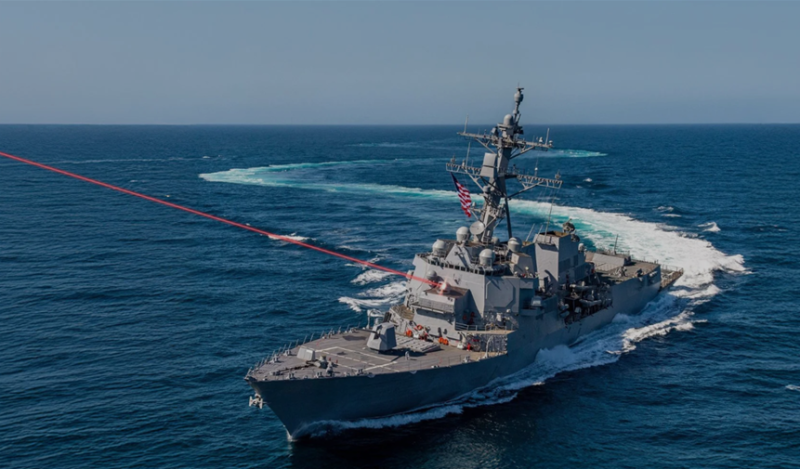
Lockheed Martin's award covers development of a 500 kW laser packed inside a transportable shipping container. The company calls it 'the highest-power laser ever packaged in a transportable container.' The program will start with a 150 kW prototype and scale up to 300–500 kW, powerful enough for serious missile defense work.
Lockheed is working with SCALED Directed Energy on the project. The Department of War lists Scaled Directed Energy as one of its six Critical Technology Areas under its Research and Engineering office. The total ceiling for the broader JLWS program sits at around $847 million. Leadership stressed that lasers offer speed-of-light engagement and virtually unlimited magazines compared to traditional missiles.
nLIGHT Stock Soars 30% as Investors Rush In
nLIGHT shares jumped about 28–30% on the news, according to TS2 Tech. That gain pushed the company into the spotlight as a pure-play defense laser stock. The $627 million contract ceiling is a massive number for a company that size, and Wall Street took notice fast.
Not everyone is buying, though — literally. nLIGHT insiders sold about $31.5 million worth of shares over the last three months, with no purchases reported. That insider selling may give some investors pause, even as the stock climbs on contract excitement. Lockheed Martin's 2% stock dip suggests larger investors saw the deal as a smaller piece of its massive portfolio.
Pentagon's Laser Push Signals Shift in Air Defense Strategy
The JLWS awards are part of a broader U.S. push to field directed-energy weapons at scale. Directed energy refers to weapons that use focused light — lasers — instead of bullets or missiles. They are cheaper per shot and harder to exhaust in a long fight. The Pentagon sees them as critical against swarms of drones and low-flying cruise missiles.
Both contracts emphasize speed. The goal is rapid fielding across land, air, and sea platforms. As defense budgets grow and drone threats multiply, the U.S. military is betting that high-powered lasers can fill gaps that traditional air defense systems cannot, according to MarketScreener.
Sentiment
Mostly PositiveNEGATIVENEUTRALPOSITIVE
Publishers
16
Articles
44
Reach
60
A
AnonymousAuthor


