July 4 Mall Evacuation
Severe Storms Force July 4 National Mall Evacuation, Disrupting Trump Speech
Anonymous
Key Points
1
Public safety officials expanded evacuation shelter options to include a broad slate of federal buildings and museums near the Mall, such as the Department of Commerce, Department of Education, Department of Agriculture, IRS, Voice of America Building, Thomas Jefferson Memorial, National Museum of American History, National Museum of Natural History, National Museum of African American History and Culture, and the Ronald Reagan Building.
2
Fireworks celebrations were still planned to proceed in other cities, with Chicago and New York continuing their displays as part of the national commemorations.
3
A U.S. Marine from Guinea became a new American citizen during the Mount Vernon event, illustrating personal milestones amid the Independence Day celebrations.
4
Donald Trump was scheduled to take the stage at the Lincoln Memorial at about 10 p.m. as part of the Freedom 250 program, despite the weather disruptions.
5
Audience reactions during evacuation announcements were mixed, with some attendees booing as authorities directed people to leave the grounds.
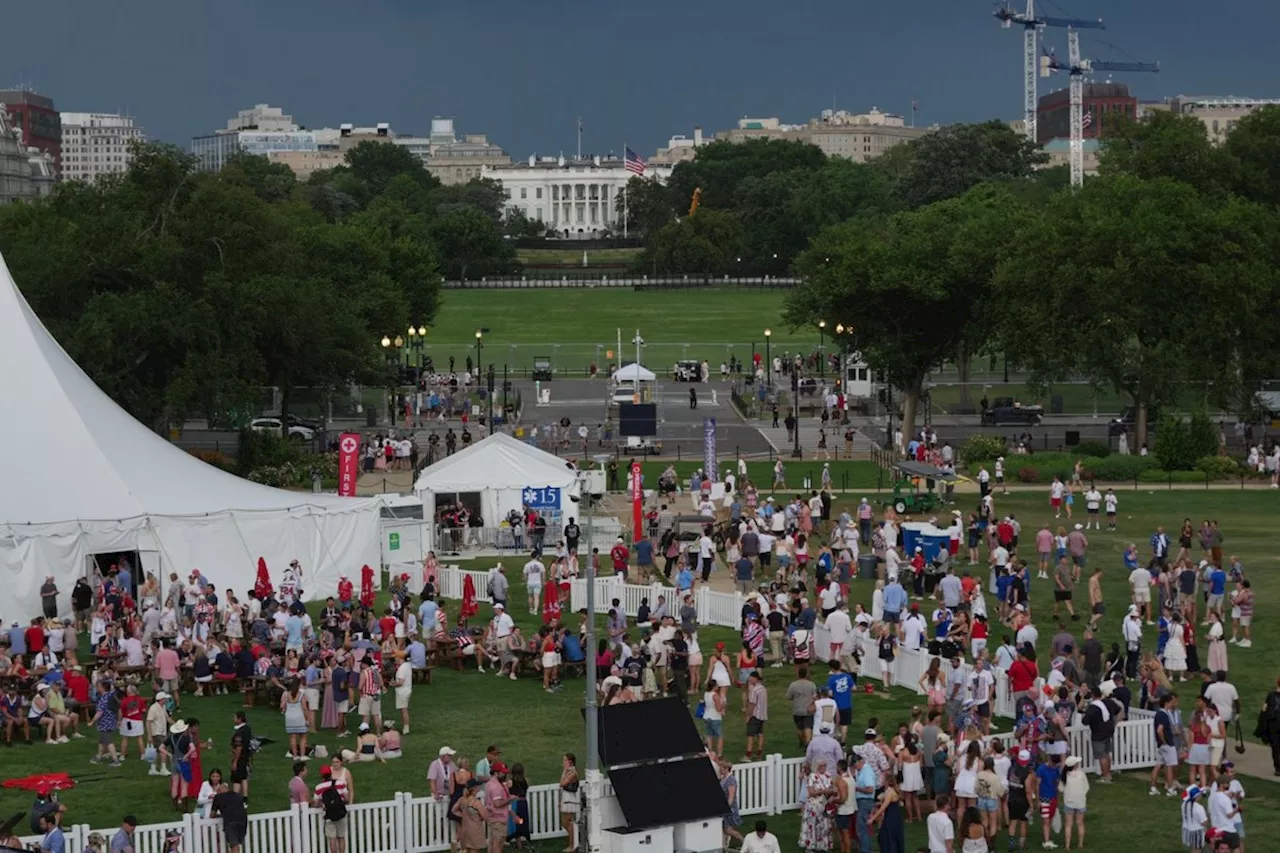
Severe storms swept through Washington on July 4, forcing a full evacuation of the National Mall just hours before President Donald Trump was set to speak at the Lincoln Memorial. Organizers of the Freedom 250 celebration — marking America's 250th anniversary of independence — cleared viewing areas and entrances as dangerous weather moved in, according to CP24 and Economic Times.
Despite the chaos, Trump confirmed he would still deliver his speech. "Trump plans to give his address," Freedom 250 organizers said, with the president scheduled to take the stage at around 10 p.m., Taylorville Daily News reported.
Storms Empty the Mall Hours Before Trump's Speech
Public safety officials moved quickly once severe storms threatened the National Mall. The Secret Service and National Park Service coordinated the evacuation, directing tens of thousands of attendees off the grounds. Some in the crowd booed as announcements told them to leave, according to CP24.
Extreme heat added to the danger even before the storms arrived. Officials stressed that the safety of guests, performers, and staff was the top priority. Organizers pushed updates in real time as conditions shifted throughout the evening.
Federal Buildings Open as Emergency Shelter for Evacuees
Officials expanded shelter options to cover a wide range of nearby federal buildings and museums. Attendees were directed to the Department of Commerce, Department of Agriculture, IRS, Voice of America Building, and the Thomas Jefferson Memorial, among others, according to Union Bulletin.
Cultural institutions also opened their doors. The National Museum of American History, National Museum of Natural History, National Museum of African American History and Culture, and the Ronald Reagan Building all served as refuge points. Organizers said they would update the public on when doors to the main event would reopen.
Trump Vows to Speak as Fireworks Plans Hold Elsewhere
Trump made clear the weather would not cancel his address. Freedom 250 organizers confirmed he planned to speak at the Lincoln Memorial, keeping the 10 p.m. slot on the schedule despite the disruption, Economic Times reported.
Other cities pressed ahead without interruption. Chicago and New York both continued their July 4 fireworks displays as part of national commemorations. The Washington events stood out as the most dramatically disrupted of the evening.
A Marine's Citizenship Oath Amid the Celebration's Chaos
Not all of the day's milestones were overshadowed by the storm. At a separate event at Mount Vernon, a U.S. Marine originally from Guinea became a new American citizen during an Independence Day ceremony. The moment captured the personal weight of the holiday even as the larger celebration struggled with the weather, according to CP24.
Sentiment
Mostly NegativeNEGATIVENEUTRALPOSITIVE
Publishers
14
Articles
144
Reach
158
Topics
A
AnonymousAuthor


