Iran's Isolated Oil
US Sanctions Deter Global Buyers From Iranian Oil, Forcing China to Remain Sole Major Purchaser
Anonymous

Key Points
1
Iran's ability to move oil is constrained by unresolved strategic frictions, including Tehran's control over the Strait of Hormuz and access to $6 billion in frozen funds (part of a $12 billion total), which are central to ongoing U.S.-Iran negotiations.
2
Diplomatic talks in Doha are contested in format and timing: the U.S. says the next round is in Doha, while Qatar stresses that no direct talks are planned, and Iran rejects direct negotiations, with President Trump making competing claims on the discussions.
3
The Treasury’s crypto crackdown is explicit: OFAC sanctioned Nobitex and three other Iranian digital-asset platforms as part of the broader pressure campaign, making such exchanges blacklisted for U.S. persons and driving about $1 billion in Iranian crypto assets into enforcement actions.
4
Beyond oil, the sanctions pressure is closing financial channels: banks that facilitate Iranian oil trades face potential cutoffs from the U.S. financial system, making settlement harder and more expensive as non-Chinese buyers pull back.
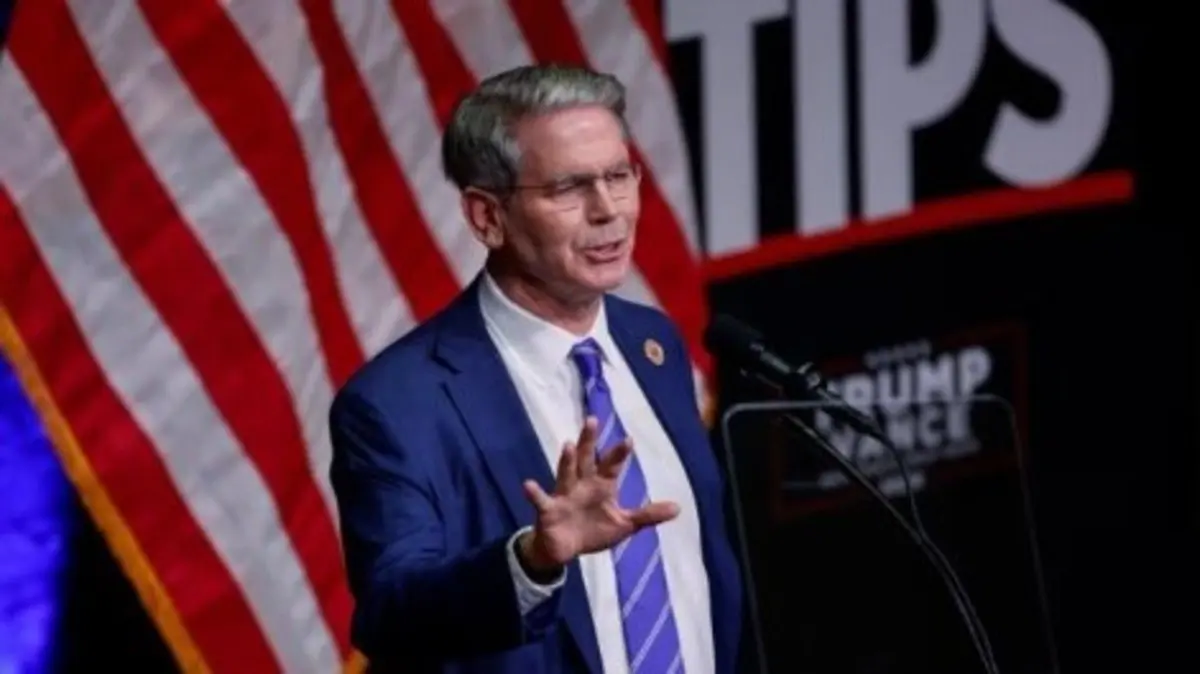
U.S. Treasury Secretary Scott Bessent declared this week that China is now the only major buyer of Iranian oil, as non-Chinese refiners pull back to avoid U.S. sanctions, according to Iran Wire and Middle East Monitor. Iran's daily exports have dropped to roughly 1.5 million barrels — down from 1.9 million barrels at their 2025 peak — with about 92% now flowing to China alone.
Bessent framed the situation bluntly: "The window for 'gray market' trading is closing. Non-Chinese buyers now face a binary choice — trade with the global financial system or trade with Tehran. You cannot do both." The warning signals that Washington's renewed pressure campaign is reshaping who buys Iranian crude and at what price.
China Gains Pricing Power as Iran's Only Customer
With no other major buyers, Iran is forced to sell oil at a steep discount. Chinese "teapot" refineries — small independent processors — pay roughly $15 per barrel below the Brent crude benchmark to compensate for sanctions risk. That discount drains Iran's foreign exchange reserves and squeezes a government already battling inflation above 40%.
Analysts warn the arrangement gives Beijing enormous leverage. "By making China the sole buyer, the U.S. has inadvertently given Beijing massive pricing power," said Dr. Elena Rodriguez of the Oxford Institute for Energy Studies. Iran's energy infrastructure is also growing more dependent on Chinese technology and investment, effectively turning Tehran into a junior partner in China's regional energy strategy. Beijing, for its part, insists the purchases are "legitimate, legal, and must be respected by third parties."
OFAC Sanctions Hit Iranian Crypto Platforms Hard
The Treasury's pressure extends beyond oil. The Office of Foreign Assets Control (OFAC) — the U.S. agency that enforces sanctions — blacklisted Nobitex, Wallex, and Excoino, three of Iran's largest digital asset exchanges, according to Crypto Briefing. The move froze or disrupted roughly $1 billion in Iranian crypto assets.
Iran had turned to cryptocurrency to bypass the SWIFT banking network — the global system banks use to transfer money. By targeting these platforms, the U.S. is showing that crypto is not a safe escape route. Any bank that helps move Iranian oil money now risks being cut off from the entire U.S. financial system, making settlement harder and more costly for any buyer who stays in the trade.
Doha Talks Shrouded in Confusion and Competing Claims
Diplomatic back-channel activity continues, but the details are murky. The U.S. says the next round of talks will take place in Doha. Qatar says no direct talks are planned. Iran insists it will not negotiate under threat. President Trump, meanwhile, has claimed a deal is "very close" — a statement Tehran's Foreign Ministry called "a fabrication of the American media machine."
At the center of those talks is a $12 billion pile of frozen Iranian funds — $6 billion held in Qatar and another $6 billion in Japan and South Korea. Washington is using the possible release of those funds for humanitarian purposes as its main bargaining chip. Iran's pragmatic officials want access to the money to fight runaway inflation, but the Revolutionary Guard reportedly favors continued smuggling over any deal.
Strait of Hormuz Threat Looms Over the Pressure Campaign
Analysts at Lloyd's List warn that if China's purchases of Iranian oil are further squeezed, Tehran may turn to "tanker harassment" in the Strait of Hormuz to drive up global oil prices. Iran controls this narrow waterway, through which about 20% of the world's traded oil passes. Any disruption there would spike energy costs worldwide and could force Washington to ease its pressure.
As UAE and Turkish banks pull back from Iranian transactions, informal money-transfer costs for Iranian merchants are expected to rise 20–30%, according to Reuters research, deepening the squeeze on ordinary Iranians. Human rights groups warn that "compliance overreach" by nervous banks is also blocking payments for imported medicines, which are technically exempt from sanctions but practically difficult to clear.
Sentiment
Mostly NegativeNEGATIVENEUTRALPOSITIVE
Publishers
11
Articles
2
Reach
13
A
AnonymousAuthor