Iran Oil Sanctions Return
US Reimposes Iran Oil Sanctions Early, Leaving Millions of Barrels Without Buyers and Rattling Global Markets
Anonymous
Key Points
1
The waiver allowing Iranian oil sales was a 60-day window issued in late June, permitting production, delivery, and sale without US penalties until August 21.
2
The sanctions were reimposed ahead of the August 21 expiry, with a new deadline set for July 17, signaling an accelerated timeline in response to the attacks in the Strait of Hormuz.
3
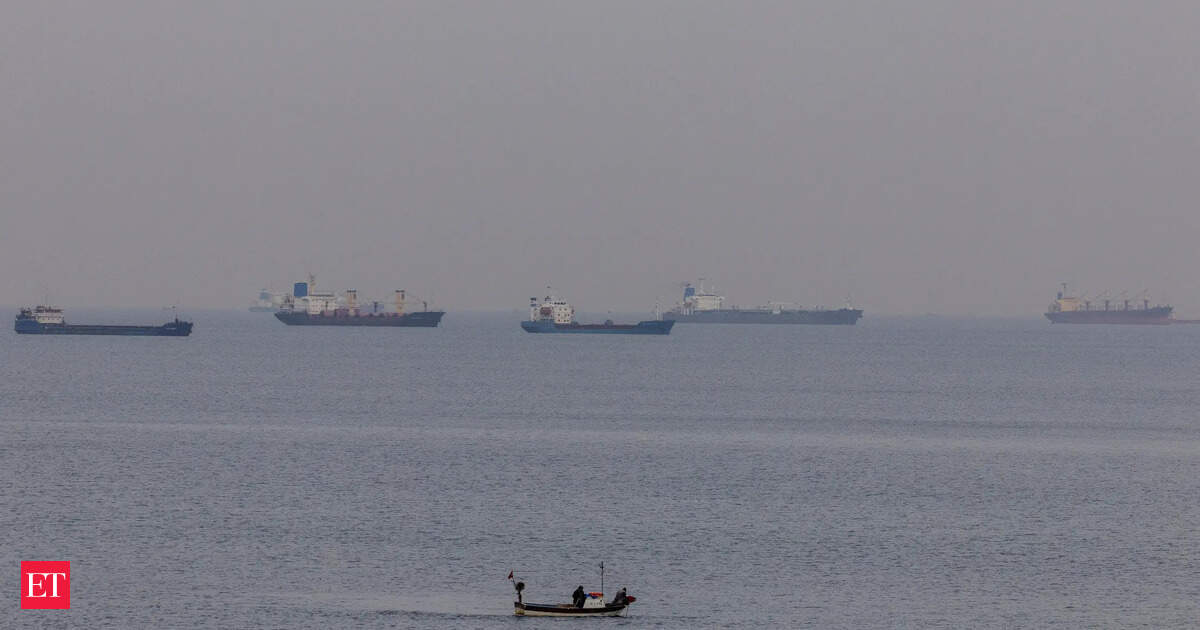
An estimated 60–63 million barrels of Iranian oil are currently afloat or idling on tankers in the Persian Gulf and Asian waters, with buyers unclear following the waiver revocation.
4
Oil prices rose by more than 5% on the news, underscoring concerns about potential supply disruptions through the Strait of Hormuz.
5
Iran condemned the US actions as a breach of the Islamabad MoU and warned of decisive countermeasures, with officials describing the moves as 'blatant violations' of Articles 1, 2, and 10 and pledging to safeguard national interests.
The United States revoked a temporary waiver allowing Iranian oil sales on July 7, 2026, after three tankers were hit by projectiles near the Strait of Hormuz. The move leaves an estimated 63 million barrels of Iranian crude stranded at sea with no clear buyers, according to Bloomberg.
Oil prices surged more than 6.5% on the news, with Brent crude jumping to $79 per barrel. President Trump declared the U.S.-Iran ceasefire officially 'over' the following day, calling Iranian officials 'scum' and 'liars' at the NATO Summit in Ankara, Turkey.
How a 60-Day Peace Deal Collapsed in 24 Hours
The crisis traces back to June 17, 2026, when the U.S. and Iran signed the Islamabad Memorandum of Understanding — a 14-point interim peace deal brokered in Switzerland. As part of the deal, the U.S. Treasury issued General License X on June 21. That waiver let Iran sell oil freely until August 21 and lifted the U.S. naval blockade on Iranian ports.
On July 7, three tankers were struck near Oman: the Qatari LNG carrier Al Rekayyat, the Saudi-flagged Wedyan, and the Liberian-flagged Cyprus Prosperity. Within hours, OFAC Director Bradley T. Smith signed General License X1, revoking the waiver and setting a new deadline of July 17 — more than a month early. That same afternoon, U.S. forces struck over 80 Iranian military targets, including 60 Revolutionary Guard small boats.
63 Million Barrels of Iranian Oil Stuck at Sea
The waiver's sudden end leaves about 63 million barrels of Iranian crude idling on tankers across the Persian Gulf and Asian waters, according to Economic Times, citing Vortexa data. Buyers are vanishing fast. Any company that purchases Iranian oil now risks being hit with U.S. secondary sanctions — penalties that can cut a firm off from American markets entirely.
To move the oil, Iran must offer deep discounts — estimated at $10 to $12 per barrel — to persuade Chinese independent refiners to take the legal risk. The stranded cargo represents a potential $8 billion to $10 billion in lost revenue for Tehran. Meanwhile, the Indian supertanker Lila Vadinar turned around mid-transit on July 8, a sign of just how fast shipping confidence has collapsed.
Iran Calls It a Treaty Violation, U.S. Calls It Payback
Iran denied attacking the three tankers, pointing out the strikes occurred during the funeral of Supreme Leader Ayatollah Ali Khamenei — killed in a U.S.-Israeli strike on February 28, 2026. Deputy Foreign Minister Kazem Gharibabadi posted on X that the revocation was a 'blatant violation of Article 10' of the Islamabad MoU, warning the U.S. 'will bear responsibility for the consequences.'
Washington pushed back hard. U.S. officials said the deal was strictly 'performance-based' — Iran had to guarantee safe passage through the Strait of Hormuz. Qatar summoned Iran's deputy ambassador after the attack on its LNG carrier. Qatari Foreign Ministry spokesman Majed Al Ansari stated: 'We hold Iran fully legally responsible for this attack and for any resulting damages.'
Energy Markets Brace for a Prolonged Strait of Hormuz Crisis
The Strait of Hormuz carries roughly one-fifth of all global oil and LNG traffic in normal times. With the threat level raised to 'Severe,' shipowners now face a dangerous choice: use the U.S.-backed Omani coastal route and risk Iranian drone attacks, or use the central channel and risk triggering U.S. sanctions. Either path is costly. Brent crude's 6.5% jump on July 8 reflects that fear.
Energy analyst Bob McNally of Rapidan Energy Group noted that Trump originally backed the Islamabad MoU to prevent an 'economic catastrophe' and cool U.S. gas prices before midterm elections. That calculation has now reversed. If the strait stays contested, analysts warn oil could push well past $80 per barrel, adding fresh pressure to inflation in the U.S. and Europe.
Sentiment
Mostly NegativeNEGATIVENEUTRALPOSITIVE
Publishers
49
Articles
144
Reach
193
A
AnonymousAuthor


