Defense Cooperation Expands
Japan and Australia Deepen Defense Cooperation, Announcing Hypersonic Missile Tests in Australia
Key Points
The Boobook project includes co-developing an enhanced laser system that can be mounted on land combat platforms and littoral platforms, with the initiative named after an Australian owl that sees in the dark, and Japanese officials calling the agreement groundbreaking.
A mechanism to enable Japan Self-Defense Forces to conduct test launches of stand-off missiles, such as hypersonic missiles, in Australia has been agreed, described by Japanese Defence Minister Koizumi as potentially groundbreaking.
The two countries agreed to begin discussions on Japan using Australian ranges for long-range missile tests, with Nikkei reporting this would be Japan's second missile-range agreement with a foreign partner after the United States.
The talks touch on Japan's counterstrike capability, including an upgraded Type 12 extended-range missile and the Hyper Velocity Gliding Projectile program, with potential testing on Australian ranges alongside plans to acquire Tomahawk cruise missiles.
Australia and Japan are moving to test a prototype laser weapon developed in cooperation with Japanese companies, signaling deepening high-tech defense collaboration beyond traditional missiles.
Japan and Australia have agreed to test hypersonic missiles — weapons that fly faster than Mach 5 — on Australian soil, marking a major step in defense cooperation between the two nations. Japanese Defence Minister Shinjiro Koizumi called the deal "groundbreaking" and "second only to similar cooperation with the United States," according to Bernama.
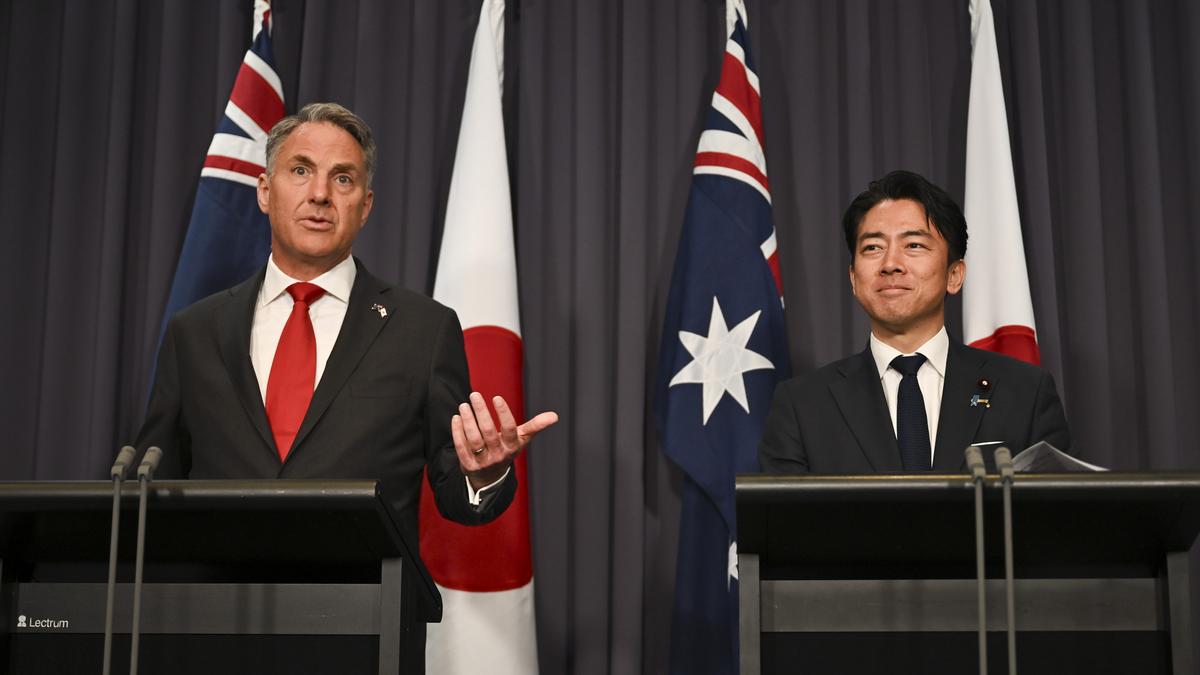
The agreement, reached after talks between Koizumi and Australian Defence Minister Richard Marles, also covers laser weapons and long-range missile development. Together, the two countries are pushing to build stronger military ties as China increases its activity across the Indo-Pacific.
Hypersonic Missile Tests Headed to Australian Ranges
Japan's Self-Defense Forces will be able to launch stand-off missiles — weapons fired from a safe distance — on Australian test ranges under the new deal. This includes the Hyper Velocity Gliding Projectile, a weapon that glides at extreme speeds after launch. The West reported that Japan sees Australian ranges as critical because its own territory offers limited space for long-range tests.
Nikkei reported this would make Australia Japan's second missile-range partner after the United States. Japan is also developing an upgraded Type 12 extended-range missile and plans to buy Tomahawk cruise missiles. The two governments agreed to start formal talks on how Japanese forces will use Australian ranges over the next decade.
Project Boobook Brings Laser Weapons Into the Partnership
Beyond missiles, Japan and Australia are co-developing a laser system designed to detect and destroy threats in the dark. The project is called "Boobook," named after an Australian owl known for its night vision. Japanese officials say the laser can be mounted on land combat vehicles and coastal patrol ships, according to The Edge Malaysia.
The two countries are now moving toward testing a prototype laser weapon built with Japanese companies. This marks a shift beyond traditional guns and missiles into high-tech defense tools. Koizumi called the Boobook agreement "groundbreaking," saying it opens new ground in what the alliance can build together.
Japan's Counterstrike Push Drives Regional Realignment
Japan is racing to build what it calls "counterstrike capability" — the ability to hit enemy bases before they can fire. This is a sharp change from Japan's long-held purely defensive posture. Tokyo is spending record sums on weapons and is now seeking allies who can help it test and develop long-range strike tools, The West reported.
Australia fits that role well. Its vast, remote test ranges give Japan room to fire missiles over long distances without risking populated areas. The deal signals that both countries see each other as core partners — not just in training and intelligence sharing, but in building and testing the next generation of weapons.
Sentiment
Mostly PositivePublishers
10
Articles
18
Reach
28


