Etched: AI Inference's Next Titan
AI Inference Chip Startup Etched Reaches $21 Billion Valuation in Latest Funding Round
Key Points
New investors SK Hynix and Diffusion Capital joined Etched's July 31 Series C, signaling broader strategic and semiconductor-industry interest alongside existing backers such as Jane Street and a16z.
Etched publicly emerged from stealth on June 30, and its rapid fundraising—culminating in a late July Sequoia-led $300 million Series C—highlights swift investor enthusiasm for Nvidia alternatives.
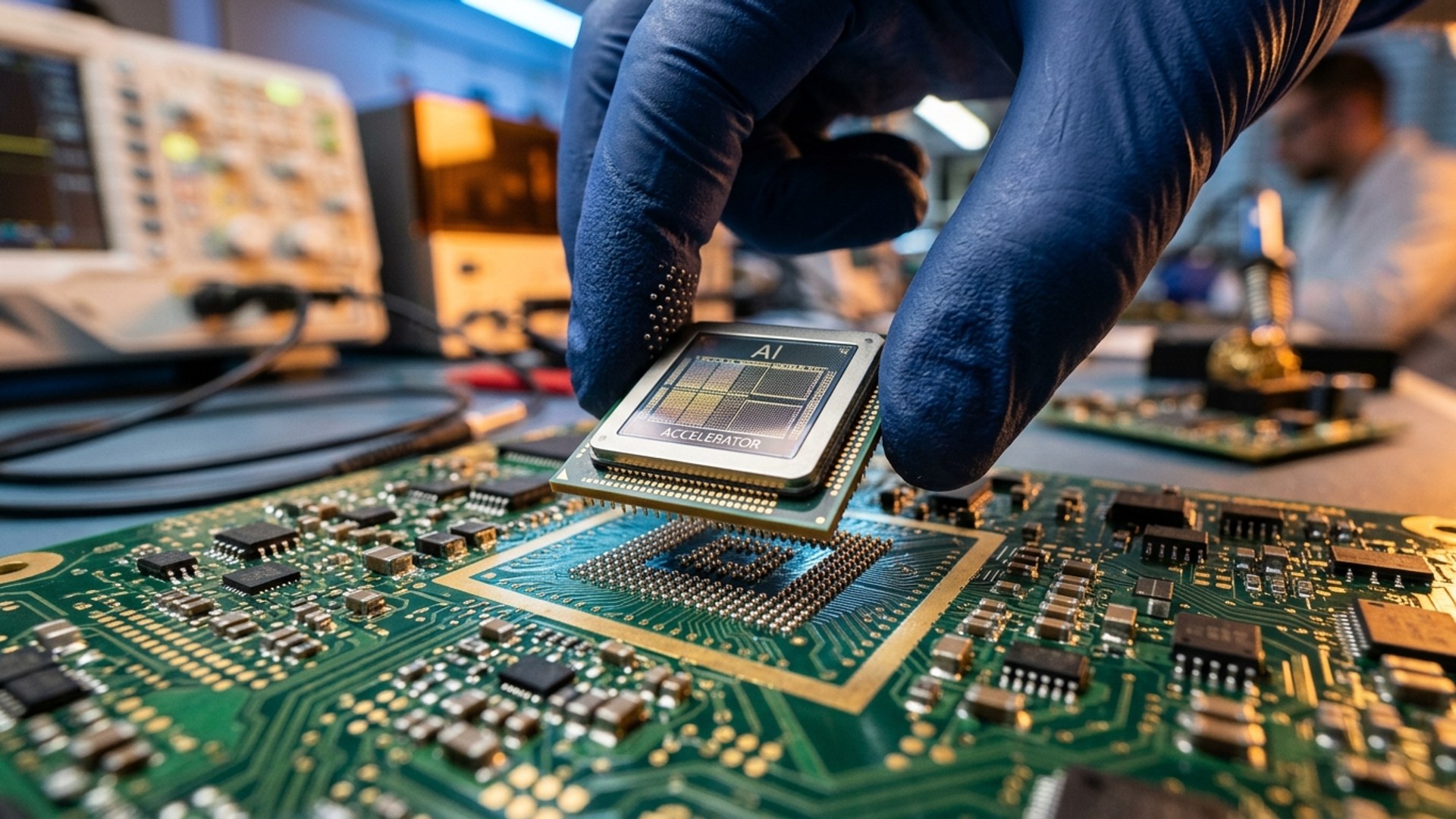
Etched's architecture is described as a two-phase inference stack: a prefill phase using low-voltage inference to run cooler and faster, and a decode phase with a Cluster Scale Memory design that enables shared memory across racks to reduce data copying.
Industry outlook cited in the coverage points to the AI inference market potentially reaching about $1.3 trillion by 2032, underscoring why entrants are pursuing Nvidia-alternative stacks.
AI chip startup Etched has raised $700 million in a new funding round, pushing its valuation to $21 billion, according to Reuters. The round was led by Jane Street, with Kleiner Perkins, Sequoia, Andreessen Horowitz, and Tiger Global also participating.
The deal roughly doubled Etched's valuation in under a month. The company was worth $10.3 billion after a Sequoia-led $300 million Series C in late July, Kansas.com reported. The speed of the jump signals strong investor appetite for chips that can challenge Nvidia's dominance in AI hardware.
Jane Street Becomes First Customer With Rack Purchase
Jane Street is not just Etched's lead investor — it is also the company's first customer. The trading firm received a full rack of Etched's AI processors and is already using them, according to Unite.ai. That makes Jane Street both a financial backer and a real-world test case for the hardware.
Etched says it has locked in more than $1 billion in customer contracts. Buyers include public and private AI firms as well as cloud providers. The company sells full rack systems built specifically for AI inference — the stage where a trained model actually responds to user prompts.
Etched's Two-Phase Chip Design Targets Speed and Cost
Etched's chips are not general-purpose like Nvidia's GPUs. They are built only for AI inference. The company uses a two-phase approach. The first phase — called prefill — runs at low voltage to stay cool and fast. The second phase uses a design called Cluster Scale Memory, which lets racks share memory across machines and cuts down on data copying, Unite.ai reported.
The company says this design lets its chips run AI models faster and cheaper than standard GPUs. Co-founder and CEO Gavin Uberti has described the goal as rebuilding the AI hardware stack "from first principles" to create a real alternative to Nvidia.
Rapid Rise From Stealth to $21 Billion in Weeks
Etched only stepped out of stealth on June 30. Within a month, it had closed a $300 million Series C at a $10.3 billion valuation. Then came this latest $700 million round at $21 billion — a doubling of its value in less than 30 days, according to Star-Telegram.
New investors SK Hynix and Diffusion Capital joined the Series C, adding semiconductor-industry credibility alongside existing backers. The pace of fundraising is unusually fast even by AI startup standards and reflects how urgently investors want to back an alternative to Nvidia.
A $1.3 Trillion Market Draws Rivals to Nvidia's Turf
The AI inference market could reach about $1.3 trillion by 2032, according to industry projections cited by Unite.ai. That massive number explains why investors are pouring money into companies like Etched. Inference is where AI makes money — every chatbot reply, every image generated, every search result runs on inference chips.
Nvidia currently dominates that market with its GPUs. Etched is betting that a chip built only for inference — with no general-purpose overhead — can be faster and cheaper at scale. If it can deliver, the startup could carve out a significant slice of one of the fastest-growing markets in tech.
Sentiment
Mostly PositivePublishers
15
Articles
78
Reach
93