Aerospace Acquisition Deal
GE Aerospace announces $11.75 billion acquisition to secure critical turbine parts supply.
Anonymous
Key Points
1
GE Aerospace has been a customer of CPP for more than 15 years, making the acquisition an expansion of a long-standing commercial relationship.
2
CPP is being acquired from private-equity firms Warburg Pincus and Berkshire Partners. The company was founded in 1991 and is headquartered in Cleveland, Ohio.
3
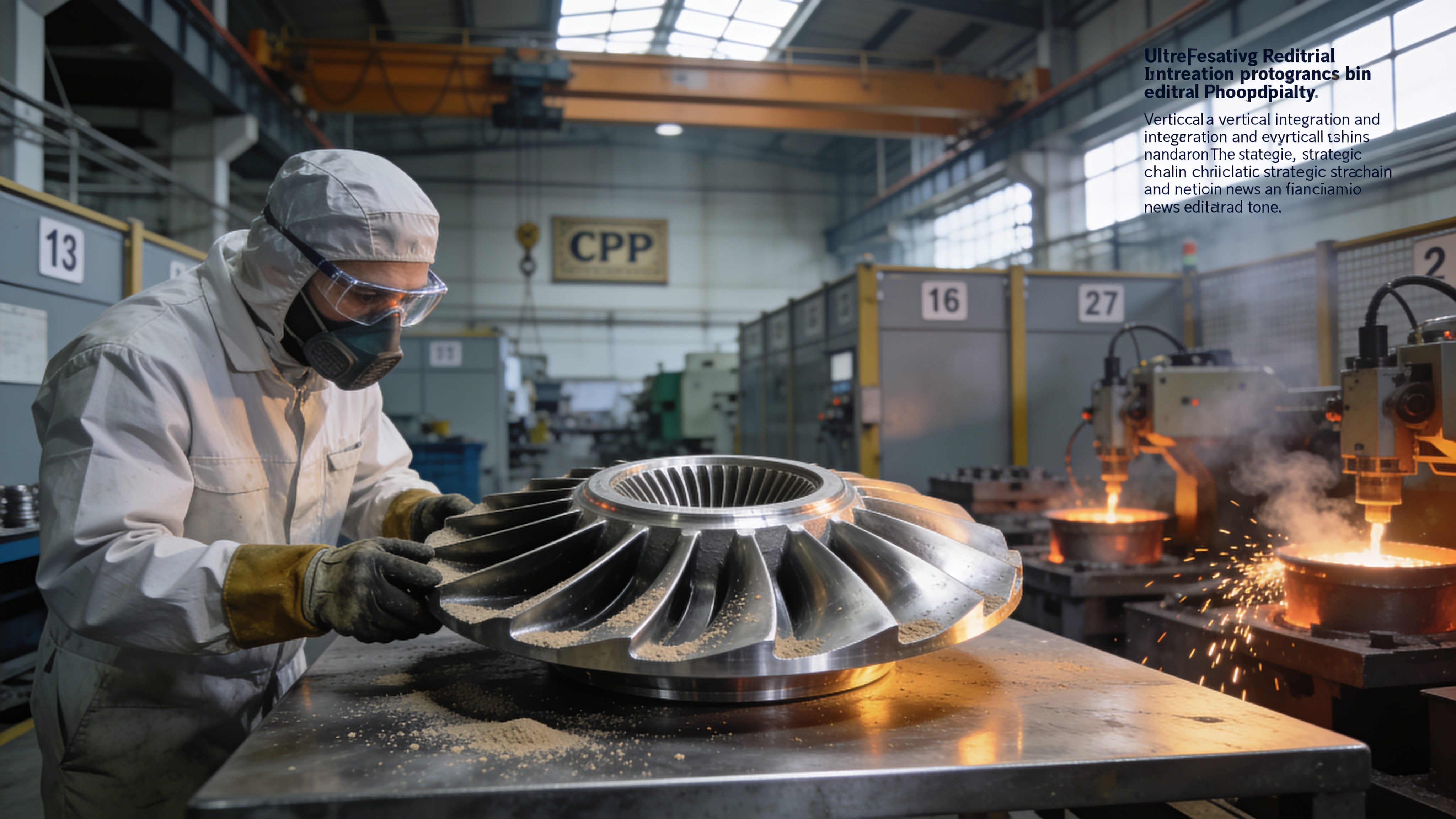
Advanced turbine blades and vanes can be cast as single, continuous metal crystals to withstand extreme heat and mechanical stress; the manufacturing process is highly complex, and even microscopic defects can cause component failure.
4
The deal values CPP at about 26 times projected 2027 EBITDA before synergies and roughly 18 times after expected cost efficiencies; GE management also expects the transaction to be accretive to earnings per share in the first full year after closing.
GE Aerospace agreed to acquire Consolidated Precision Products for $11.75 billion, marking the aerospace spinoff's largest deal since becoming independent in 2024. According to Yahoo Finance, the acquisition will bring critical casting capacity in-house and help address supply-chain constraints amid strong demand for commercial engines, aftermarket parts, and defense equipment.
CPP, based in Cleveland and employing 6,600 people across 20+ facilities, produces precision castings from superalloys and other metals for aircraft turbines and weapons systems. CEO Larry Culp stated that "investing in mission-critical casting capacity is needed to support the strong simultaneous demand across commercial engines, aftermarket and defense." The deal is financed with $7 billion in cash and roughly $4.75 billion in new debt, with closing expected in late 2027.
Why Casting Capacity Is the Bottleneck
Precision castings—liquid metal poured into molds to form turbine blades and vanes—represent what Reuters calls the "intractable chokepoint" in post-COVID aerospace manufacturing. Advanced turbine blades are cast as single, continuous metal crystals to withstand extreme heat and mechanical stress. Even microscopic defects can cause component failure, making the manufacturing process extraordinarily complex.
A 15-Year Supplier Relationship Becomes Vertical Integration
GE Aerospace has been CPP's largest customer for over 15 years, relying on its castings for engines including the LEAP, GEnx, T700, and F110 lines. AviTrader reported that CPP is being sold by private-equity firms Warburg Pincus and Berkshire Partners, who have owned the company since 2011. CEO James Stewart called GE "a great partner" and expressed excitement about deepening the relationship.
This move mirrors a broader industry shift toward vertical integration. Reuters notes that Pratt & Whitney opened an in-house casting foundry in North Carolina, while Rolls-Royce is expanding facilities in the UK. Jet engine makers are pivoting from acquiring new aircraft orders to controlling production execution and supply chains.
A Steep Valuation Carries Execution Risk
GE is paying roughly 26 times CPP's projected 2027 EBITDA before synergies, or about 18 times after expected cost efficiencies. Quiver Quant reported that GE Aerospace shares dropped 3.3% on investor caution over the deal's size and added debt financing. The company projects $200 million in net cost synergies and targets double-digit returns on invested capital by year five.
Jefferies analyst Sheila Kahyaoglu characterized the acquisition as "an impactful move" that adds roughly 1.5% to GE's 2028 EPS forecast. The deal is expected to be accretive to earnings per share in the first full year after closing. However, a 12- to 18-month regulatory approval timeline creates execution risk for a company managing a $210+ billion engine order backlog.
Scaling Production With GE's Operating Model
GE plans to deploy its proprietary lean operating system, called FLIGHT DECK, across CPP's 20+ plants to boost output and improve quality. Aero-Mag reported that GE expects the acquisition to support faster adoption of new engine technologies. The company projects a greater-than-30% surge in internal demand for airfoils by 2030 compared to 2026 levels—demand that internal capacity must now satisfy.
Despite the vertical integration, GE management emphasized that CPP will continue serving non-GE customers across the aerospace and defense sector. CEO Culp stated in an Aviation Week interview that he does not expect antitrust barriers to closing the deal. CPP generated roughly $2 billion in projected 2027 revenue, with about 70% stemming from commercial and defense engines.
Sentiment
Mostly PositiveNEGATIVENEUTRALPOSITIVE
Publishers
25
Articles
61
Reach
86
A
AnonymousAuthor


