Aerospace Electrification Breakthrough
GE, NASA, BETA, and Boeing Partner to Complete First High-Altitude Hybrid-Electric Flight
Anonymous
Key Points
1
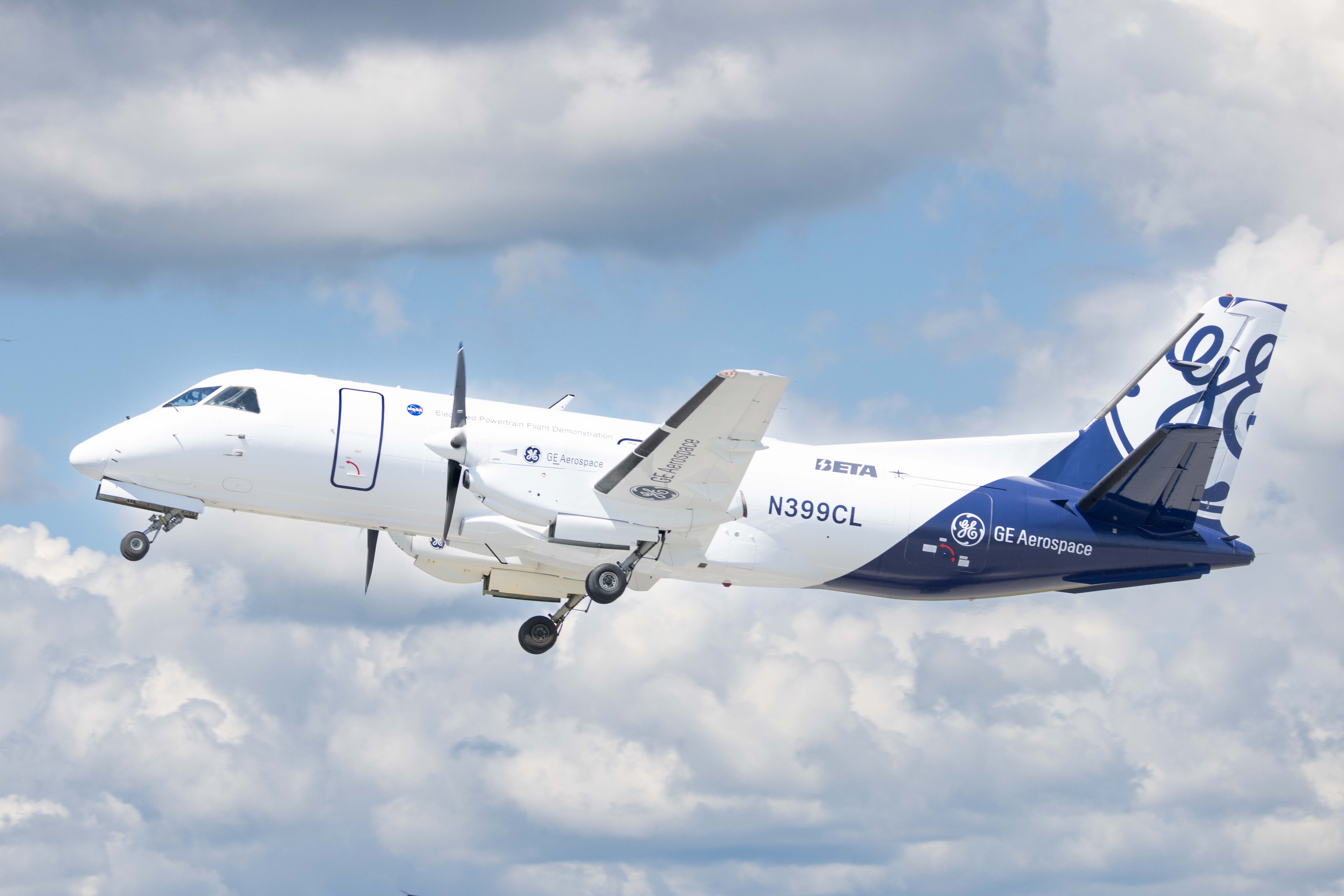
The Saab 340B testbed's right side was redesigned to fit inside an inverted nacelle, providing extra ventilation for the hybrid-electric system.
2
The flight campaign was developed under NASA’s Electrified Powertrain Flight Demonstration (EPFD) program, illustrating explicit government-backed efforts to advance electrified propulsion.
3
The hybrid propulsion hardware stack on the testbed includes GE motor/generators, power converters and inverters, controllers, Avio Aero gearboxes, Dowty propellers, Unison heat exchangers, torque sensing, engine harnesses, and a CT7 engine, with batteries from BAE Systems and the nacelle from Aurora Flight Sciences.
4
GE’s $300 million equity investment in BETA is framed as an option on a future hybrid-electric propulsion architecture rather than an immediate revenue driver.
Aviation history was made at Farnborough 2026 when GE Aerospace, NASA, BETA Technologies, and Boeing flew a hybrid-electric aircraft above 30,000 feet for the first time ever. The flight lasted over two hours and used a modified Saab 340B testbed, according to Post Register.
The milestone caps years of government-backed development under NASA's Electrified Powertrain Flight Demonstration program. It signals that hybrid-electric propulsion — long a concept — can now work at real commercial airline altitudes, Daily Guardian reported.
What Flew and How the Hardware Worked
The Saab 340B was heavily modified for the flight. Its right side was redesigned to fit inside an inverted nacelle that gave extra ventilation to the hybrid-electric system, according to Aviation Business News. The nacelle itself was built by Aurora Flight Sciences.
The full hardware stack was a team effort. GE supplied motor/generators, power converters, inverters, and controllers. Avio Aero provided gearboxes. Dowty built the propellers. Unison handled heat exchangers. BAE Systems supplied the batteries. A GE CT7 engine powered the whole system, Aviation Week reported.
BETA Becomes GE's Bet on Electric Propulsion
GE did not just partner with BETA Technologies — it invested $300 million in the company. That equity stake is not about quick returns. It is an option on the future of hybrid-electric propulsion architecture, according to Markets Financial Content.
BETA served as systems integrator for the entire flight campaign. GE brings certification experience and safety know-how. BETA brings electric-propulsion expertise. Together, they cover the full stack — turbine, power extraction, and integration — across future airframes.
NASA's Program Pushed the Tech Past Key Benchmarks
The flight was not a solo stunt. It ran under NASA's Electrified Powertrain Flight Demonstration program, which sets clear benchmarks for electrified propulsion. GE's 2025 Passport-based demo reportedly exceeded those benchmarks before the Farnborough flight even happened, according to Daily Guardian.
Government backing matters here. NASA's program gives companies a clear target and helps share the cost of expensive flight testing. The result is a megawatt-class hybrid-electric system — one powerful enough for regional and potentially larger aircraft — validated at altitude.
A Staged Path to Cleaner Flight, Not a Battery Moonshot
The team's strategy is deliberate. Rather than waiting for battery technology to catch up, GE's approach uses turbines to generate electricity onboard first. Storage gets added gradually as batteries improve. It is a step-by-step road to electrification, not a leap, Aviation Business News reported.
That approach has value beyond commercial aviation. GE sees hybrid-electric systems fitting civil and defense platforms alike. The Farnborough flight showed the hardware works above 30,000 feet — the altitude where most commercial flights cruise. That makes the technology real, not just a lab result.
Sentiment
Mostly PositiveNEGATIVENEUTRALPOSITIVE
Publishers
24
Articles
103
Reach
127
A
AnonymousAuthor


