Flex $4.4B EPC Power deal plans spin-off
Flex $4.4B EPC Power deal plans spin-off
Anonymous
Key Points
1
Flex said the acquisition is tied to a “generational shift in power architecture,” with CEO Revathi Advaithi noting that the change is driven by “rising power density and the changing demands of digital infrastructure,” and that adding EPC Power expands Flex’s ability to design and deliver digital infrastructure as an integrated product.
2
MarketWatch reported EPC Power is on pace to generate about $800 million of revenue this year, and Flex expects the deal to improve the growth and margin profile of its Cloud and Power Infrastructure segment.
3
Flex is evaluating financing alternatives and expects to fund the purchase with a combination of debt and equity (rather than only cash).
4
EPC Power’s business details included an emphasis on 800V data-center architectures: its technology is geared toward modern 800-volt setups, its pipeline includes rectifiers, DC-to-DC energy converters, and “upcoming solid-state transformer technology,” and it expects to expand domestic manufacturing throughput beyond 30 gigawatts in 2027.
5
Stock reaction was mixed immediately after the announcement: Flex shares rose nearly 2% on Thursday but fell about 1.6% in after-hours trading, according to TradingView’s repost of market commentary.
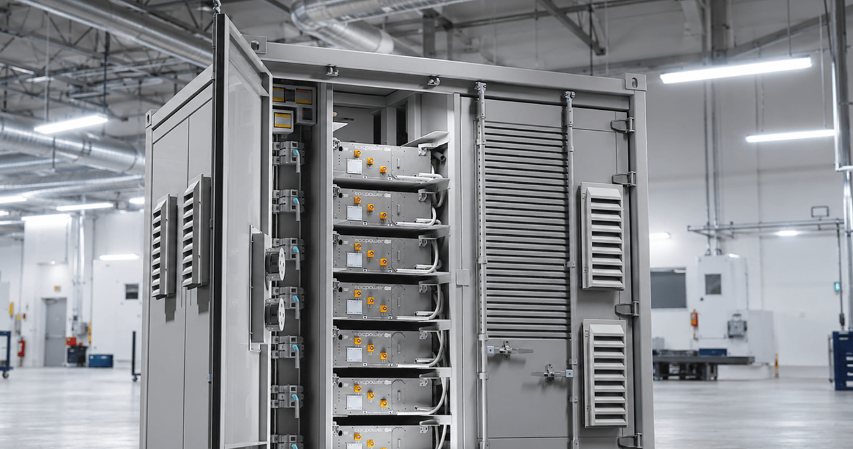
Flex has agreed to buy EPC Power for $4.4 billion to solve a critical problem: AI data centers are demanding so much electricity so quickly that power grids can't keep up. Hart Energy reports that the deal targets a "generational shift in power architecture" driven by rising electricity density. EPC Power makes grid-forming inverters and power-conversion technology that stabilizes voltage in milliseconds—technology Flex says is as essential as GPUs for scaling AI infrastructure.
The acquisition closes in Q4 2026, but there's a twist: Flex will spin off the entire Cloud and Power Infrastructure segment as a standalone public company just two months later, in early 2027. MarketWatch reports EPC Power is on pace to generate about $800 million in revenue this year. Flex plans to fund the $4.4 billion purchase with a mix of debt and equity.
The Power Bottleneck Choking AI Growth
Data centers running AI models consume enormous amounts of electricity in sudden spikes. These rapid load swings destabilize grids and can trip equipment. DataCenterKnowledge explains that Flex needs EPC Power's 800-volt DC technology to handle the next wave of data center design. The company's grid-forming inverters smooth out these voltage swings in milliseconds.
CEO Revathi Advaithi said the acquisition expands Flex's ability to "design and deliver digital infrastructure as an integrated product." EPC Power's pipeline includes rectifiers, DC-to-DC energy converters, and "upcoming solid-state transformer technology" geared toward 800-volt architectures. The company expects to expand domestic manufacturing capacity beyond 30 gigawatts by 2027.
A Two-Month Marriage Before Spinning Off
This deal has an unusual structure: DataCenterDynamics reports EPC Power becomes part of Flex's Cloud and Power Infrastructure segment immediately after closing in late 2026. But within weeks, Flex spins that entire segment into a separate public company. The spin-off happens in early 2027—meaning EPC Power stays inside Flex for roughly 60 days before becoming independent again.
The strategy signals that Flex views power-conditioning hardware as a standalone business opportunity worth billions. By acquiring EPC Power first and then spinning off the combined business, Flex gains scale and integrated capabilities for the public markets to value as a pure-play data center infrastructure company.
Market Skepticism and Mixed Stock Reaction
Flex shares rose nearly 2% on Thursday after the announcement, but fell about 1.6% in after-hours trading. TradingView commentary noted the stock volatility reflects investor uncertainty about execution risk. Some analysts point out that Flex appears priced above estimated intrinsic value, and note limited insider buying as a warning sign.
The acquisition bet depends on Flex executing a complex integration and spin-off while scaling manufacturing capacity by 2027. If power-conditioning hardware becomes as critical to AI as semiconductors, the deal looks cheap. If adoption stalls or competition intensifies, overpaying looms as the bigger risk.
Sentiment
Mostly PositiveNEGATIVENEUTRALPOSITIVE
Publishers
16
Articles
86
Reach
102
A
AnonymousAuthor


