Pentagon Air Incident
Pentagon locks down, evacuates floors as hazmat teams respond to air-quality issue.
Key Points
Arlington County Fire and EMS said, “ACFD units, including our Hazardous Materials Team, are currently operating at the Pentagon in support of PFPA’s Hazmat Team during a hazardous materials incident,” indicating the response was coordinated with the Pentagon Force Protection Agency’s Hazmat unit.
CNN reported that the Pentagon Force Protection Agency hazardous materials response team was responding “with the assistance of the Arlington County Fire Department,” citing Arlington’s spokesperson Capt. Jamie Jill.
The specific containment areas reportedly extended to “Floors two through five in corridors four through seven” of the Pentagon complex, according to two sources cited by CNN.
CNN also reported that “police in the building” were wearing “gas masks and full chemical protective gear,” adding detail beyond general references to some personnel wearing chemical protective equipment.
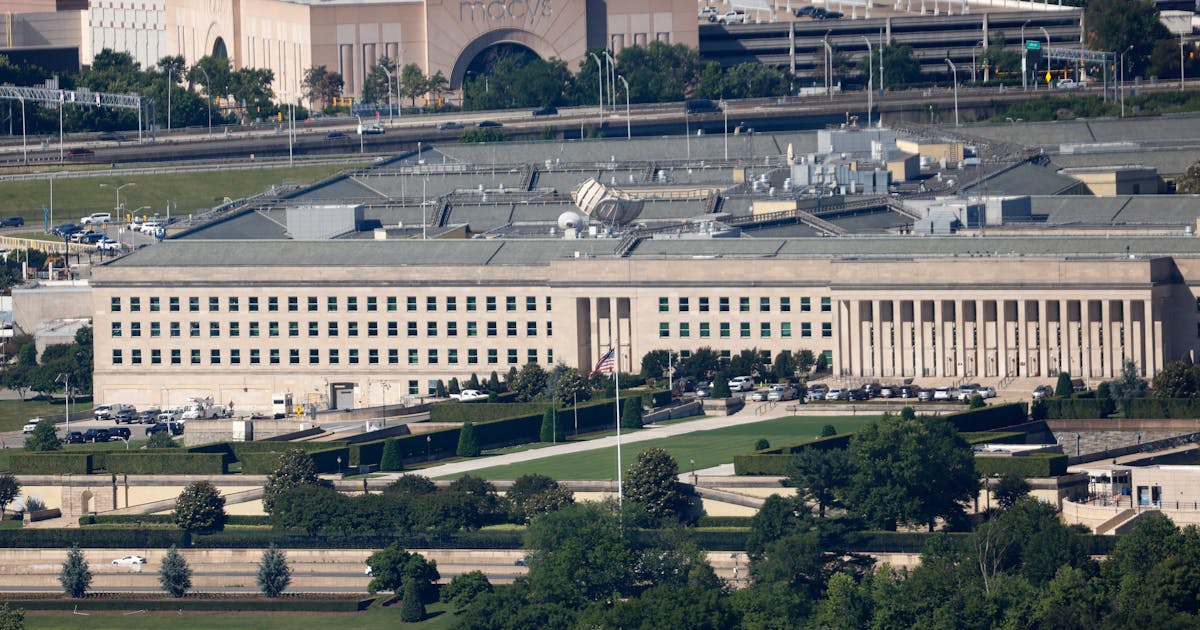
The Pentagon locked down multiple floors Thursday morning after its internal systems detected what officials called an "air quality issue," sending hazmat teams scrambling through corridors in full chemical protective gear. Arlington County firefighters, police wearing gas masks, and the Pentagon Force Protection Agency's hazmat unit all responded to the building as some workers were evacuated and others were ordered to shelter in place.
Pentagon spokesman Sean Parnell said the systems triggered "precautionary measures until we determine its significance," adding that the Department was "executing standard protection protocols." The incident unfolded less than 24 hours after Defense Secretary Pete Hegseth warned of imminent "strong and clear" strikes against Iran, Newsweek reported.
Floors Two Through Five Sealed, Testing Underway
The lockdown covered floors two through five in corridors four through seven of the Pentagon complex, according to two sources cited by CNN. That is a significant slice of the building, which has seven floors total. A shelter-in-place order was formally issued for the affected zone by 11:38 AM EDT, NOTUS reported.
Security messages sent to building occupants said additional air-quality testing could take "one to two hours," according to The New Republic. The Pentagon typically houses around 27,000 employees, though how many were sheltered versus evacuated remained unconfirmed.
Hazmat Teams and Gas Masks Signal High-Alert Response
Arlington County Fire and EMS confirmed their specialized hazmat team was "currently operating at the Pentagon in support of PFPA's Hazmat Team," according to a statement from department spokesperson Capt. Jamie Jill cited by CNN. Firefighters were seen in full protective gear outside the building.
Inside the building, the response was equally intense. CBS News reported that police were operating in full chemical protective gear and gas masks. That level of equipment signals that responders were treating the situation as potentially dangerous until tests proved otherwise.
Incident Lands During Escalating U.S.-Iran Hostilities
The timing raised immediate questions. Just one day before the lockdown, Secretary Hegseth announced the U.S. would target "key facilities" in Iran following the downing of a U.S. Apache helicopter and attacks on bases in Jordan and Kuwait, Anadolu Agency reported. U.S. military facilities worldwide have been on heightened alert.
National security analysts are split on the cause. Some point to the Pentagon's aging HVAC system, which received upgrades to detect chemical and biological agents. Others note that the elevated threat environment makes even ambiguous air-quality readings harder to dismiss. No cause had been confirmed as of the initial reporting.
Sensor Systems Triggered Protocol Before Cause Was Known
Pentagon systems detected the anomaly and drove the response before anyone knew what caused it. That is by design. Officials confirmed that the air-quality alert alone was enough to deploy hazmat teams, lock down four floors, and issue shelter-in-place orders — all as precautionary steps, CNBC reported.
The combined approach — shelter-in-place in the core zone, lockdown in surrounding corridors, and selective evacuation elsewhere — reflects a triage strategy. Contain the highest-uncertainty area first. Prevent spread. Then wait for test results to determine severity. The investigation was ongoing as of the latest reports.
Sentiment
Mostly NegativePublishers
119
Articles
598
Reach
717


