Qatar LNG Supply Disruption
Qatar Pauses LNG Output Ramp-Up After Tanker Attack, Fueling Global Supply Worries
Anonymous
Key Points
1
The tanker Al Rekayyat, a Qatari-flagged LNG carrier, was struck by an Iranian projectile near the Strait of Hormuz, causing an engine-room fire and a full crew evacuation, according to Anadolu Agency via News.Az; this comes on top of earlier damage that knocked out about 17% of Ras Laffan's capacity, with repairs projected to take around three years.
2
QatarEnergy chief Saad Al-Kaabi ordered Ras Laffan to operate at absolute minimum safety levels, reducing incoming vessel traffic and pausing the ramp-up plan to boost output.
3
The security shock has translated into sharp market moves: European benchmark gas prices surged above 50 euros per megawatt-hour, while Asian LNG spot prices have risen more than 80% above pre-war levels.
4
The Hormuz strait remains a critical choke point, with the route handling around 20% of global LNG trade, meaning any sustained disruption could quickly constrain supplies to Asia and Europe.
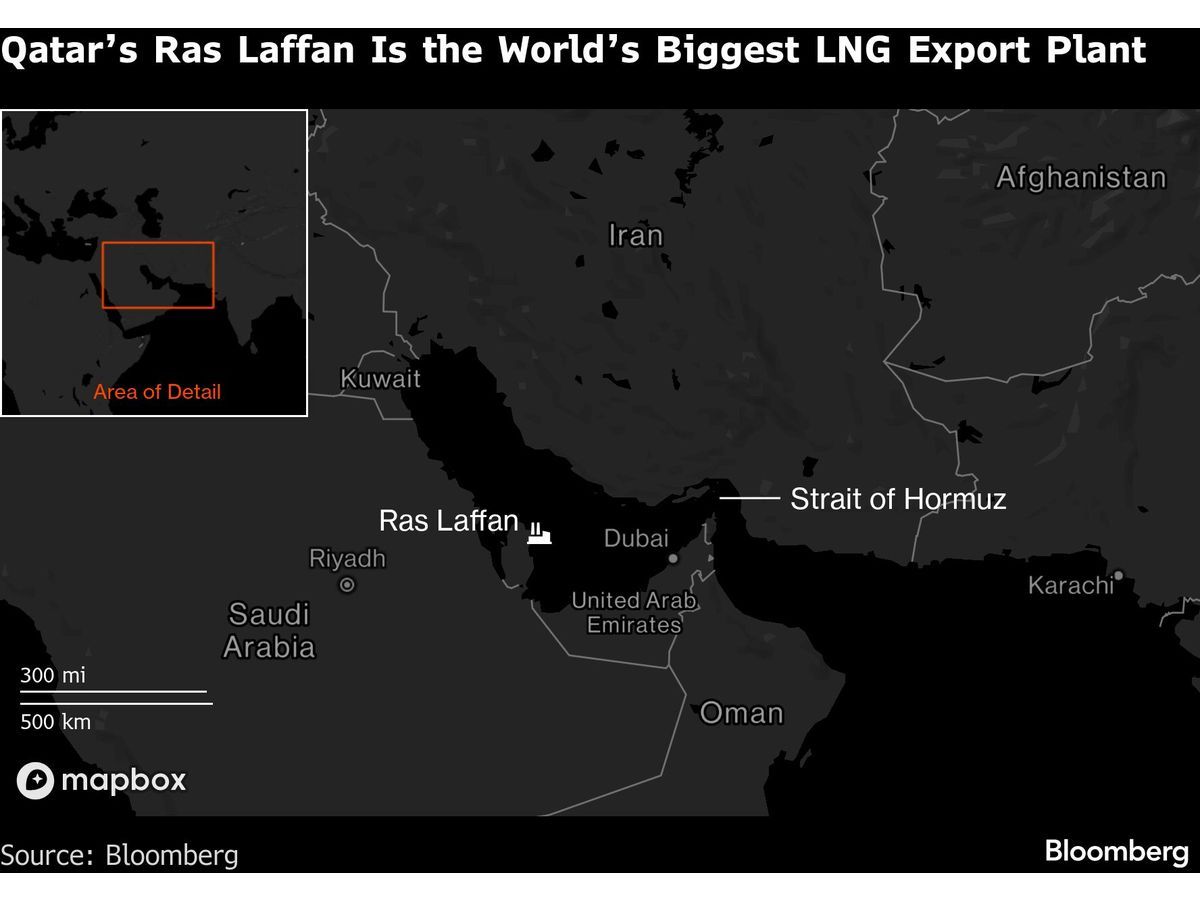
QatarEnergy has paused plans to ramp up output at Ras Laffan, the world's largest LNG facility, after an Iranian projectile struck a Qatari-flagged tanker near the Strait of Hormuz. The attack set off an engine-room fire and forced a full crew evacuation, according to Anadolu Agency via News.Az.
QatarEnergy chief Saad Al-Kaabi ordered the facility to run at absolute minimum safety levels. Incoming vessel traffic has been cut, and the push to boost production is on hold. The pause could ripple across global energy markets heading into winter, Financial Post reported.
Tanker Strike Knocks Qatar's LNG Plans Offline
The tanker Al Rekayyat was hit by an Iranian projectile off the Omani coast near the Strait of Hormuz. The strike caused a fire in the engine room and triggered a full crew evacuation. It was not the first blow to Ras Laffan. Earlier damage had already knocked out about 17% of the facility's capacity, with repairs expected to take around three years, according to Crypto Briefing.
In response, Al-Kaabi ordered Ras Laffan to operate at the lowest possible safe levels. Vessel traffic into the port has been reduced. The ramp-up plan — designed to add roughly 60% more capacity by the end of the decade through the North Field expansion — is now in a holding pattern, Financial Post reported.
Gas Prices Spike as Markets Absorb the Shock
Markets moved fast after news of the attack. European benchmark gas prices jumped above 50 euros per megawatt-hour. Asian LNG spot prices climbed more than 80% above pre-war levels. Both moves reflect how quickly traders priced in the risk of reduced Qatari supply, according to Investing.com.
Qatar is the world's largest LNG exporter. Any sustained pause at Ras Laffan hits global supply hard and fast. The Strait of Hormuz handles around 20% of all global LNG trade. Buyers in Asia and Europe have few quick alternatives if Qatari shipments slow further, Zero Hedge noted.
Hormuz Choke Point Raises Geopolitical Stakes
The Strait of Hormuz is the single most important waterway for global energy. Qatar relies on it entirely to reach buyers in Asia and Europe. Any closure or sustained threat to transit could cut off a fifth of the world's LNG supply almost immediately, Crypto Briefing reported.
The incident has drawn attention beyond energy markets. U.S. President Donald Trump has commented on potential escalations tied to the broader tensions around the strait. Qatar has made clear it will not resume normal operations until safe transit is assured, according to Financial Post.
Winter Supply Window Narrows as Delays Mount
The North Field expansion was Qatar's flagship plan to secure its position as the top LNG supplier through the 2030s. The project was meant to add 60% more output capacity. With the ramp-up paused and repairs to existing damage taking up to three years, that timeline is now at risk, Investing.com reported.
Winter demand in Europe and Asia typically peaks between October and February. If Qatar cannot restore and expand output before then, buyers may face a tight and expensive market. Traders and governments will be watching Hormuz closely in the weeks ahead, according to Zero Hedge.
Sentiment
Mostly NegativeNEGATIVENEUTRALPOSITIVE
Publishers
11
Articles
15
Reach
26
A
AnonymousAuthor


