Qatari Energy Export Restart
Empty LNG Tankers Move Toward Qatar, Signaling Potential Restart of Energy Exports
Anonymous
Key Points
1
QatarEnergy told customers in June that, once safe navigation through the Strait of Hormuz is restored, it could recover roughly 50% of LNG production capacity within one month and about 80% within two months.
2
QatarEnergy has continued loading LNG onto available empty carriers inside the Gulf, while vessels unable to proceed through Hormuz have either remained in the waterway or been redirected to Kuwait; this has allowed parts of the Ras Laffan export complex to keep operating at reduced capacity.
3
Ship-tracking data indicated that 15 LNG carriers loaded with Qatari gas were idled behind Hormuz, while two additional vessels were loading at the Ras Laffan terminal—evidence of a substantial backlog even as Qatar considers restarting outbound shipments.
4
The LNG carrier that successfully crossed Hormuz in late July had been idle in the strait since early July and made the passage with its geolocation device switched on, providing a specific indication of the security precautions surrounding the voyage.
5
Qatar’s suspension has been especially significant because the country previously supplied about one-fifth of global LNG, while QatarEnergy’s force-majeure declaration followed strikes on the Ras Laffan complex and an earlier reduction in LNG production in March.
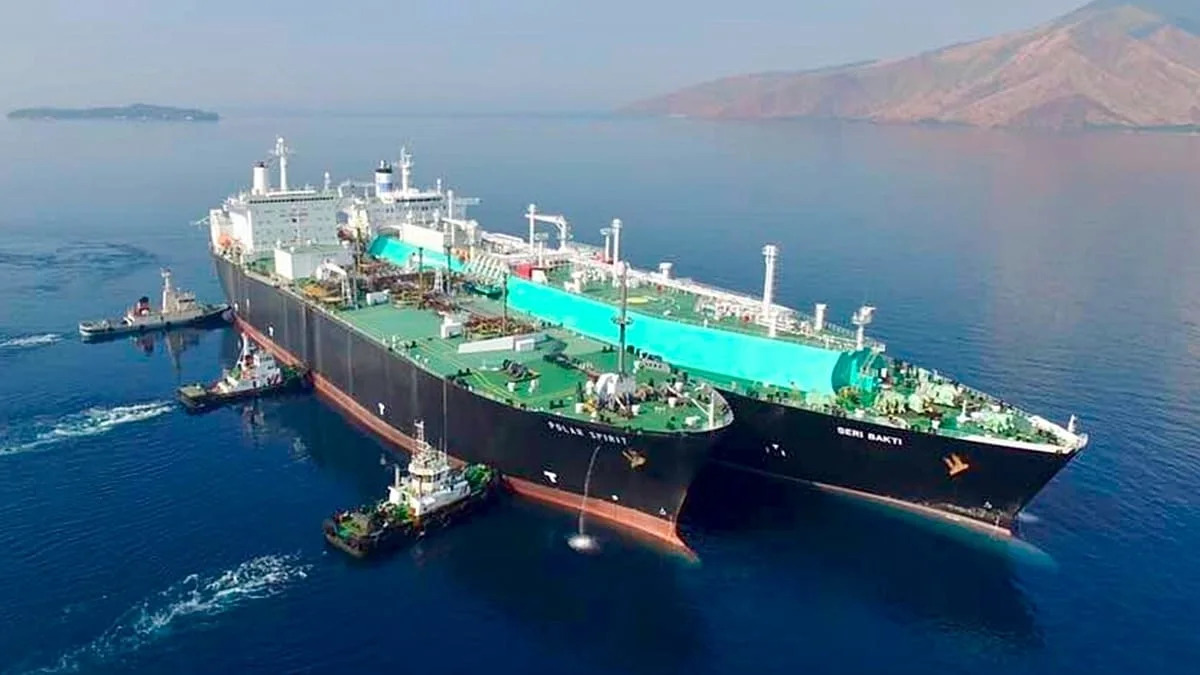
Six empty LNG tankers are moving through the Gulf of Oman toward Qatar, signaling that QatarEnergy may be preparing to restart exports through the Strait of Hormuz after months of disruption. Marine Insight reported that the Al Marrouna, a Qatari LNG carrier, successfully crossed Hormuz in late July—the first visible shipment since the blockade began. The move comes as Yahoo Finance notes that Qatar and the UAE have spent six months testing alternative routes, including costly ship-to-ship transfers that add over $1 million per transfer.
Qatar halted most LNG exports after attacks on its facilities and vessels forced a force majeure declaration. A restart could ease supply shortages in Asian and European markets, but safe passage through the strait remains uncertain. The company previously supplied about one-fifth of global LNG before the disruptions began.
The Backlog Building Behind Hormuz
Qatar's suspension has created a massive bottleneck. Ship-tracking data shows 15 LNG carriers loaded with Qatari gas sitting idle behind the Strait of Hormuz. Two additional vessels were actively loading at the Ras Laffan terminal, evidence of a substantial backlog as the country considers restarting shipments. Marine Insight documented this congestion as companies weigh when to risk passage through the contested waterway.
Ship-to-Ship Transfers Add Cost and Delay
For six months, Qatar and the UAE have kept some gas flowing through expensive workarounds. Yahoo Finance reported that ship-to-ship transfers—where LNG is moved between vessels outside the strait—add more than $1 million per transfer and consume up to 35 hours. This method has allowed the Ras Laffan complex to operate at reduced capacity, but it is far slower and costlier than direct export routes. The practice underscores the real economic toll of the blockade.
How Fast Qatar Could Restart Full Operations
QatarEnergy told customers in June that recovery depends on restored safe passage. The company said it could reach roughly 50% of production capacity within one month of safe navigation returning. Full recovery to about 80% capacity would take two months. These timelines assume the Strait of Hormuz remains navigable and tanker attacks do not resume—conditions that remain far from certain given ongoing regional tensions.
The First Successful Passage Sets a Cautious Precedent
The Al Marrouna's crossing in late July offers a glimpse of what resumption might look like—and the security measures it requires. Marine Insight noted that the vessel had been idle in the strait since early July and made the passage with its geolocation device switched on. This unusual transparency suggests QatarEnergy coordinated the voyage carefully with authorities. One successful shipment, however, does not guarantee a smooth restart for the remaining 15 tankers still waiting to transit.
Sentiment
Mostly NegativeNEGATIVENEUTRALPOSITIVE
Publishers
14
Articles
28
Reach
42
Topics
A
AnonymousAuthor


