AI Transforms Lab Discovery
Lawrence Livermore National Lab Embraces Autonomous AI to Accelerate Scientific Discovery
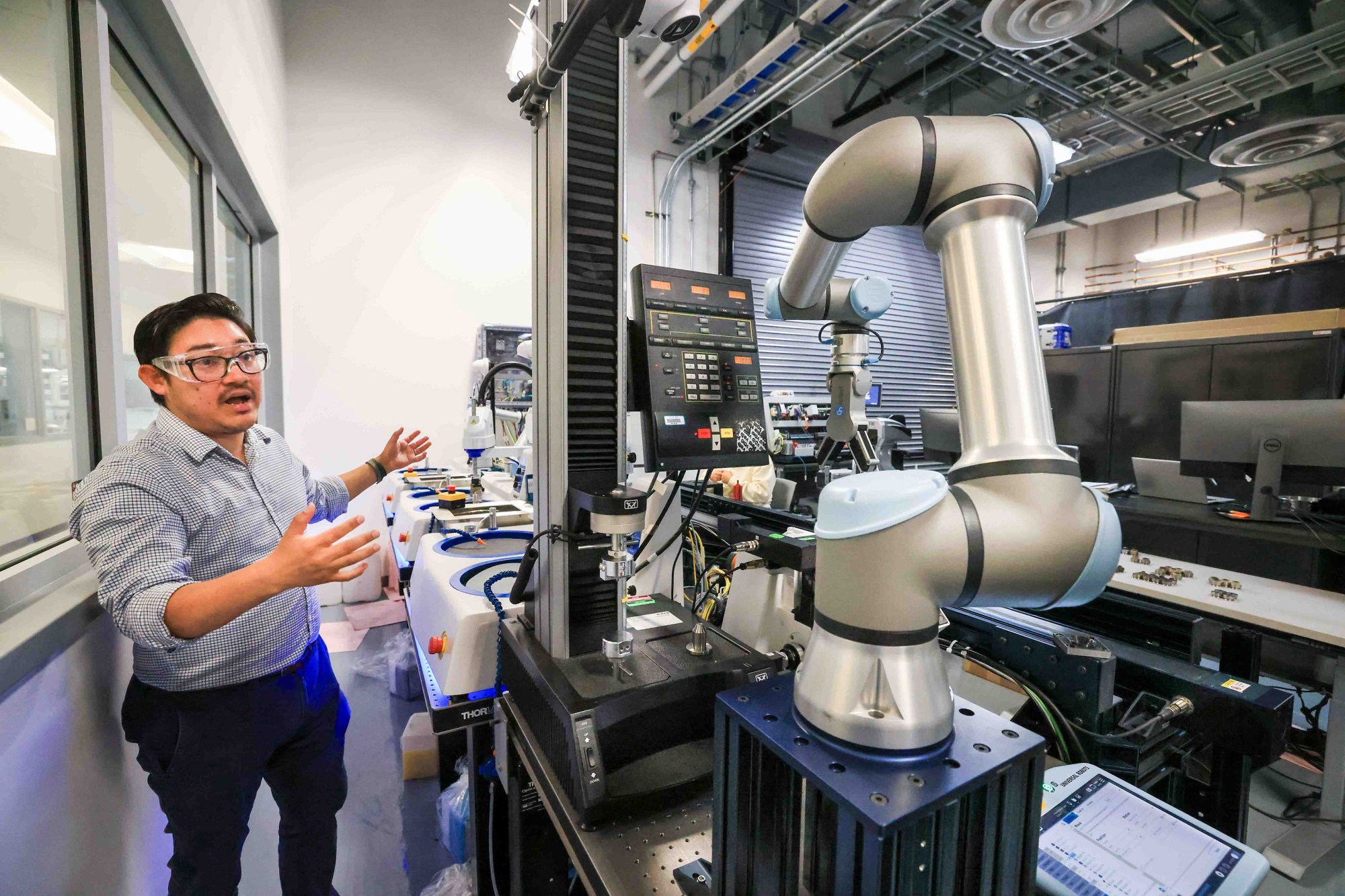
Lawrence Livermore National Laboratory is using autonomous artificial intelligence to speed up scientific experiments and find new metal alloys, chemical compounds, and possible cancer treatments, according to San Diego Union-Tribune. The AI can run experiments on its own, even when scientists are not in the lab, making research faster and wider in scope.
The shift is still in its early stages, but scientists at the lab believe it could change experimental science as much as the supercomputer did. Christopher Spadaccini, head of the Materials Engineering Division at Livermore, says the potential for discovery is enormous, according to Daily Breeze.
AI Runs Experiments Even When Scientists Go Home
Before autonomous AI, scientists had to be present to guide each step of an experiment. Now, the AI can make decisions and run tests on its own. Researchers can leave the lab at night and return to new results in the morning, according to Press Enterprise.
This makes the lab far more productive. Experiments that once took days of hands-on work can now run around the clock. The AI adjusts its approach based on what it learns, choosing the next test without waiting for a human to tell it what to do, Press Telegram reported.
New Alloys, Compounds, and Cancer Clues Discovered Faster
The lab is using AI to find new metal alloys and chemical compounds that might take years to discover through traditional methods. Scientists are also using it to look for potential cancer treatments, according to Trentonian. The AI can test far more combinations than any human team could in the same time.
This broader scope of research is one of the biggest benefits. Scientists are no longer limited by how many experiments they can physically run in a day. The AI expands what is possible, letting researchers ask bigger questions and get answers much sooner, Journal Advocate reported.
Livermore Scientists Compare AI Leap to the Supercomputer Era
Scientists at the lab say this moment feels like when supercomputers first arrived. That technology changed what was possible in science. Researchers believe autonomous AI could do the same thing, according to News Herald. It is not just faster — it changes how science is done at a basic level.
Christopher Spadaccini said the potential for the future in scientific discovery is enormous. The lab sees autonomous AI as a tool that could open doors that were simply closed before — not because the science was too hard, but because there was not enough time or human capacity to explore it, SB Sun reported.
Early Days, but the Foundation Is Already Shifting
Experts at Livermore are careful to note the technology is still new. The integration of AI into lab work is described as being in its infancy, according to Pottstown Mercury. There are still limits to what the AI can do on its own, and human scientists remain essential to the process.
Still, what is already happening at the lab shows a clear direction. Autonomous experimentation has gone from rare to commonplace. The lab is now a model for how AI can be built into the heart of scientific research, Times-Tribune reported.
Sentiment
NeutralPublishers
10
Articles
10
Reach
10


