Postwar Middle East Strategy
US Drafts Postwar Middle East Strategy to Shape Regional Policy and Contain Iran
Anonymous
Key Points
1
The Gaza component could involve implementing the Board of Peace’s Hamas disarmament plan, which has stalled because of opposition from Prime Minister Benjamin Netanyahu’s government.
2
The Israel-Lebanon track would build on a trilateral framework announced by the United States, Israel and Lebanon in June. That framework called for an eventual end to the state of war between Israel and Lebanon and further negotiations to resolve outstanding security issues.
3
Axios had previously reported that Trump urged Israeli Prime Minister Benjamin Netanyahu in July to redeploy Israeli forces from parts of Syria and Lebanon, an indication of the potential territorial and security concessions the broader strategy could require.
4
The proposed Saudi-Israeli normalization would face a major obstacle because Riyadh is demanding an irreversible pathway to Palestinian statehood, a condition opposed by Netanyahu and many of his political rivals.
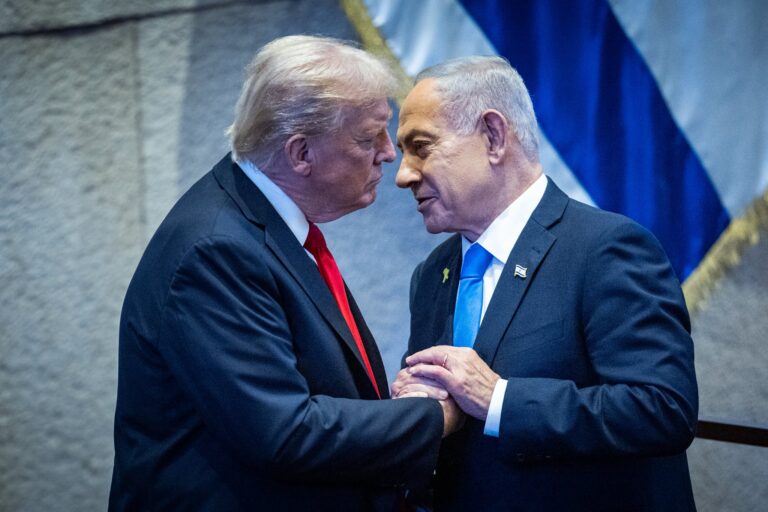
The Trump administration is drafting a postwar Middle East strategy to shape U.S. policy after the Iran conflict through the remainder of the president's term. Times of Israel reported that the plan aims to build a regional coalition of U.S. allies to contain Iran, with Washington serving as the security guarantor for the group.
The strategy has four main pillars: a U.S.-backed Iran containment coalition, a postwar Gaza arrangement, new Israeli-Syrian security deals, and expanded Abraham Accords including possible Israel-Saudi normalization. Axios noted that agencies are still developing the framework, with drafting expected to take several more weeks before implementation.
Saudi Arabia Sets Palestinian Statehood as Deal Breaker
Saudi normalization with Israel remains the strategy's centerpiece — but faces a major roadblock. Riyadh has tied any agreement to an irreversible pathway toward Palestinian statehood, a condition Times of Israel reports that Prime Minister Benjamin Netanyahu and his political allies strongly oppose. Without Saudi buy-in, regional credibility collapses.
Saudi participation would give the normalization agenda far greater political and religious weight than earlier bilateral agreements between Israel and smaller Arab states. The kingdom's economic and diplomatic leverage makes it essential to the alliance's success — but also gives Riyadh the power to block the entire package if Palestinian demands go unmet.
Gaza Disarmament Plan Blocked by Netanyahu's Government
The Gaza component could implement the Board of Peace's Hamas disarmament plan, which has stalled entirely. Vinnews reported that opposition from Netanyahu's government has frozen the proposal, creating a major obstacle to postwar governance. Without a Hamas disarmament framework, regional partners may refuse to participate in the broader coalition.
The plan links Gaza reconstruction to security arrangements across the entire Middle East. If partners cannot agree on how to handle Hamas and Gaza governance, disputes over the other tracks — Syria, Lebanon, and Iran containment — become far more likely to derail the entire strategy.
Israel-Lebanon Framework Requires Military Withdrawals
The Israel-Lebanon track builds on a trilateral U.S.-Israel-Lebanon framework announced in June that called for an eventual end to the state of war between the two countries. Voice of Emirates reported that the broader strategy could require Israeli withdrawals from buffer zones and security guarantees along the border, potentially creating domestic pressure on Netanyahu.
Axios previously reported that Trump urged Netanyahu in July to redeploy Israeli forces from parts of Syria and Lebanon. These territorial concessions would satisfy regional security concerns but face resistance from Israeli political allies who oppose any withdrawal without lasting security guarantees.
Iran Containment Alliance Hinges on Arab Buy-In
The strategy's core goal is creating a U.S.-backed regional coalition to contain Iran, with Washington serving as the alliance's security guarantor. Stocktwits reported that the plan aims to limit Iran's influence and strengthen regional partnerships against Tehran. But Arab partners face pressure to balance Iran containment with independent policies on Gaza and Israel.
U.S. guarantees could improve deterrence credibility, but they also create expectations that Washington will defend partners during future crises. This increases American military and diplomatic commitments across the region. Regional governments may therefore support cooperation against Iran without joining a formal alliance — leaving the strategy weaker than planners hope.
Sentiment
Mostly PositiveNEGATIVENEUTRALPOSITIVE
Publishers
24
Articles
11
Reach
35
A
AnonymousAuthor


