Hormuz Shipping Tensions
US Launches Strikes on Iran After Tankers Attacked, Aiming to Deter Shipping Threats in Hormuz
Anonymous
Key Points
1
U.S. Treasury documents indicated that the wind-down of oil transactions allowed under the previous sanctions waiver would be completed by July 17.
2
Iranian state media reported explosions in the ports of Qeshm and Bandar Abbas following the strikes, signaling potential escalation at key maritime facilities.
3
NATO leaders were set to hold a two-day summit in Turkey, where President Trump was expected to press allies to increase defense spending amid the Iran conflict.
4
Iran’s funeral observances for former Supreme Leader Khamenei included processions in Iraq, with his body being taken to Najaf and Karbala for planned ceremonies.
5
A third tanker transit through the Strait of Hormuz was reported to have been struck by an unidentified unmanned aerial vehicle, causing minor structural damage but no casualties.
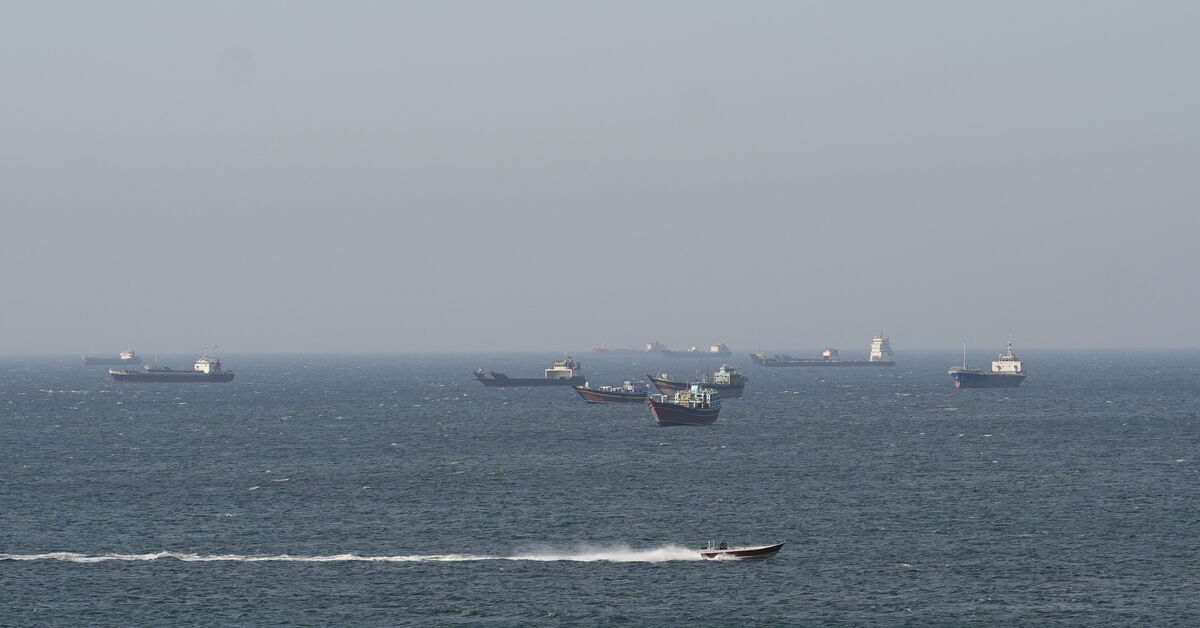
Three commercial tankers were attacked in the Strait of Hormuz on July 7, 2026, prompting the United States to launch air and ground strikes against more than 80 Iranian military targets in southern Iran. Al-Monitor reported that at least four additional tankers turned back from the strait after the attacks, as the Joint Maritime Information Center raised the transit threat level to "Severe."
The US also revoked a key oil sanctions waiver the same evening, ending Iran's ability to sell crude oil in US dollars under the interim peace deal. Iran retaliated on July 8 by striking 85 US and allied military facilities in Bahrain and Kuwait. Brent crude surged nearly 6%, hovering around $76 per barrel.
Three Tankers Hit as Hormuz Threat Level Hits Severe
The first vessel struck was the M/T Al Rekayyat, a Marshall Islands-flagged Qatari LNG carrier. Its engine room caught fire and all 29 crew members, including 4 Indian nationals, abandoned ship. A Saudi Arabia-flagged crude tanker, the M/T Wedyan, sustained structural damage. A third vessel, the Liberia-flagged M/T Cyprus Prosperity, was hit by an unidentified drone and suffered minor damage with no casualties reported.
Qatar held Iran "fully legally responsible" for the attack on its LNG vessel, calling it an "unacceptable attack" on global energy security. Daily transits through the strait fell to just 16, down from a pre-war average of 125. Average freight rates for ships inside the Gulf jumped from under $200,000 to nearly $300,000 per day.
US Strikes 80-Plus Iranian Targets, Revokes Oil Waiver
US Central Command launched strikes on air defenses, radar sites, anti-ship launch systems, and more than 60 IRGC fast-boats. Targets included sites on Qeshm Island, Sirik, and Bandar Abbas. CENTCOM said the strikes were designed to "impose heavy costs for targeting and attacking commercial shipping." Operations were expected to continue for several hours.
The same evening, the Treasury's Office of Foreign Assets Control replaced General License X with General License X1. The new order halted all new Iranian oil transactions immediately and set a 10-day wind-down deadline of July 17. Risk analyst Brett Erickson called the move "a complete destruction of the Memorandum of Understanding," noting that the oil waivers were "the only notable upfront concession that Iran received."
Iran Retaliates as Ceasefire Framework Collapses
Iran's IRGC fired on 85 US and allied military targets in Bahrain and Kuwait overnight on July 8. Iranian Parliament Speaker Mohammad Bagher Ghalibaf declared on X: "The era of bullying and extortion is over... We don't fold." Iranian state media reported explosions at the ports of Qeshm and Bandar Abbas following the initial US strikes.
The escalation shattered a fragile ceasefire built on a 14-point Memorandum of Understanding signed on June 17. President Trump declared the MOU "over" at the NATO summit in Ankara, Turkey. The summit, already tense over defense spending, became a flashpoint as Trump pressed allies to spend 5% of GDP on defense, up from the historical 2% target.
Hormuz Handles 20% of World Oil — Disruption Risks Are Global
The Strait of Hormuz channels roughly 20% of the world's crude oil and LNG. Even brief disruptions push up global energy prices and trigger alarm from Asia to Europe. Yahoo News reported that at least four tankers reversed course after the attacks, a sign that commercial shippers are already pulling back from the route.
Khamenei's state funeral drew an estimated 2.3 million mourners in Najaf, Iraq, mobilizing hardline Shiite groups and Iraq's Popular Mobilization Forces. Iranian Deputy Foreign Minister Kazem Gharibabadi condemned the US strikes as a "blatant violation" of the interim peace deal. With oil waivers gone and military strikes ongoing, analysts say the path back to negotiations has narrowed sharply.
Sentiment
Mostly NegativeNEGATIVENEUTRALPOSITIVE
Publishers
72
Articles
351
Reach
423
A
AnonymousAuthor


