Hormuz Blockade Escalates.
U.S. Announces Hormuz Blockade and Cargo Toll on Iran Starting July 14 Amid Legal Doubts.
Anonymous
Key Points
1
Iran and the U.S. had signed a memorandum of understanding on June 17 in which Tehran agreed it would not charge a toll for 60 days, signaling an attempt to de-escalate toll-collection disputes before recent reversals.
2
The U.S.-led blockade enforcement is described as applying to all of Iran's ports, oil terminals and coastal areas, with the blockade taking effect from 2000 GMT on July 14; vessels entering the blockaded area without authorization may be intercepted or captured, and force could be used, while neutral transit to non-Iranian destinations through Hormuz will not be impeded.
3
Observers note the current move comes after a ceasefire memorandum of understanding was reportedly lifted on June 18, 2026, marking a significant shift and intensifying military pressure around Hormuz.
4
Industry skepticism exists regarding the proposed 20% cargo toll, with Nordic American Tankers CEO Herbjorn Hansson calling the figure unrealistic and saying Iran and the U.S. must agree on how the strait will be administered.
5
Market analysis associated with the blockade suggests a substantial drop in the odds of normal Strait of Hormuz traffic by August 31, 2026, with YES odds around 15.5%, reflecting heightened risk and uncertainty for maritime flow.
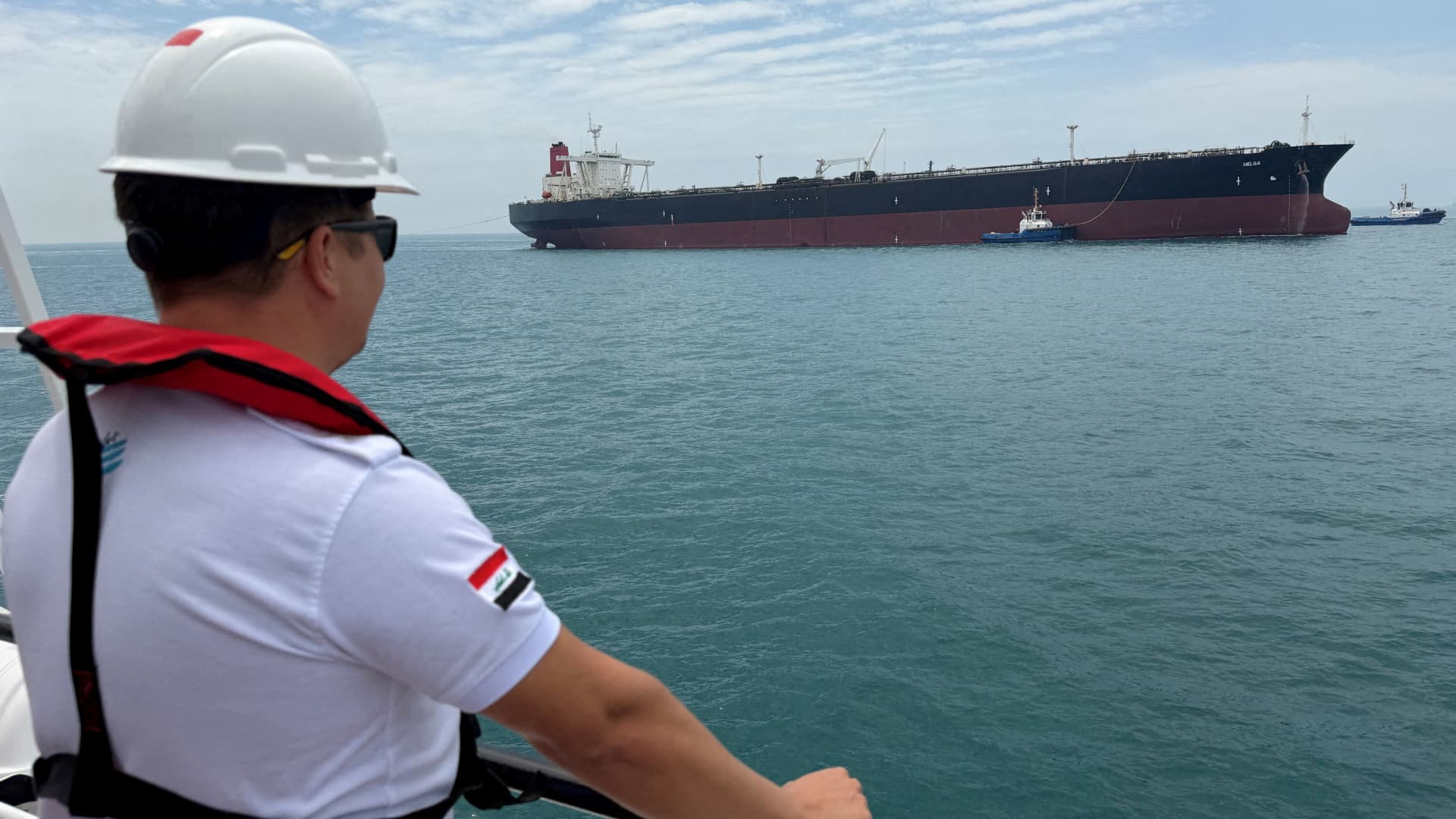
The United States will reimpose a naval blockade on Iran starting at 2000 GMT on July 14, 2026, and will levy a 20% toll on all cargo transiting the Strait of Hormuz, President Trump announced Sunday Defense News. The move comes after the June 17 Islamabad peace deal collapsed when two tankers — including the Qatari LNG carrier *Al Rekayyat* — were struck by projectiles on July 7, prompting Trump to declare the agreement "over" KUOW.
The UN's International Maritime Organization fired back immediately, stating "there is no legal basis through which to introduce mandatory tolls simply to transit through a strait" Crypto Briefing. Prediction markets now price the odds of normal Strait traffic by August 31 at just 15.5%, down from 28% before the blockade announcement.
How a Ceasefire Collapsed in Three Weeks
The June 17 Islamabad Memorandum of Understanding gave Iran and the U.S. 60 days to negotiate, with Tehran agreeing to allow free passage "with no charge for 60 days only" Defense News. But the deal had a fatal flaw: both sides read it differently. Washington saw a grace period back to normal shipping. Tehran saw a legal green light to eventually charge tolls and act as the strait's permanent gatekeeper.
That gap turned explosive on July 7 when projectiles hit two tankers in the strait. Trump declared the MoU dead. By July 13, CENTCOM and the Joint Maritime Information Center had issued formal advisories: the blockade returns at 2000 GMT on July 14 Navy Times. Vessels entering the blockaded area without authorization may be intercepted, diverted, or captured — and force may be used.
Two Countries, Both Claiming to Guard Hormuz
Trump framed the blockade as a policing fee. "The U.S.A. will be known as 'THE GUARDIAN OF THE HORMUZ STRAIT,'" he wrote, adding the 20% toll is a matter of "FAIRNESS" for reimbursing security costs KUOW. The blockade targets only Iranian ships and customers. Non-Iranian vessels transiting to non-Iranian destinations will not be stopped, he said.
Iran's Foreign Minister Abbas Araghchi did not push back on the concept — he pushed back on the price. "Iran has always been the GUARDIAN of the Strait and will remain so FOREVER," he wrote online. "20% is of course too much. We will be fair." The dueling "guardian" claims highlight how both sides are now fighting over who controls — and profits from — one of the world's most critical shipping lanes.
IMO Says Tolls Break International Law — Industry Agrees
Under the UN Convention on the Law of the Sea, the Strait of Hormuz is governed by "transit passage" rules. Those rules give all ships an unimpeded, non-discriminatory, and toll-free right to cross. The IMO said flatly that no country — coastal or external — can charge mandatory fees for that passage Crypto Briefing. Legal scholars note that the U.S. toll contradicts its own position: Secretary of State Marco Rubio said just weeks ago, "No country is allowed to charge tolls or fees on an international waterway."
Shipping executives are equally skeptical. Nordic American Tankers CEO Herbjorn Hansson called the 20% figure "unrealistic" and said "Iran and the U.S. need to agree on how the strait will be administered" before any toll system could work Military Times. Experts also question the basic logistics: how do you assess and collect a cargo-value toll on hundreds of tankers per day in real time?
Oil Prices Jump as Markets Price In Prolonged Disruption
Crude oil jumped nearly 5% after Trump's Sunday announcement, pushing prices back toward $80 per barrel. That is still well below the April 7 peak of $138 per barrel — reached when Iran first shut the strait — but analysts warn prices could top $100 again if the blockade halts Iranian exports and rattles broader traffic Defense News. About 20% of the world's oil and gas flows through Hormuz every day.
The risk picture extends beyond oil. Iran has threatened to strike U.S. military bases in Jordan, Bahrain, Kuwait, and Oman if the blockade holds. UN Secretary-General António Guterres warned that "a return to full-scale hostilities would have catastrophic consequences." During the first blockade phase — April 13 to June 18 — U.S. forces redirected more than 140 vessels and disabled 9 that did not comply Navy Times.
Sentiment
Mostly NegativeNEGATIVENEUTRALPOSITIVE
Publishers
56
Articles
173
Reach
229
A
AnonymousAuthor


