US Naval Expansion
Trump Policy Permits Foreign Shipbuilders to Boost US Naval Capacity with Domestic Investment
Key Points
Hanwha's acquisition of Philly Shipyard provides a concrete example of the Finland-model approach in action, with a foreign shipbuilder investing in an American yard network.
The policy envisions three ship classes built by foreign builders under a Finland-model framework, requiring the foreign yard to either own a new U.S. shipyard or acquire a majority stake in an existing one, and stipulating that after the first two ships all subsequent vessels be built in U.S. yards.
Three sources note that ships constructed overseas under this arrangement are intended to be delivered promptly to fill capability gaps before transitioning to full domestic production.
Some coverage describes the administration's memo using the term Department of War (DoW), rather than the Defense Department, illustrating terminology variations across outlets.
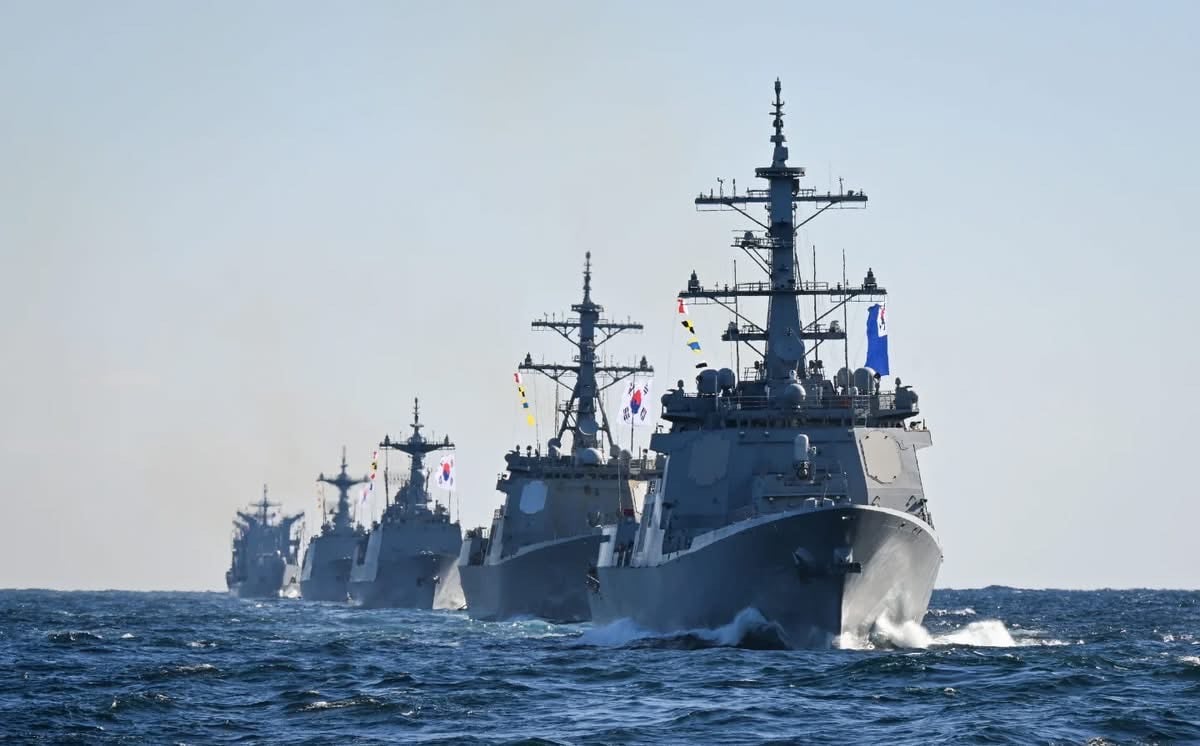
President Trump has signed a National Security Presidential Memorandum allowing foreign shipbuilders to build up to two vessels at their home shipyards for delivery to the U.S. Navy, according to USNI News and Korea JoongAng Daily. The move marks a sharp break from decades of policy requiring American-built warships.
The policy is designed to fill urgent capability gaps in the U.S. fleet while simultaneously rebuilding domestic shipbuilding capacity. Any ships beyond the first two must be built inside the United States, Korea Herald reported.
The Finland Model Behind the New Shipbuilding Rules
The policy borrows directly from a framework the U.S. already used for Coast Guard icebreakers. That approach, called the "Finland model," lets a foreign yard build the first ships while a new American yard is built or upgraded in parallel, according to gCaptain. It is meant to deliver ships fast without abandoning long-term domestic production goals.
Under the new memo, a foreign shipbuilder must either own a new U.S. shipyard or hold a majority stake in an existing one. The company must also make sustained investments in American workers and supply chains. BigGo Finance reported that licenses for proprietary shipbuilding technology may also be part of the deal.
Hanwha and Philly Shipyard as the Policy's Test Case
South Korean defense giant Hanwha's acquisition of Philly Shipyard is seen as the clearest real-world example of this policy in action. BigGo Finance identified Hanwha Ocean as a key beneficiary of the new memo. The deal gives a major foreign builder a direct ownership stake in a U.S. yard — exactly what the memo requires.
The memo covers three ship classes that could be built by foreign yards under this framework, Korea JoongAng Daily reported. Once the first two ships in each class are delivered overseas, all remaining vessels in that class must shift to American shipyards.
Navy Gaps and a Fifth Public Shipyard in the Works
The Trump administration says the U.S. Navy faces serious production shortfalls. USNI News reported that the White House memo directly criticizes the pace and cost of domestic naval construction. The memo also calls for building a fifth public naval shipyard, a major infrastructure commitment, according to gCaptain.
The order covers both surface combatants — warships like destroyers — and support and transport vessels. The goal is to get ships into service quickly while U.S. yards ramp up. Korea Herald noted the foreign-built ships are intended as a temporary bridge, not a permanent solution.
Conditions Tied to Ownership, Licenses, and U.S. Supply Chains
The memo sets strict conditions. Foreign builders must use U.S. supply chains for all ships built domestically. They must also transfer key shipbuilding technology through licensing agreements, BigGo Finance reported. These requirements are meant to ensure American workers and companies benefit from the arrangement long-term.
Some outlets noted unusual terminology in the administration's documents. USNI News reported that the memo references a "Department of War" — an older name for what is now the Department of Defense — illustrating the wide variation in how different news outlets described the policy's language and scope.
Sentiment
Mostly PositivePublishers
15
Articles
7
Reach
22


