Wildfire Smoke Impacts
Hednesford Hills Wildfire Treated as Arson as Smoke Impacts Distant Cities' Air Quality
Key Points
The incident on Hednesford Hills is being treated as deliberate; Staffordshire Fire & Rescue said the fire was started intentionally and is under police investigation, with 11 appliances at the scene and the blaze fought using main jets and wildfire hoses.
A NASA visualization shows wildfire smoke rising to high altitudes (2-3 miles) and traveling long distances, helping explain why smoke from Canadian and U.S. fires can affect cities like New York and Detroit; experts note that smoke particles 'last in the atmosphere for a week or more'.
The same NASA analysis highlights health risks from prolonged exposure, including smoke mixing with urban pollutants to form increased ground-level ozone, which can worsen asthma and related conditions.
NOAA’s narrative describes a broad, multi-directional smoke layer from fires across Canada and the CONUS, including northwestern movements toward Yukon and Alberta, Manitoba remnants toward Greenland, and coastal plumes off the Atlantic and Mid-Atlantic/Carolinas (with Florida fires contributing to offshore smoke).
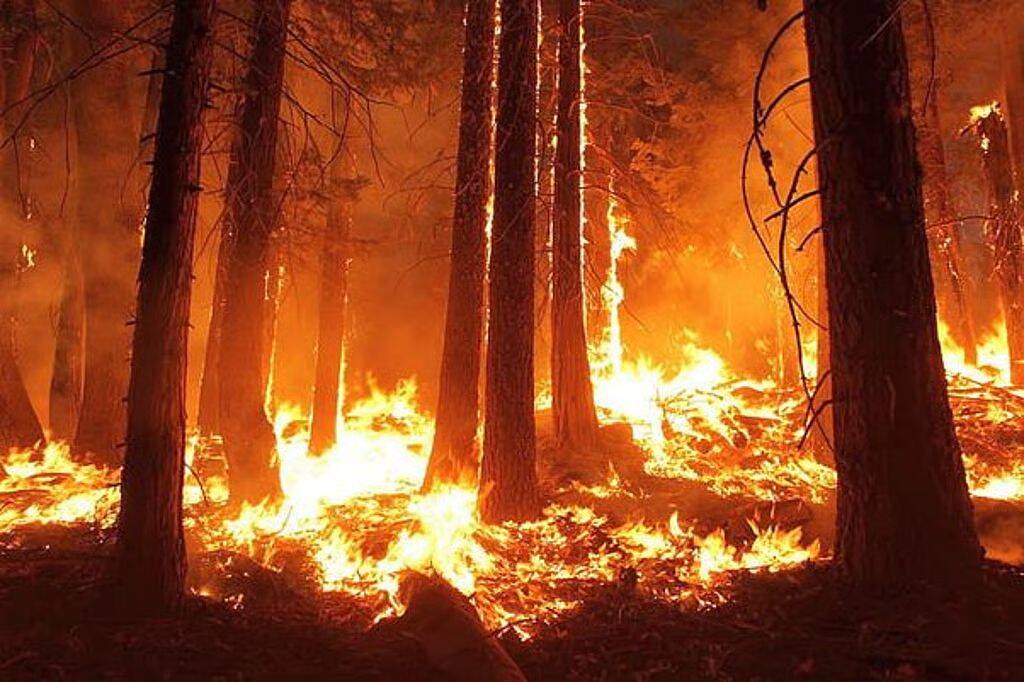
A wildfire on Hednesford Hills in Staffordshire, UK, burned over three-and-a-half acres before firefighters brought it under control. Staffordshire Fire & Rescue said 11 appliances responded to the scene, crews used main jets and wildfire hoses, and no injuries were reported.
Authorities are treating the fire as deliberate. Police made two arrests in connection with the incident. The blaze is now under active investigation.
Arson Suspected as Police Make Two Arrests
Staffordshire Fire & Rescue confirmed the fire was started intentionally. Crews deployed both main jets and specialist wildfire hoses to fight the blaze across the heathland. The site covers sensitive natural terrain, making the damage harder to contain and reverse.
Officials are urging the public to stay vigilant and are calling for better youth education to prevent arson. Hednesford Hills is a protected area, so even a small fire can cause lasting environmental harm.
Wildfire Smoke Travels Hundreds of Miles Unseen
Wildfire smoke does not stay local. A NASA visualization shows smoke rising 2 to 3 miles into the atmosphere and drifting hundreds or even thousands of miles. Fast Company reported that 2026 marks the fourth straight year Canadian fire smoke has caused severe air pollution in distant cities like New York and Detroit.
Smoke particles can last in the atmosphere for a week or more. That means a fire in one country can affect air quality in another within days. NOAA has tracked wide, multi-directional smoke plumes from fires across Canada and the continental US, with some reaching as far as Greenland.
Smoke Mixed With City Pollution Creates Hidden Health Risk
When wildfire smoke drifts into cities, it mixes with existing pollution. That mix can create higher levels of ground-level ozone. Ozone is a gas that irritates the lungs and can worsen asthma and other breathing conditions.
Daily UW noted that extreme heat and wildfire smoke are now growing concerns for many communities, especially those without access to air conditioning. Experts warn that long-term or repeated exposure raises the health risk further, even when smoke levels appear low.
Data-Driven Maps Help Predict and Prevent Future Fires
Prevention tools are improving. In India, geospatial analysis is identifying forest areas in Mizoram most at risk of fire. Inshorts reported that the maps use environmental and spatial data to highlight vulnerable landscapes, helping authorities focus resources before fires start.
The maps support early warning systems and smarter resource allocation during the dry season. Together with NASA's smoke tracking tools and NOAA's smoke narratives, these technologies show how data can help communities get ahead of wildfires rather than just react to them.
Sentiment
Mostly NegativePublishers
15
Articles
35
Reach
50


