Minerals and AI Partnership
South Korea and ADB Discuss Central Asia Mineral Supply Chains and AI
Anonymous
Key Points
1
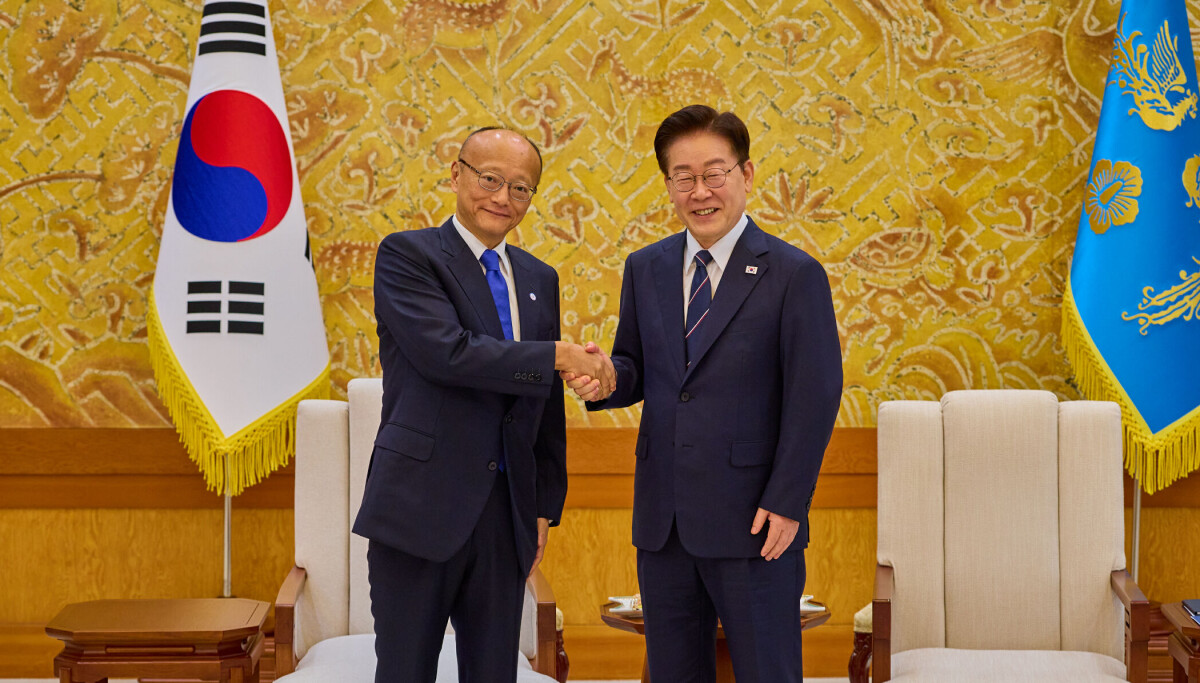
The meeting took place at 11 a.m. at Lee’s office in Cheong Wa Dae, while Kanda was in Seoul to attend both the Korea-Uzbekistan summit and the Korea-Central Asia Summit.
2
The talks were intended to connect South Korea’s Central Asia summit diplomacy with the ADB’s development cooperation, creating more opportunities for Korean companies to expand overseas.
3
Kanda expressed hope that the Korea-Central Asia Summit, held in South Korea that week, would be successful.
4
Kanda had received unanimous backing from ADB member countries earlier in the month for a second five-year term as president, beginning in November.
South Korean President Lee Jae-myung and Asian Development Bank President Masato Kanda met in Seoul on September 14 to forge a partnership on critical minerals and artificial intelligence across Central Asia. The two leaders agreed to combine South Korea's advanced technology and manufacturing with the ADB's development financing to stabilize mineral supply chains in Uzbekistan and neighboring countries, according to Korea JoongAng Daily.
The meeting came as South Korea prepared to host its first multilateral Korea-Central Asia Summit two days later, bringing five regional leaders to Seoul. Korea JoongAng Daily reported that Kanda praised South Korea's economic strength, calling it "outstanding" even amid global uncertainty, while Lee promoted his "AI for All" vision for deploying digital solutions across the developing world.
Critical Minerals Strategy for Central Asia Supply Chains
Central Asia holds vast untapped reserves of gold, copper, uranium, and rare earths that South Korea needs for its electronics and battery industries. Korea JoongAng Daily reported that Lee and Kanda identified stabilizing these supply chains as a shared priority, particularly in Uzbekistan. South Korea committed up to $1 billion in cofinancing through Korea Eximbank ($500 million) and Korea Trade Insurance Corporation ($500 million) to support the ADB's newly launched Critical Minerals-to-Manufacturing Financing Partnership Facility.
The partnership lets South Korean companies access Central Asian raw materials while the ADB provides project expertise and development financing. Caspian Post noted that South Korea and Uzbekistan are already discussing $20 billion in joint projects. By combining Seoul's processing technology with ADB's regional development network, both sides aim to de-risk volatile global supply chains and give Korean firms competitive footing in resource-rich markets.
AI Innovation and Energy Infrastructure Expansion
Lee promoted his "AI for All" national initiative during the meeting, proposing joint ventures to deploy artificial intelligence across Central Asia's developing economies. Korea JoongAng Daily reported the two leaders discussed aligning South Korea's digital expertise with the ADB's Center for AI Innovation and Development. The goal is to bring digital tools to agriculture, healthcare, and small business across the region.
Energy infrastructure also topped the agenda. The leaders discussed South Korea's role in financing the ASEAN Power Grid and nuclear power projects across Asia-Pacific. Korea JoongAng Daily indicated the talks included ways to finance small modular reactors and clean energy transitions in developing nations, positioning South Korea as a technology and capital provider for Asia's energy future.
Kanda Secures Second Term, Backs Korea Summit Success
Masato Kanda arrived in Seoul on a strong footing. Earlier in September, ADB member countries gave him unanimous backing for a second five-year term as president, beginning in November. Korea JoongAng Daily reported that Kanda expressed hope the Korea-Central Asia Summit would succeed and deepen ties between Seoul and the region.
The summit brought together presidents from five Central Asian nations alongside 500 corporate and government representatives. The Times Of Central Asia reported that South Korea had already signed 13 bilateral agreements with Uzbekistan during a separate summit, while Qazinform noted Kazakhstan and South Korea are jointly implementing 51 industrial projects. The meeting with Kanda was designed to weave ADB's multilateral development framework into Seoul's expanding commercial footprint across the region.
Sentiment
Mostly PositiveNEGATIVENEUTRALPOSITIVE
Publishers
66
Articles
38
Reach
104
A
AnonymousAuthor


