IBM Powers Quantum Future
IBM Acquires HRL Labs from GM, Boeing to Advance Multi-Technology Quantum Computing Strategy
Anonymous
Key Points
1
HRL Laboratories is the former Hughes Aircraft research arm located near Malibu, California, and it specializes in electron spin qubits.
2
IBM’s two-track quantum strategy will merge HRL’s electron spin qubits with IBM’s superconducting qubits, noting that spin circuits can be smaller and are compatible with the same chip-fabrication equipment used for conventional chips.
3
IBM envisions integrating HRL’s spin-qubit approach as part of its timeline toward a multi-technology roadmap, with IBM’s Blue Jay superconducting system expected to be delivered by 2033.
4
Jay Gambetta, IBM’s director of research, said: 'I and the team strongly believe that the future is going to be (electron) spins, or superconducting, or possibly a combination of them,' underscoring the multi-technology approach.
5
Marketscreener notes that the HRL deal could help IBM to industrialize related quantum technologies, including quantum sensing and quantum materials, expanding IBM’s practical applications portfolio beyond computing alone.
IBM has agreed to acquire HRL Laboratories, a quantum computing research lab jointly owned by Boeing and General Motors, to add a second type of quantum technology to its growing portfolio, according to Yahoo Finance. Financial terms were not disclosed, and the deal is expected to close after regulatory approvals.
HRL, based near Malibu, California, specializes in electron spin qubits — a different kind of quantum building block than the superconducting qubits IBM already uses. The move puts IBM in direct competition with Alphabet, Microsoft, and others racing to build practical quantum machines.
IBM's Two-Track Bet on Quantum Technology
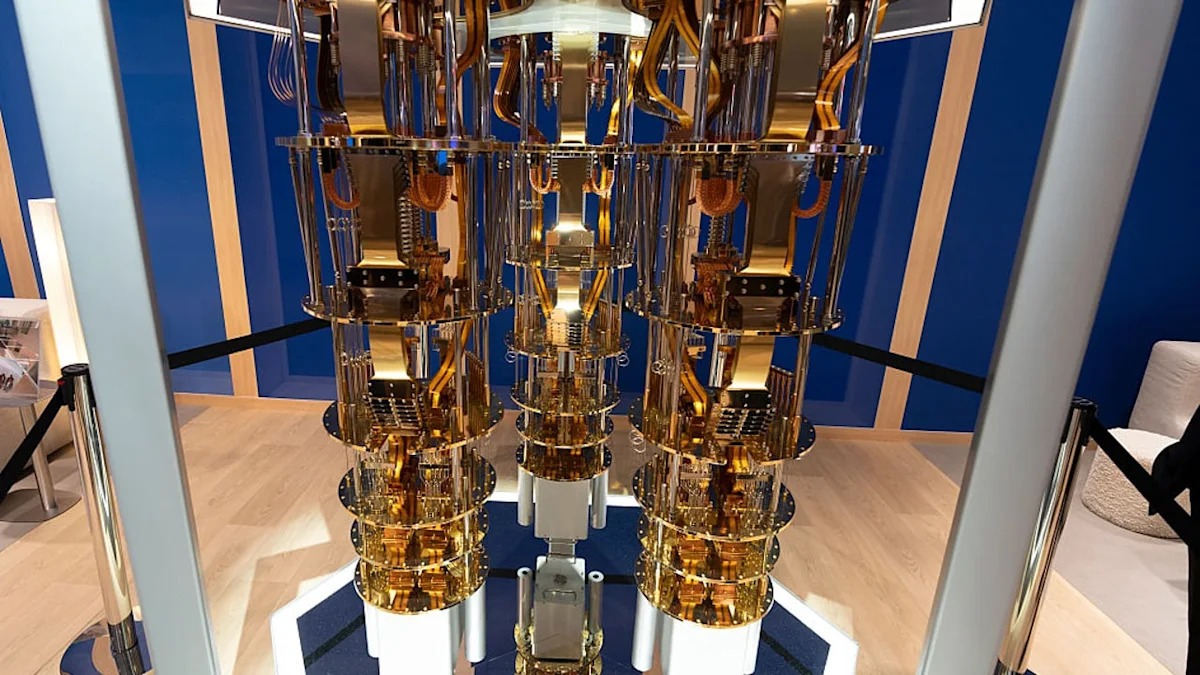
IBM plans to run two types of quantum technology side by side. It will combine HRL's electron spin qubits with its own superconducting qubits. Jay Gambetta, IBM's director of research, said: 'I and the team strongly believe that the future is going to be (electron) spins, or superconducting, or possibly a combination of them.' That flexibility is the core of IBM's strategy, according to MarketScreener.
Spin qubits have a key advantage: they are smaller than superconducting qubits. They also work with the same chip-making equipment used for regular computer chips. That could make them far easier and cheaper to produce at scale, according to Yahoo Finance.
HRL's History and What IBM Is Really Buying
HRL Laboratories started as the research arm of Hughes Aircraft. Boeing and General Motors each owned 50% of the lab. It sits near Malibu, California, and has built deep expertise in electron spin qubits and related quantum materials. IBM gets that entire research base with this deal, according to Yahoo Finance.
Beyond computing, HRL also works on quantum sensing and quantum materials. MarketScreener noted that these areas could help IBM build out a broader practical applications portfolio — going well beyond just running quantum calculations.
Boeing and GM Stay on as IBM Partners After the Sale
Even after selling HRL, Boeing and General Motors will keep working with IBM on quantum applications. The two companies are not walking away from quantum computing — they are just shifting how they access it. Instead of owning a lab, they will use IBM's growing quantum platform, according to MarketScreener.
This signals a broader shift. Large industrial companies are stepping back from owning quantum research directly. They are letting specialized players like IBM carry the cost and risk of building the underlying technology.
IBM's 2033 Roadmap and the Quantum Race Ahead
IBM already has an ambitious timeline for quantum computing. Its Blue Jay superconducting system is expected to be delivered by 2033. Adding HRL's spin-qubit research gives IBM more paths to hit that goal. GuruFocus reported that the acquisition is designed to accelerate IBM's push toward large-scale, practical quantum systems.
The deal comes as governments are also pouring money into quantum tech. The Trump administration has backed new ventures aimed at boosting domestic quantum manufacturing. IBM, Alphabet, and Microsoft are all moving fast. The race to commercialize quantum machines is heating up, and this acquisition puts IBM in a stronger position to compete.
Sentiment
Mostly PositiveNEGATIVENEUTRALPOSITIVE
Publishers
13
Articles
48
Reach
61
A
AnonymousAuthor


