Syria Accuses Israel
Damascus Blames Israel for Idlib Airbase Strike as Regional Tensions Escalate
Key Points
News outlets recorded conflicting strike counts for the Abu al-Duhur attack: eight strikes in one report, four in others, illustrating inconsistent reporting across outlets.
A Turkish military delegation reportedly visited Abu al-Duhur airfield in recent days as part of efforts to reactivate it.
Syrian official Ahmad al-Shara says Syria seeks a security agreement with Israel, suggesting a potential path to peace without giving up the Golan Heights.
Israel has expanded strikes in Syria since Assad's fall, including operations in response to threats near its borders and activities linked to securing Druze communities in Sweida, with actions in southern Syria’s demilitarised zones around Mount Hermon.
Abu al-Duhur airbase has a long, contested history in the civil war: rebel capture in 2015, return to loyalists in 2018, and rebel recapture in November 2024; the base lies about 70 km from the Turkish border.
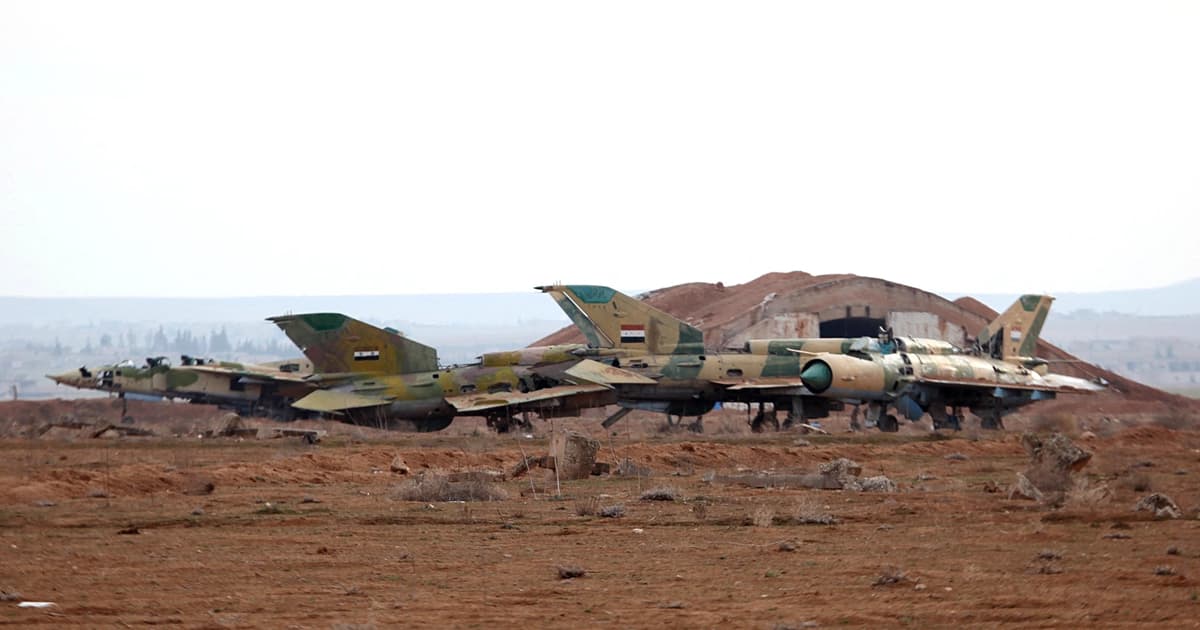
Unidentified fighter jets struck the runway of Abu al-Duhur military airbase in Syria's Idlib province early Tuesday, with Damascus blaming Israel for the attack. Times of Israel reported that the strikes caused material damage to the airbase's infrastructure but no casualties. Israel offered no comment. WTOP confirmed Syrian state TV's account that the runway was the primary target.
The strike came just hours after a Turkish military delegation visited the base to assess plans for its rehabilitation, according to Yahoo News. The timing sent a sharp signal — Israel will not allow Syria's new government to rebuild its military air capabilities, especially with Turkish backing.
Turkish Visit Triggered Strike on Contested Airbase
Abu al-Duhur airbase sits roughly 70 kilometers from the Turkish border in eastern Idlib. It is one of the largest military airfields in northern Syria. The base fell out of use in 2012, was seized by rebels in 2015, retaken by Assad loyalists in 2018, and recaptured by Syria's new forces after Assad's fall in December 2024. It had been serving as a training site for Syria's new army.
On Monday, a Turkish military delegation toured the facility to plan runway rehabilitation as part of a joint Turkish-Syrian defense project. Less than 24 hours later, jets hit those same runways. Free Malaysia Today reported that forces from Syria's defense ministry are present at the base. By targeting the runway the morning after Turkey's visit, Israel sent an unmistakable message to both Ankara and Damascus.
Israel Silent as Syria Condemns 'Act of Aggression'
Syria's government condemned the strikes as an unjustified violation of its sovereignty. Damascus blamed Israel directly, though Israel has not confirmed or denied involvement. The IDF offered no comment to AFP. WTOP noted that Syrian state TV described the damage as limited to material infrastructure, with zero casualties confirmed across all reporting agencies.
Attribution remains contested. Times of Israel and several other outlets described the strikes as "likely Israeli," pointing to a well-established pattern of Israeli air operations inside Syria. Since Assad's fall, Israel has carried out hundreds of strikes to prevent Syria from rebuilding offensive military capacity. This strike, however, marks a shift — it targeted a facility under active Turkish assessment, not an Iranian or Hezbollah asset.
Syria Wants a Peace Deal — But Won't Give Up Golan
Syrian President Ahmad al-Sharaa has publicly sought a security agreement with Israel. He told Al Jazeera in July 2026 that Syria is working with international intermediaries toward peace, but will not concede its claim to the occupied Golan Heights. He also warned Israel not to alter the 1974 Disengagement Agreement. It is a rare diplomatic opening from a leader who once headed a militant group.
US Special Envoy Tom Barrack had been pushing both sides toward a deal ahead of the UN General Assembly in September 2026. The strike now threatens to stall those talks. Syria may find it politically impossible to sign a security pact while Israeli jets are hitting its airbases. The window for diplomacy is narrowing fast.
Conflicting Strike Counts Highlight Chaotic Early Reporting
Initial reports on the scale of the attack varied widely. Syrian state TV and the Syrian Observatory for Human Rights counted eight strikes. Daily Tribunal 24 and other AFP-sourced outlets reported four strikes. One Syrian Defense Ministry source put the number at just two. All accounts agreed on one fact: zero casualties, with damage confined strictly to the runway and nearby abandoned warehouses.
The discrepancy reflects the fog of early conflict reporting in a region with limited independent access. What is not disputed: the strikes occurred around 2:50 AM local time, the runway was hit, and the base was rendered temporarily unusable. The attack followed Syria's first post-revolution military air exercises just weeks earlier, when Syrian jets flew MiG-21s for the first time since Assad's ouster.
Sentiment
Mostly NegativePublishers
58
Articles
196
Reach
254