UK Intercepts Russian Jets
UK F-35s Scramble to Intercept Russian Bear-F Jets Near Carrier Group in Norwegian Sea.
Anonymous
Key Points
1
The Russian aircraft involved was identified as a Tu-142 Bear-F maritime patrol aircraft.
2
Two Bear-F maritime patrol aircraft were involved in the incident, not just a single aircraft.
3
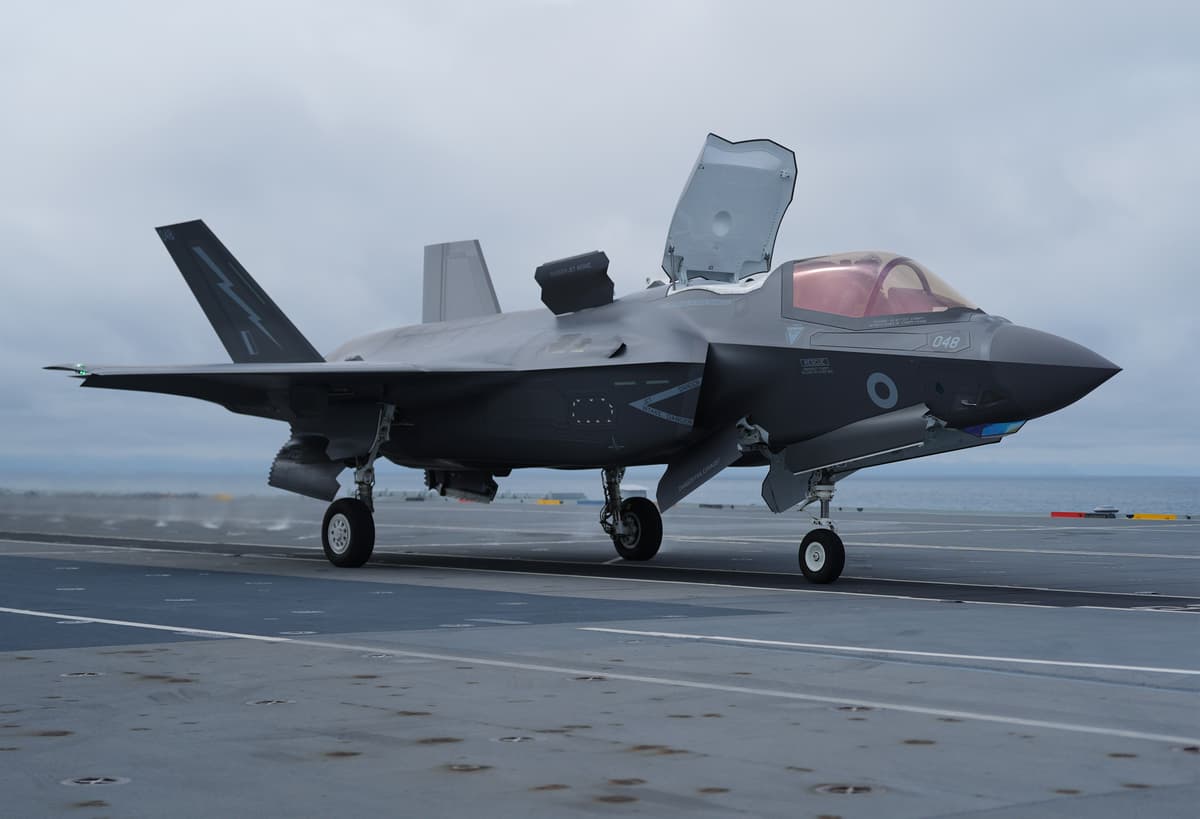
The interception was carried out by two UK F-35 jets from HMS Prince of Wales.
4
The incident occurred on July 2 in the Norwegian Sea during Operation Firecrest, illustrating ongoing Arctic tensions.
Two UK F-35 fighter jets scrambled from HMS Prince of Wales on July 2 to intercept a pair of Russian Tu-142 Bear-F maritime patrol aircraft in the Norwegian Sea, according to Kyiv Independent. The Russian planes repeatedly flew close to the British carrier strike group during Operation Firecrest, dropping a large number of sonobuoys — underwater listening devices — at dangerously close range.
The UK Ministry of Defence called the Russian aircraft's behavior "unsafe and unprofessional," Perth Now reported. The two F-35s escorted the Bear-F aircraft away from the carrier group, ending the incident without further escalation.
Russian Aircraft Dropped Sonobuoys Near British Carrier
The Tu-142 Bear-F is a long-range maritime patrol aircraft used by Russia to track enemy submarines and warships. During the July 2 incident, two of these planes flew at low altitude and came unnecessarily close to HMS Prince of Wales, according to Kyiv Independent. The aircraft also dropped sonobuoys — sensors that listen for submarines — in close proximity to the carrier group.
UK officials described the approach as deliberate and provocative. Dropping sonobuoys near an active carrier strike group is a show of force. It signals that Russia was actively trying to track and monitor the British fleet's movements in the region.
F-35s from HMS Prince of Wales Scrambled to Intercept
HMS Prince of Wales is the UK's flagship aircraft carrier and the centerpiece of its naval power in the North Atlantic. Two F-35B stealth jets launched from its deck to meet the Russian aircraft, Lithgow Mercury reported. The F-35s escorted the Bear-F planes until they left the area.
The speed of the response showed the carrier group was on high alert. F-35 jets can get airborne quickly and cover large distances fast. The intercept was completed without any weapons fired or direct physical contact between the aircraft.
Operation Firecrest Highlights Rising Arctic Tensions
The incident happened during Operation Firecrest, a UK naval deployment to the Norwegian Sea. The Norwegian Sea sits between Norway and Iceland and is a strategically vital corridor for both NATO and Russia. Russia regularly uses the area to test NATO's responses and monitor Western naval movements, Irrigator reported.
Arctic and North Atlantic tensions have grown sharply in recent years. Russia has increased its submarine and patrol aircraft activity in the region. NATO allies, including the UK, have ramped up their own presence in response. This latest incident is one of the most direct confrontations between Russian aircraft and a British carrier in recent memory.
UK Calls Russian Behavior a Threat to Safe Air Operations
The UK Ministry of Defence did not mince words after the intercept. Officials called the Russian aircraft's conduct "unsafe and unprofessional," a formal diplomatic signal that the behavior crossed a line, according to Mandurah Mail. Flying at low altitude near a carrier strike group creates serious collision risks for both sides.
The UK is expected to release further updates as the situation develops. The incident adds to a pattern of Russian probing of NATO naval forces in the Arctic. Western governments have repeatedly warned Moscow that such actions risk accidental escalation in one of the world's most sensitive military zones.
Sentiment
Mostly NegativeNEGATIVENEUTRALPOSITIVE
Publishers
28
Articles
115
Reach
143
Topics
A
AnonymousAuthor


