5G Drone Communications Partnership
Hanwha Systems and Schiebel Expand 5G Drone Partnership, Targeting Global Airborne Communication Markets
Key Points
Joint development includes navigation and anti-jamming technologies for airborne communication UAVs, highlighting a focus on resilient, secure links in diverse battlefield environments.
Hanwha will standardize its advanced communications, radar and avionics equipment as standard payloads on Schiebel platforms, enabling direct entry of Korean avionics into overseas markets and supporting reverse exports.
To accelerate timelines, the partners are focusing on army-variant mission equipment designed based on already-validated test data, aiming to dramatically cut development time and costs.
The collaboration builds on Schiebel’s S-300 rotary-wing drones, with Hanwha acting as systems integrator since 2023 on navy shipborne reconnaissance drones and NW-island drones, underscoring a data and capability foundation for the new program.
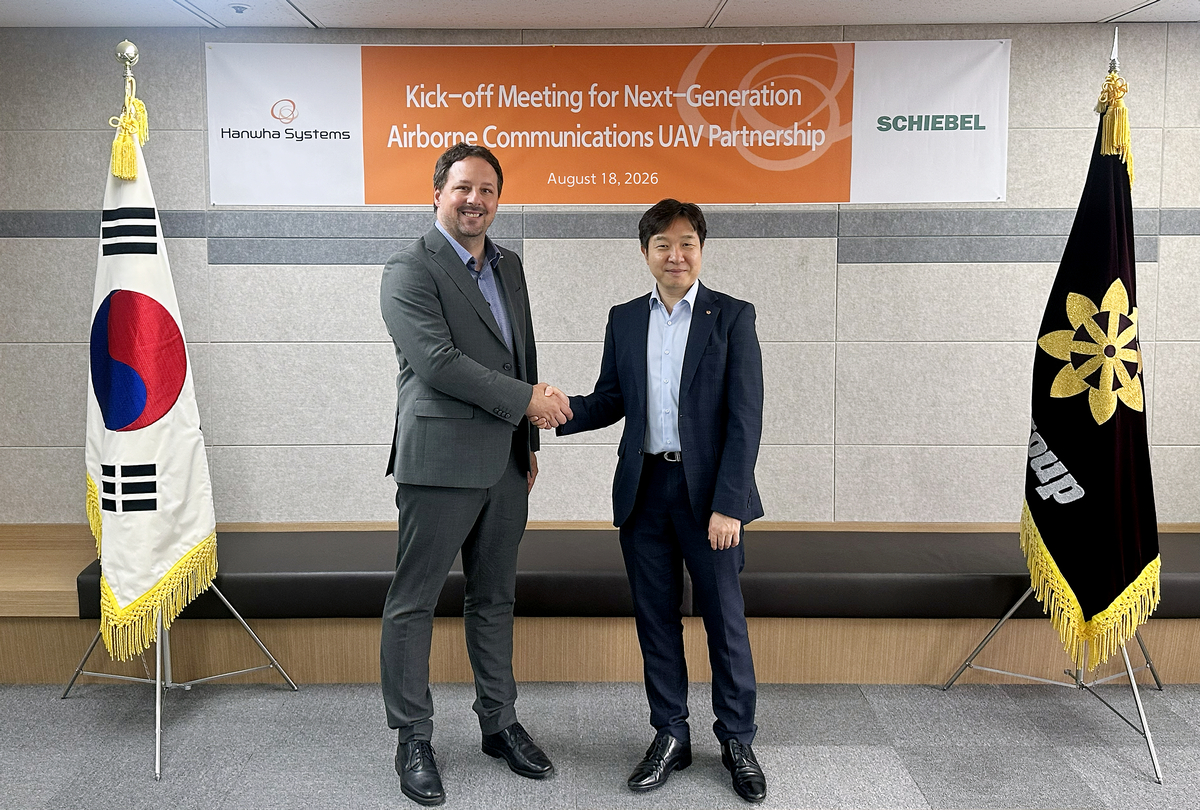
The kickoff meeting to initiate full-scale work was held at Schiebel’s Korea office in Jongno-gu, Seoul, marking the formal start of development activities.
Hanwha Systems and Austrian drone maker Schiebel have formally launched joint development of a next-generation airborne communications drone, holding a kickoff meeting at Schiebel's Korea office in Seoul's Jongno-gu district, according to Korea JoongAng Daily. The move marks the start of full-scale work following an exclusive memorandum of understanding signed in May.
The partnership pairs Schiebel's proven rotary-wing drone platforms with Hanwha's advanced communications, radar, and avionics systems. The two companies aim to break into both domestic and international UAV markets, with re-export opportunities for Korean-made avionics as a key goal, SE Daily reported.
5G Airborne Base Station at the Heart of the Deal
The core product the two companies are building is a 5G-based airborne base station. Think of it as a flying cell tower for soldiers. It creates seamless communication links between ground units and aircraft in battlefield environments where normal signals break down, BigGo Finance reported.
The system also includes relay equipment designed to keep air-to-air and ground-to-air networks connected across diverse terrain. Hanwha is contributing navigation and anti-jamming technologies to make those links harder for enemies to disrupt or spoof.
Built on Two Years of Shipborne Drone Data
This is not a fresh start for either company. Hanwha has served as systems integrator on Schiebel's S-300 rotary-wing drones since 2023, running navy shipborne reconnaissance programs and drone operations for South Korea's northwestern island defense, according to Korea JoongAng Daily.
That track record gives the partners a real data foundation to build on. Rather than starting from scratch, the new army-focused mission equipment is being designed using already-validated test results. The goal is to dramatically cut both development time and costs, SE Daily reported.
Schiebel's 40-Country Network Opens Export Doors for Korea
Schiebel brings more than hardware to the table. The Austrian firm counts more than 40 military and government customers worldwide. That global reach gives Hanwha a fast lane into overseas markets without building a sales network from the ground up, according to BigGo Finance.
The plan is to standardize Hanwha's communications, radar, and avionics gear as default payloads on Schiebel platforms. Once that happens, every Schiebel sale becomes a potential channel for Korean-made equipment to enter foreign defense markets directly.
Army Expansion Widens Scope Beyond Naval Roots
The original Hanwha-Schiebel work was focused on navy missions. The new program pushes into army applications, a significant widening of scope. The companies are now conducting dedicated research and development for land-force variants of the airborne communications drone, SE Daily reported.
By using test data from prior naval programs to inform army designs, the partners believe they can shorten typical development cycles significantly. The broader ambition is to accelerate South Korea's entry into the global UAV export market at a competitive pace and cost.
Sentiment
Mostly PositivePublishers
11
Articles
4
Reach
15


