Gaza Cropland Crisis
Gaza Cropland Accessibility Plummets to 3% Undamaged Amid Blockade and Expanding Yellow Line
Key Points
Rafah has the highest levels of inaccessibility: 97.2% of cropland and 98.4% of greenhouse area cannot be accessed.
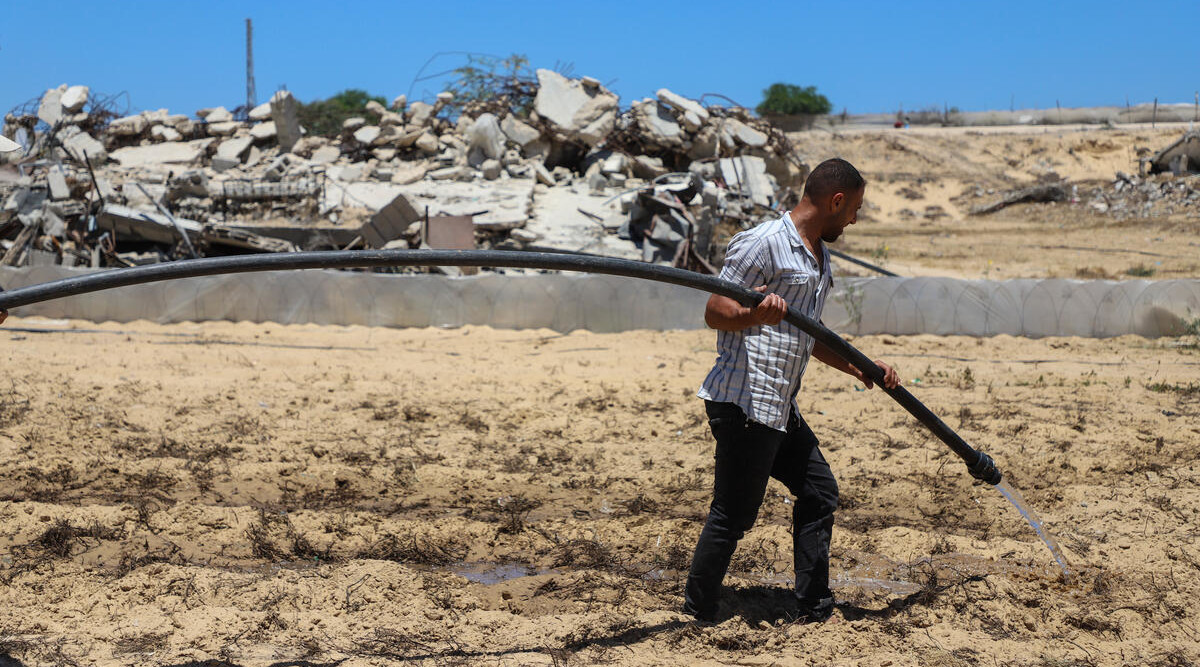
Farmer testimonies illustrate hardship on the ground: Taysir Dahdouh says he managed to rehabilitate about one dunum (0.1 hectare) after returning, while Wajiha Dahdouh notes a lack of water, fertilizers and seeds.
Blockade and agricultural import restrictions continue to hamper recovery, with livestock farmers unable to obtain animal feed and veterinary supplies.
Greenhouse availability declined by 17.3% since October 2025 to 224 hectares, representing about 16.6% of greenhouse area still accessible and undamaged.
Even with the October 2025 ceasefire, fighting continues, with airstrikes and casualties mounting—about 1,265 Palestinians killed since the ceasefire took effect.
Only 3% of Gaza's cropland is both accessible and undamaged, according to a new geospatial assessment by FAO and UNOSAT. That amounts to just 448 hectares — out of roughly 15,000 total — left for farmers to grow food as of June 24, 2026.
The situation has gotten worse, not better. In October 2025, 601 hectares were undamaged. That number has now fallen by 25.5%, even as a ceasefire technically remains in place. The war has killed tens of thousands of Palestinians and uprooted nearly two million people UN News.
Yellow Line Expansion Cuts Farmers Off the Land
The biggest driver of lost cropland is not new bombing — it is restricted access. The westward expansion of what is called the "Yellow Line," a military buffer zone, has cut farmers off from fields they could once reach FAO. Total accessible cropland now stands at 4,091 hectares, or about 27% of Gaza's farmland.
Of that 27%, most is too damaged to farm. A further 3,643 hectares are accessible but in no condition for food production. Rafah is the hardest hit: 97.2% of its cropland and 98.4% of its greenhouse area cannot be reached at all Morning Ag Clips.
Greenhouses Shrink, Farmers Struggle Without Seeds or Water
Greenhouse farming has also collapsed. Accessible, undamaged greenhouse area fell by 17.3% since October 2025 to just 224 hectares — about 16.6% of the total greenhouse area in Gaza FAO. Deir al-Balah and Khan Younis saw the largest reductions of any governorate.
Farmer Taysir Dahdouh said he managed to fix up about one dunum — roughly 0.1 hectare — after returning to his land. His relative Wajiha Dahdouh described the core problem simply: no water, no fertilizers, no seeds UN News. Livestock farmers face the same wall, unable to get animal feed or veterinary supplies due to import restrictions.
Ceasefire on Paper, Airstrikes on the Ground
A ceasefire took effect in October 2025, but the fighting never truly stopped. About 1,265 Palestinians have been killed since it began UN News. Airstrikes continue to mount casualties and block any real path to recovery for farmers trying to return.
The ongoing blockade makes recovery even harder. Food and agricultural imports remain restricted. FAO director Rein Paulsen called for urgent action, saying safe access must be restored so farmers can revive local food production Mirage News.
What Recovery Would Actually Require
Even the cropland that is technically accessible is largely ruined. With only 448 hectares undamaged and usable, Gaza's ability to feed itself is nearly gone. Before the war, local farms supplied a meaningful share of fresh produce for the population L'Orient Today.
Rebuilding will need more than a ceasefire holding. Farmers need seeds, water, fertilizer, and the ability to reach their fields without risk. FAO says none of that is currently in place at the scale needed FAO. Until access opens and supplies flow in, the 3% figure is unlikely to improve.
Sentiment
Mostly NegativePublishers
10
Articles
15
Reach
25


