SpaceX Moon Crater
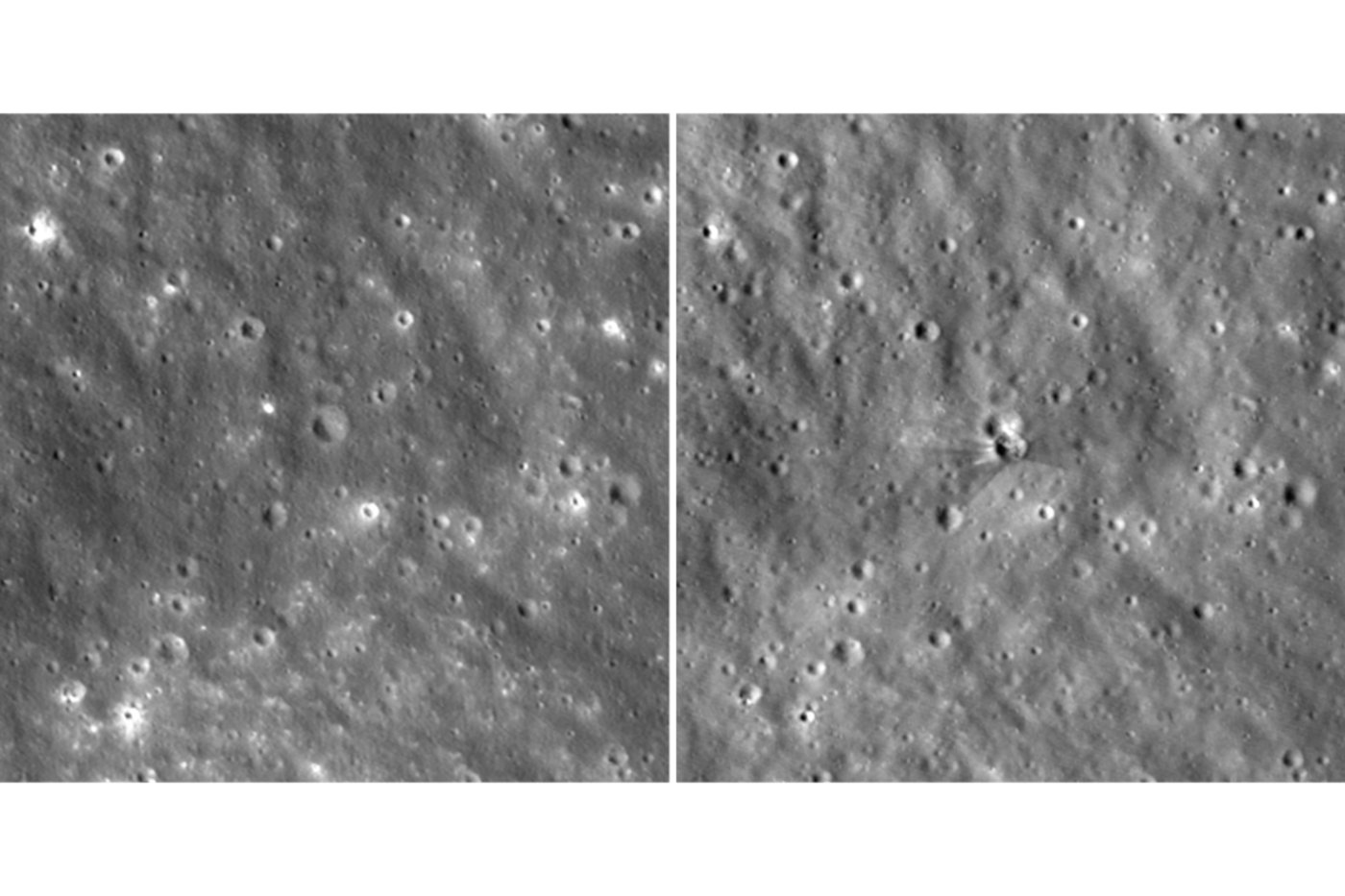
NASA Orbiter Captures New High-Resolution Images of SpaceX Falcon 9 Moon Crater
Key Points
The Falcon 9 upper stage struck the Moon at about 5,400 mph (8,700 km/h), a detail NASA highlighted about the impact event.
The Lunar Reconnaissance Orbiter’s Narrow-Angle Camera can resolve features as small as 3 feet across, enabling the sharp, high-resolution view of the 60-foot crater.
The debris excavated from roughly 1.5 feet below the surface helps explain the observed brighter rays, which indicate material from deeper underground.
Imaging required precise timing and positioning: even a 10-second mismatch could move the target center by about 10 miles, with some reports noting as much as 16 miles in other contexts.
Locating the site involved global coordination, including independent astronomers who traced the rocket’s trajectory from public data and NASA’s Center for Near-Earth Object Studies (CNEOS).
NASA's Lunar Reconnaissance Orbiter has captured sharp before-and-after images of a fresh crater on the Moon, formed when a SpaceX Falcon 9 upper stage slammed into the surface on Aug. 5, according to CBS News. The crater measures about 60 feet wide and less than 10 feet deep.
The rocket booster hit at roughly 5,400 mph. Dark and bright rays fan out from the impact site, revealing both weathered surface material and fresher rock dug up from underground, Castanet reported.
How the LRO Spotted a 60-Foot Moon Crater
NASA's Lunar Reconnaissance Orbiter used its Narrow-Angle Camera to capture the impact site on Aug. 11 and 12. The camera can resolve features as small as 3 feet across, giving scientists a clear look at the crater's shape and surrounding debris field, according to CBS News.
The orbiter flew roughly 60 miles above the surface during imaging. Engineers had to orient the spacecraft carefully as the Moon rotated beneath it. Castanet noted that a 10-second timing error would shift the target by about 10 miles in the frame — a razor-thin margin.
Bright Rays Reveal What Lies Below the Surface
The crater's rays tell two different stories. The darker rays come from older, weathered surface material thrown outward by the blast. The brighter rays come from fresher rock dug up from about 1.5 feet underground, according to Brandon Sun.
That contrast helps scientists map what the lunar soil looks like at different depths. The crater itself is less than 10 feet deep, meaning the Falcon 9 punched through only the top layer of the Moon's surface before stopping.
Global Team Tracked the Rocket's Final Path
Finding the impact site was not easy. Independent astronomers used public tracking data to trace the rocket's trajectory. NASA's Center for Near-Earth Object Studies, known as CNEOS, also helped pinpoint where the booster would hit, Castanet reported.
South Korea's Danuri lunar orbiter captured the first images of the site. NASA then used those early photos to guide the LRO's more detailed follow-up shots. The effort showed how multiple space agencies and amateur trackers can work together on a single target, according to La Ronge Now.
A Rogue Rocket That Nobody Claimed at First
The Falcon 9 upper stage had been drifting in space for years before it hit the Moon. SpaceX did not immediately claim ownership of the booster. The rocket weighed about 8,000 pounds and was too far from Earth to recover or redirect, CBS News reported.
The impact added one more crater to a Moon already covered in millions of them. But this one stands out — it is one of the few craters scientists can trace directly to a human-made object, with photos to prove it.
Sentiment
Mostly NegativePublishers
10
Articles
54
Reach
64


