Advanced Russian Jet Crashes
Russia's advanced Su-57 fighter jet crashes during training flight near Moscow; pilot ejects.
Anonymous
Key Points
1
The reported price tag for a single Su-57 is typically cited at $100–120 million, according to multiple outlets.
2
Initial reports conflict on the exact crash site: Lutino near the Moscow region (per one outlet); Zvenigorod (per Astra); and Odintsovo (per another source) — underscoring the absence of official confirmation.
3
Russian authorities have not yet issued an official statement on the crash, with reports relying on media and Telegram channels for details.
4
The Su-57 program traces back to the PAK-FA initiative launched in 2001, with a full-scale mock-up in 2004 and the T-50 prototype’s first flight in 2010, highlighting its long development path and limited production.
5
Robert Brovdy, commander of Russia's Unmanned Systems Force, described Su-57s as posing a particular threat to aviation and air defense systems.
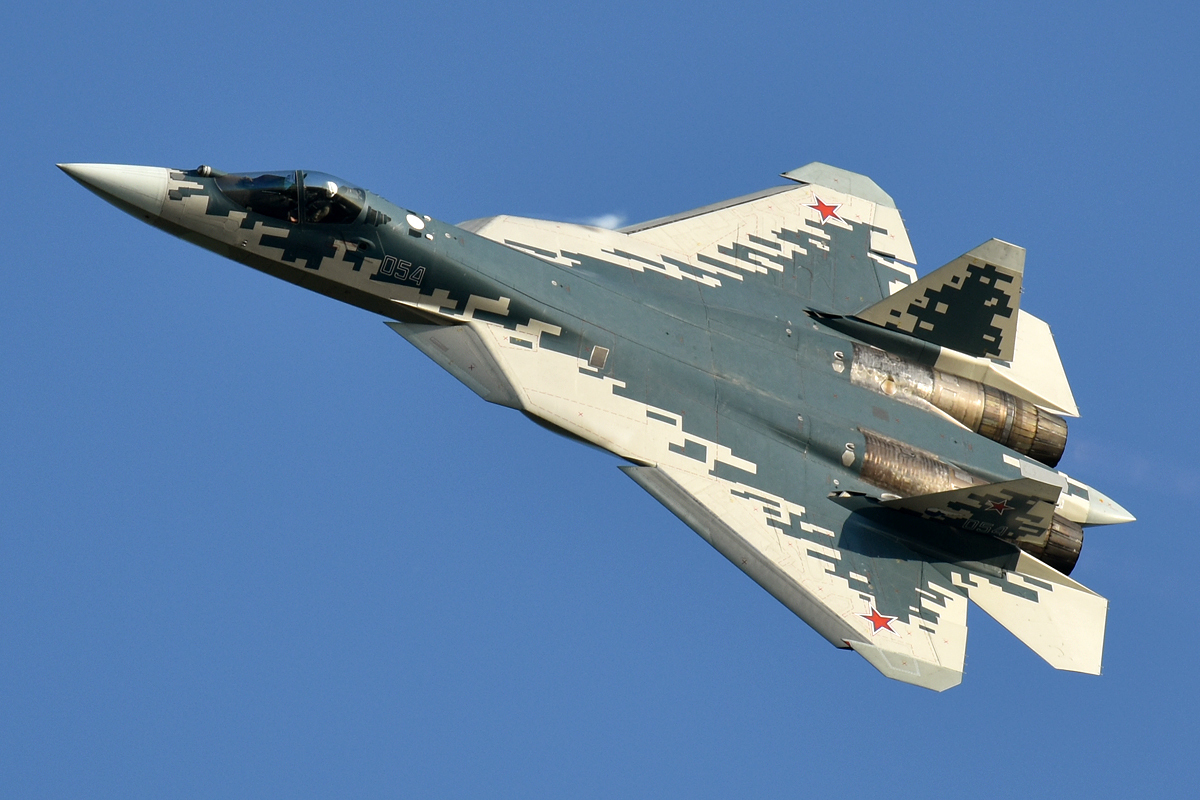
Russia's most advanced fighter jet, the Su-57 stealth aircraft, crashed in the Moscow region on July 23, 2026, with the pilot ejecting safely, according to Kyiv Independent and Euromaidan Press. Russian state news agency TASS first reported the incident, describing it as a training flight gone wrong.
The crash immediately drew attention because the Su-57 — NATO codename "Felon" — is Russia's only operational stealth fighter. Each jet costs an estimated $100–120 million, making the loss significant. No official statement from Russia's Defense Ministry had been released as of initial reports, leaving key details unconfirmed.
Pilot Ejects as Su-57 Goes Down Near Moscow
The crash occurred on July 23 during what Russian sources described as a routine training flight. The pilot ejected and survived, with no casualties reported on the ground, according to Euromaidan Press. Early reports placed the wreckage near Lutino, Zvenigorod, and Odintsovo — three different locations cited by three different outlets.
The Aviationist noted that the Russian Defense Ministry did confirm a crash took place, but stopped short of officially naming the aircraft type. Unconfirmed reports from Russian and Ukrainian Telegram channels identified it as a Su-57. AeroTime cautioned that the aircraft type remained speculative pending a formal statement.
Friendly Fire Rumors Cloud the Cause of the Crash
The most striking theory to emerge is that Russian air defenses may have shot down the jet by mistake. Aerospace Global News reported that rumors of friendly fire began circulating almost immediately after the crash. Russia operates dense air defense networks around Moscow, which some analysts have suggested could have misidentified the Su-57.
Euromaidan Press highlighted comments from Robert Brovdy, commander of Russia's Unmanned Systems Force, who had previously described Su-57s as posing a "particular threat" to air defense systems. That statement, made in a different context, now fuels speculation that the jet's stealth profile may have confused Russian operators on the ground.
Russia's Su-57 Program: Long Road, Short Production Run
The Su-57 has been decades in the making. Russia launched the PAK-FA program in 2001. A full-scale mock-up appeared in 2004. The T-50 prototype made its first flight in 2010. Despite that long timeline, production numbers remain very low, according to AeroTime and Kyiv Independent.
The jet is designed to be stealthy — meaning radar has a hard time detecting it — and can carry weapons internally to reduce its radar signature further. But observers have long questioned how effective its stealth really is. Losing even one Su-57, at $100–120 million per aircraft, is a serious blow to a program already struggling with limited output.
No Official Word Yet as Reports Remain Fragmented
Russia's Defense Ministry had not issued a detailed official statement as of the time of initial reporting. Most information came from Russian state media, Telegram channels, and Ukrainian monitoring groups. The Aviationist noted the "claims swirling" around the incident, underscoring how much remains unverified.
The conflicting location reports — Lutino, Zvenigorod, Odintsovo — show just how chaotic the early information flow was. Until Moscow speaks officially, the full picture of what brought down one of Russia's most prized jets stays unclear.
Sentiment
Mostly NegativeNEGATIVENEUTRALPOSITIVE
Publishers
15
Articles
15
Reach
30
A
AnonymousAuthor


