US-South Korea Drills Reduced
Trump Orders Pentagon to Scale Back Joint Military Exercises with South Korea
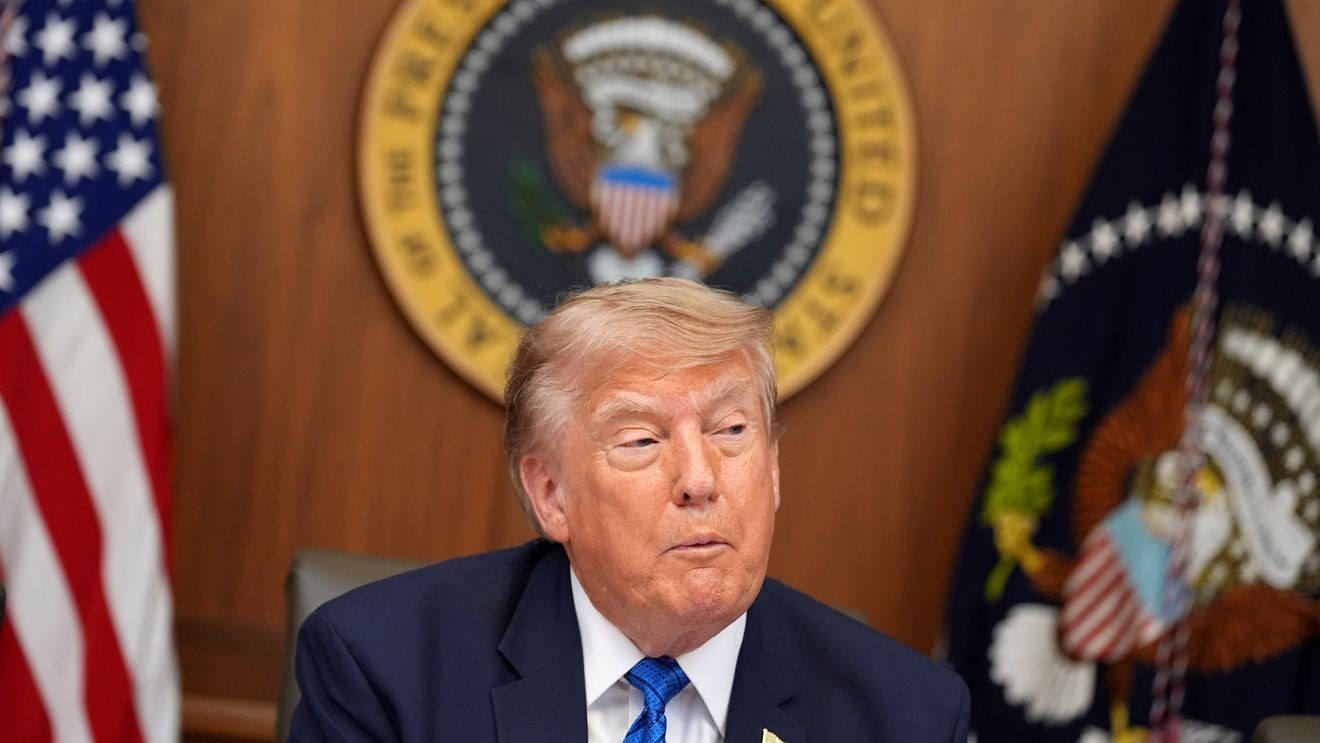
President Donald Trump has ordered the Pentagon to scale back the upcoming joint military exercises with South Korea, set to begin August 17. The drills, known as Ulchi Freedom Shield, were planned to run 11 days and involve 18,000 South Korean soldiers. Trump made the announcement on Truth Social, calling the exercises costly and a "totally inappropriate and hostile" signal to North Korea. ABC News reported the order came after South Korea declined a U.S. request to help with what Trump called the "denuclearization" of Iran.
Trump tied the decision directly to South Korea's refusal to join U.S. military efforts in the Middle East, writing: "I recently asked the President of South Korea if they would like to join us in the Denuclearization of the Islamic Republic of Iran, and they said, 'No thanks!'" North Korea's Foreign Ministry had already called the scheduled drills a "rehearsal for an aggressive war." The move marks the second time Trump has sought to cancel or reduce such exercises, after doing so following his 2018 Singapore summit with Kim Jong Un.
South Korea Refused to Join the Iran War Effort
The roots of this decision stretch back to the 2026 U.S.-Israel military offensive against Iran, launched on February 28. Washington pressured Seoul to deploy its Cheonghae naval unit to help enforce a blockade at the Strait of Hormuz. South Korea said no. President Lee Jae Myung, elected in June 2025 on a platform of cautious diplomacy, argued that joining the war could cut off South Korea's vital energy imports from the region. WBAL-TV reported that Trump viewed Seoul's refusal as a betrayal by a key ally.
The Iran conflict has already cost the U.S. an estimated $113.3 billion, with direct military operations running $37.5 billion as of July 2026. U.S. stockpiles of Patriot interceptors, THAAD missiles, and Tomahawk cruise missiles have been seriously depleted. Defense Secretary Pete Hegseth has faced sharp questions from Congress over these shortages. Against that backdrop, Trump appears unwilling to spend more resources on large-scale exercises with an ally he sees as uncooperative.
Trump Cites Cost and Kim Jong Un Relationship as Reasons
Trump framed the scale-back as a fiscal decision. He argued that South Korea should not get a "free ride" on U.S. taxpayer money while refusing to support American goals overseas. He also said the drills send the wrong message to North Korean leader Kim Jong Un. On August 15, Trump posted a throwback photo with Kim, writing that the two "get along GREAT." Trump has long believed personal diplomacy with Kim is more effective than military pressure. KCRA noted this echoes his first-term approach, when he canceled exercises after the 2018 Singapore summit.
North Korea welcomed the move. Pyongyang's Foreign Ministry had condemned the scheduled Ulchi Freedom Shield drills just two days earlier. Kim Jong Un has continued to strengthen military ties with Russia, and North Korean troops have gained real combat experience fighting alongside Russian forces in Ukraine. Critics say this makes reducing joint exercises especially dangerous right now.
Scaled-Back Drills Leave Korea Defense at Risk
The Ulchi Freedom Shield exercises were built to test complex defensive moves. These include precision live-fire targeting, river crossing operations, and rapid deployment of prepositioned equipment. The 28,500 U.S. troops stationed in South Korea train alongside Korean forces to stay combat-ready against North Korean threats. Cutting the drills undermines that coordination. WMUR reported that the exercises were also meant to serve as a formal evaluation period for a major milestone: South Korea taking over Wartime Operational Control, known as OPCON, from the U.S.
Military analysts warn the timing could not be worse. North Korea has been testing advanced missiles and now has battle-hardened troops from Ukraine. Reducing joint readiness drills sends a signal of weakness, analysts say. South Korean President Lee responded by proposing talks on August 15 to formally end the Korean War. For now, the exact scope of the scaled-back exercises has not been publicly disclosed by the Pentagon.
A Familiar Pattern: Trump Has Done This Before
This is not a new move for Trump. After his June 2018 summit with Kim Jong Un in Singapore, Trump shocked U.S. allies by suspending major military exercises with South Korea. He called them "provocative" and "very expensive." The Biden administration later restored the full drills, and South Korea under conservative President Yoon Suk Yeol expanded cooperation. That era ended in late 2024, when Yoon declared martial law, triggering his impeachment. The election of the more dovish Lee Jae Myung set the stage for today's friction. KETV noted Trump has expressed ongoing interest in restarting talks with North Korea over its nuclear program.
Sentiment
NeutralPublishers
37
Articles
37
Reach
37


