Toyota Reimagines Best-Selling RAV4 as 85-Mile PHEV
Toyota Reimagines Best-Selling RAV4 as 85-Mile PHEV
Anonymous
Key Points
1
Toyota has dropped the conventional RAV4 Hybrid from the UK lineup because it accounted for less than 20% of the model’s sales there, choosing instead to focus on maximizing the plug-in-hybrid powertrain.
2
The new RAV4 PHEV’s battery has been moved from the boot to the floor, which Toyota says increases body rigidity and lowers the centre of gravity; revised rear seating also creates more boot space.
3
In Australia, the RAV4 PHEV range starts at $59,515 plus on-road costs for the 2WD XSE, while the flagship GR Sport costs $66,430; the bZ4X starts at $55,990 for front-wheel drive and rises to $67,990 for the tested dual-motor AWD version.
4
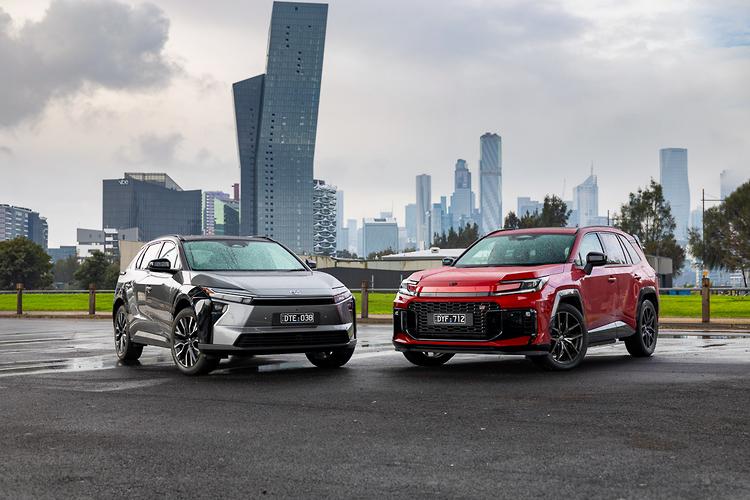
Although the RAV4 PHEV and bZ4X are close in exterior size, the bZ4X has a substantially longer wheelbase—2860mm versus 2690mm—reflecting the packaging advantages of its dedicated electric-vehicle platform.
Toyota is pushing its best-selling RAV4 deeper into plug-in hybrid territory with a redesigned 2026 model that roughly doubles the electric driving range to 85 miles. The move reflects Toyota's strategy to maximize practical daily driving without combustion engines while keeping gasoline as a backup—rather than immediately abandoning hybrid and PHEV models for full electric-only lineups carsales.
The new RAV4 PHEV packs a larger 22.7-kWh battery, a more powerful electric motor, and a 2.5-liter gasoline engine. In Australia, the 2WD version starts at $59,515 plus on-road costs, while the flagship GR Sport tops out at $66,430—making it pricier than the regular hybrid but offering far greater zero-emission driving capability carsales.
Battery Moved to Floor, Cargo Space Gains
Toyota relocated the RAV4 PHEV's battery from the cargo area to the vehicle floor. This move improves body rigidity and lowers the center of gravity, which helps handling. carsales reports that revised rear seating now creates more boot space, addressing a common complaint that previous plug-in hybrids sacrificed practicality for battery placement.
RAV4 PHEV Edges Out Rival Electric SUV in Range
The new RAV4 PHEV's claimed 85-mile electric range in front-wheel-drive form far exceeds the old model's 48-mile limit. Toyota also introduced a FWD option alongside the existing all-wheel-drive variant, broadening appeal to buyers who prioritize lower cost and efficiency over all-weather capability.
Meanwhile, the bZ4X—Toyota's dedicated electric SUV—starts at $55,990 for front-wheel drive in Australia, undercutting the RAV4 PHEV's entry price carsales. But the bZ4X trades off the plug-in hybrid's combustion-engine safety net. Its dual-motor AWD version reaches $67,990.
Why Toyota Ditched the Regular Hybrid in the UK
Toyota dropped the conventional RAV4 Hybrid from its UK lineup because that powertrain accounted for less than 20% of RAV4 sales there. Rather than maintain three powertrain options, Toyota chose to focus on maximizing the PHEV's practical appeal—longer electric range, better cargo space, and two-wheel-drive affordability.
EV Platform Gives bZ4X Size Advantage Despite Similar Looks
Although the RAV4 PHEV and bZ4X appear similar in exterior dimensions, the bZ4X enjoys a substantially longer wheelbase—2,860mm versus 2,690mm carsales. This reflects the packaging advantages of a dedicated electric-vehicle platform, which places batteries low and frees up interior space without the constraints of hybrid engine placement.
Sentiment
Mostly PositiveNEGATIVENEUTRALPOSITIVE
Publishers
40
Articles
10
Reach
50
A
AnonymousAuthor


