EU, Canada Plan Broad Trade-Security Alliance
EU, Canada Plan Broad Trade-Security Alliance
Anonymous
Key Points
1
Canada’s retaliatory tariffs cover approximately $20 billion worth of U.S. goods, with Prime Minister Mark Carney warning that the measures would cause short-term economic pain but arguing that remaining dependent on the United States would ultimately cost more.
2
Carney said four decades of deeper economic integration had left Canada overly reliant on the United States, adding: “In too many areas, they wanted dependency, not a true economic partnership.”
3
Canada is consulting not only provinces and territories but also labor groups as it considers the structure of a deeper relationship with the EU; officials have not yet selected a specific legal model.
4
The defense discussions build on Canada’s participation last year as the first non-EU country in the bloc’s €150 billion defense procurement fund.
5
At the World Economic Forum, Carney argued that the “rules-based international order” was dead and called for an alliance of “middle powers” to counter the growing assertiveness of the world’s superpowers.
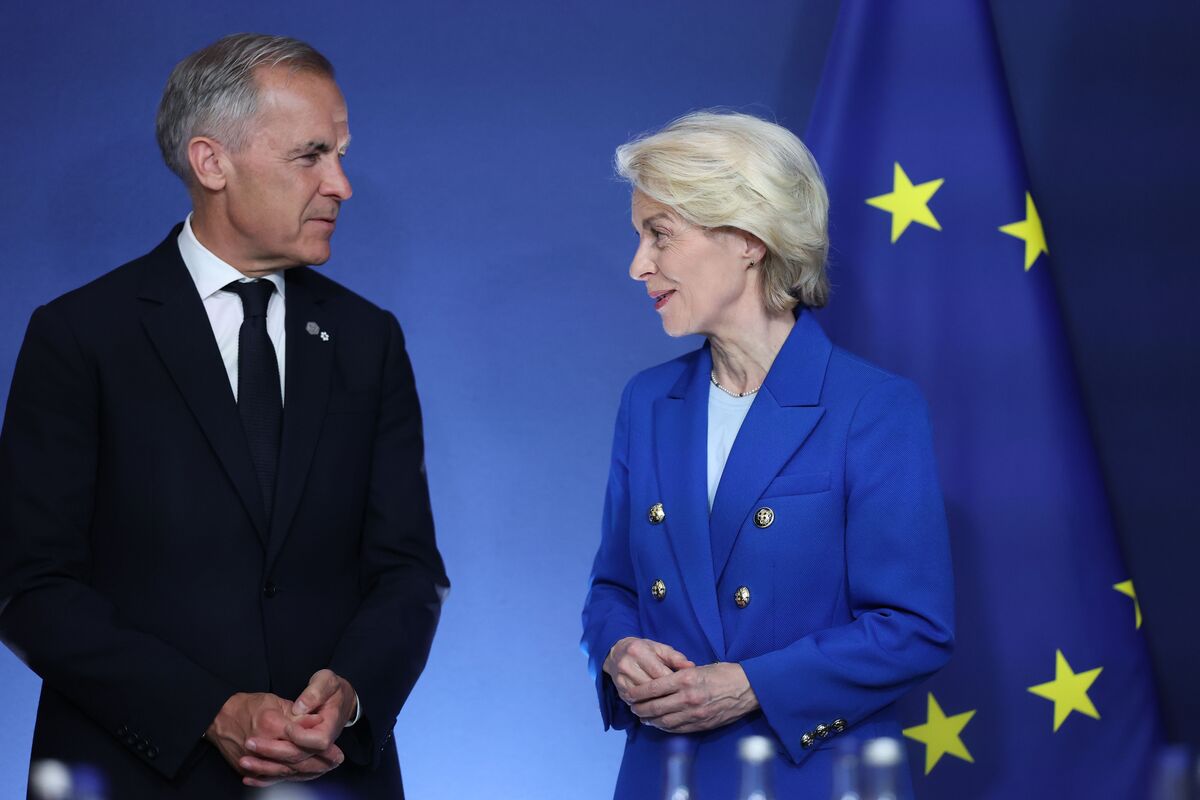
Canada and the European Union are building a sweeping strategic alliance that stretches far beyond typical trade deals. The partnership will span commerce, defense, raw materials, space exploration, and scientific research — a move driven by Prime Minister Mark Carney's push to reduce Canada's economic dependence on the United States. Bloomberg reports that EU Commission President Ursula von der Leyen will unveil the plan in Strasbourg on September 16, when Carney addresses European lawmakers.
This alliance reflects broader tensions: Canada has imposed retaliatory tariffs on roughly $20 billion of U.S. goods, while Carney argues that decades of deep North American integration have left Canada vulnerable. Briefs notes the relationship will include security cooperation, supply-chain coordination, and possible access to parts of the EU single market — elements that signal a fundamental shift in how Canada approaches its economic partnerships.
Why Canada Is Turning Away From the U.S.
For four decades, Canada has grown increasingly dependent on American trade and investment. Carney bluntly stated: "In too many areas, they wanted dependency, not a true economic partnership." Toronto Sun reports that this structural imbalance now threatens Canadian resilience during U.S.-China tensions. By diversifying toward Europe, Canada seeks to build strength through multiple aligned partners rather than relying solely on geographic proximity to Washington.
The $20 billion in Canadian retaliatory tariffs signal serious commitment to the shift. Carney acknowledged the measures would cause short-term pain but argued remaining dependent on the U.S. would cost far more over time. Canada is consulting provinces, territories, and labor groups to structure a deeper EU relationship — officials have not yet selected the specific legal model.
A Security Partnership Built on Defense Procurement
Defense cooperation forms a pillar of the proposed alliance. Canada became the first non-EU nation last year to join the bloc's €150 billion defense procurement fund. Briefs explains that linking commercial policy with strategic defense capabilities transforms the relationship from a trade agreement into a security compact. This foundation positions both sides to coordinate weapons purchases, critical-mineral sourcing, and military research.
The timing matters: as Washington and Beijing compete for global influence, smaller and mid-sized powers are seeking new leverage. Carney told the World Economic Forum that the "rules-based international order" no longer holds and called for an alliance of "middle powers" to counter superpower assertiveness. Canada and the EU together represent a substantial economic and military bloc without dominating the system.
A Digital Trade Deal and Bigger Treaty Discussions
Beyond defense, Canada and the EU are negotiating a digital trade agreement that Bloomberg reports could be signed by end of 2026. The talks build on the existing CETA framework, which already governs tariff-free goods trade between the two economies. However, a digital agreement signals both sides want to expand into services, data flows, and tech standards — areas where the U.S. has traditionally held advantage.
Larger treaty discussions remain fluid. Carney is exploring integration short of formal EU membership, including expanded agreements and closer alignment with the single market. Toronto Sun notes that regulatory and legal arrangements are still under discussion. A Canada-EU summit in October will chart next steps. The alliance represents a calculated bet that strategic diversification pays off even when it requires years to restructure supply chains and investment flows.
Sentiment
Mostly PositiveNEGATIVENEUTRALPOSITIVE
Publishers
13
Articles
11
Reach
24
Topics
A
AnonymousAuthor


