Ukraine-Raytheon Patriot Deal
Ukraine and Raytheon Announce Joint Production Plan for Patriot Interceptors
Anonymous
Key Points
1
Lockheed Martin's PAC-3 ACE is expected to enter production within 36 months, with initial production slated within that window; current PAC-3 MSE missiles cost more than $4 million per intercept, while ACE could cost under $2 million.
2
ACE is designed to deter air and missile threats at less than half the cost of the PAC-3 MSE, enabling Ukraine to preserve scarce PAC-3 MSE missiles for the most dangerous ballistic threats.
3
"Ukraine will partner with Raytheon to produce interceptor missiles for Patriot defense systems," a July 23 Zelensky announcement said, continuing discussions that began with President Trump in Ankara.
4
The Raytheon delegation at the meeting was led by Vice President Joseph DeAntona, highlighting the level of company leadership involved in the talks.
5
Representatives from the Ukrainian government, Raytheon and the private sector will remain in close contact to finalize the proposals, signaling a broad, collaboration-focused approach to the project.
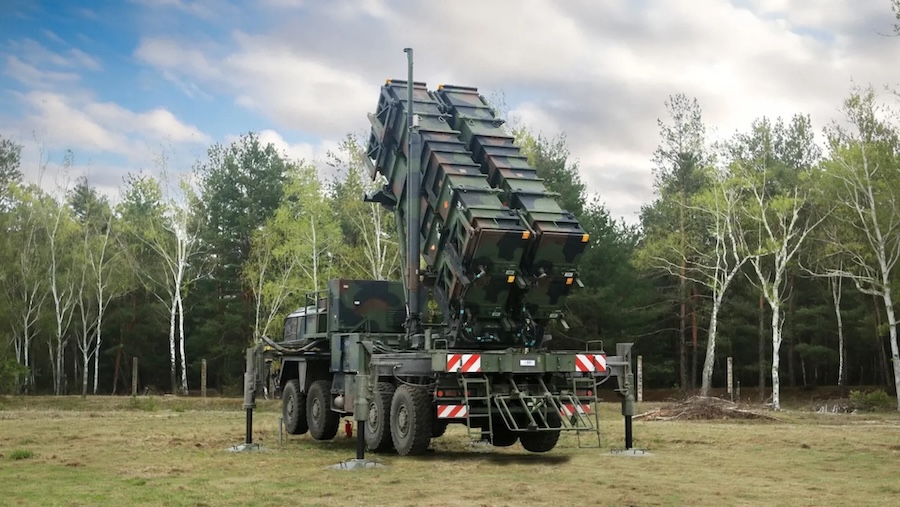
Ukrainian President Volodymyr Zelenskyy announced on July 23 that Ukraine will jointly produce Patriot interceptor missiles with U.S. defense giant Raytheon, marking the first formal manufacturing partnership of its kind between the two sides. Kyiv Independent reported the deal follows a meeting with Raytheon's Vice President Joseph DeAntona, building on talks that began when Zelenskyy met U.S. President Donald Trump in Ankara.
The announcement signals Kyiv's push to produce key air defense weapons on its own soil, reducing reliance on outside supply chains as Russia continues to strike Ukrainian cities. No strict production timeline was given, but representatives from Ukraine's government, Raytheon, and the private sector will stay in close contact to finalize details, according to Ukrinform.
What the Raytheon Deal Actually Says — and Doesn't
Zelenskyy's announcement confirmed a framework agreement to co-manufacture Patriot interceptors on Ukrainian soil. Tech Times noted this is the first formal step toward domestic missile production in Ukraine. But key details — including exact production volumes, funding sources, and U.S. export licensing — are still unresolved.
The Raytheon delegation was led by Vice President Joseph DeAntona, showing the company is engaging at a senior level. Defence Industry Europe reported that U.S. officials are also in talks over missile licensing, which is a required legal step before American-designed weapons can be built abroad. That process could take time.
Why Ukraine Urgently Needs More Patriot Interceptors
Russia has been firing waves of missiles and drones at Ukrainian cities. Patriot systems are Ukraine's strongest shield against ballistic missiles. But each PAC-3 MSE interceptor — the current standard missile — costs more than $4 million per shot. Ukraine burns through them fast and cannot get enough.
Yahoo News reported that Zelenskyy said Raytheon has expressed clear interest in joint production. Producing interceptors locally would shorten delivery times and reduce dependence on U.S. stockpiles that are already stretched thin supplying multiple allies around the world.
A Cheaper Interceptor From Lockheed Could Change the Math
Raytheon is not the only U.S. defense firm reshaping Patriot economics. Lockheed Martin has introduced the PAC-3 ACE interceptor — a lower-cost alternative to the PAC-3 MSE. The ACE is projected to cost under $2 million per missile, less than half the price of the current version. Lockheed expects it to enter production within 36 months.
The cheaper ACE missile is designed to handle air threats like drones and cruise missiles. That would free up the more expensive PAC-3 MSE missiles for the most dangerous ballistic targets. For Ukraine, mixing the two could stretch its air defense budget significantly further.
Zelenskyy's Broader Push to Build Weapons at Home
The Raytheon deal fits a wider strategy. Zelenskyy has been pushing to build more weapons inside Ukraine itself, making the country less vulnerable to political shifts in Washington or delays in allied deliveries. Kyiv Independent noted the agreement follows a pattern of Zelenskyy locking in defense partnerships during high-level diplomatic meetings abroad.
Ukraine's private sector is expected to play a role alongside the government in finalizing production plans. Defence Industry Europe reported that both sides see this as a long-term, collaboration-focused project rather than a one-time arms deal. The next steps depend heavily on how quickly U.S. export licenses can be approved.
Sentiment
Mostly PositiveNEGATIVENEUTRALPOSITIVE
Publishers
12
Articles
17
Reach
29
A
AnonymousAuthor


