Quiet Hurricane Season
Atlantic Hurricane Season Remains Unusually Quiet in July, With No Storms Expected
Anonymous
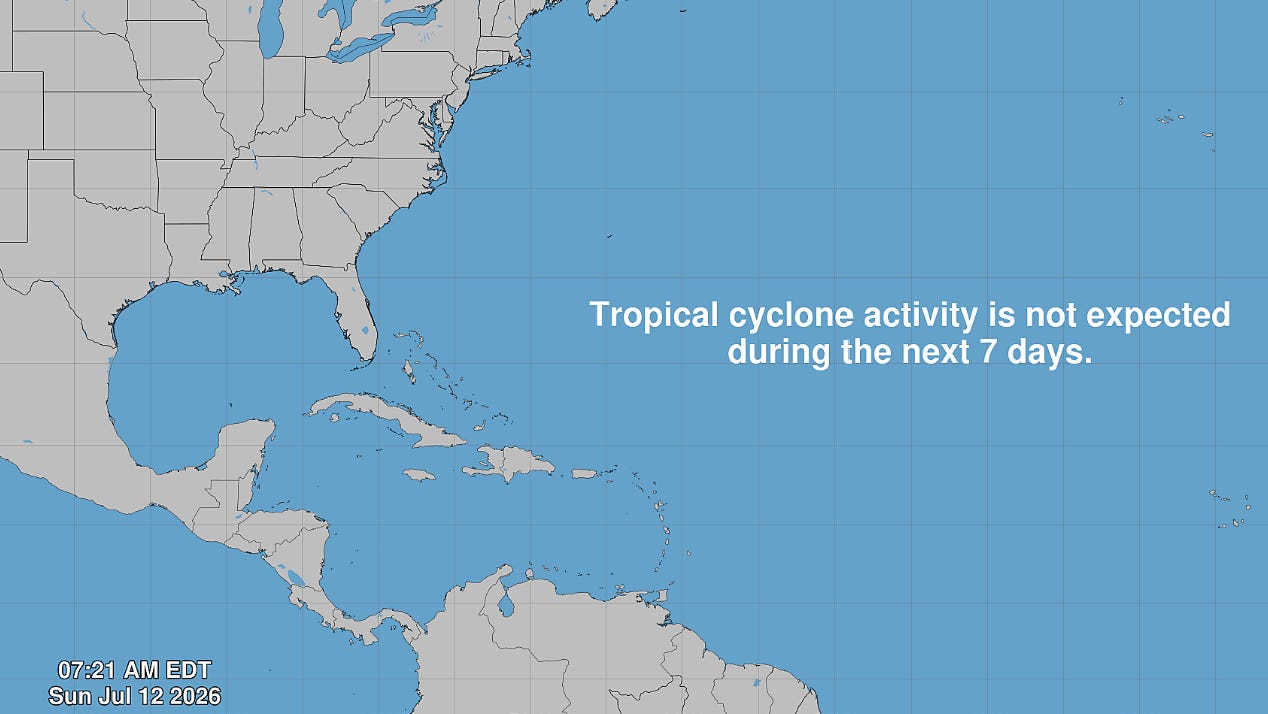
The 2026 Atlantic hurricane season is two months in, and the tropics have been strikingly calm. As of July 12, the National Hurricane Center in Miami issued an advisory stating no tropical cyclone formation is expected across the North Atlantic, Caribbean Sea, or Gulf of America for the next seven days, according to Jacksonville.com.
If a storm does develop, it would be only the second named system of the season — called Bertha. So far, that has not happened. The quiet stretch marks an unusual lull for a period when Atlantic activity often begins to pick up, Herald Tribune reported.
No Named Storms Expected in the Next Seven Days
The National Hurricane Center resumed its regular tropics advisories on May 15, the start of routine monitoring season. Since then, activity has stayed flat. The agency's July 12 advisory covered the entire Atlantic basin — the northern Atlantic, the Gulf of America, and the eastern Caribbean — and found no systems worth tracking, according to News-Press.
The next named storm would be Bertha. Storm names cycle through a pre-set list each season. Bertha has not formed. That means only one named storm, at most, has occurred so far in 2026 — a notably slow pace for mid-July.
What the Atlantic Basin Covers and Why It Matters
The Atlantic basin is the area forecasters watch each hurricane season. It includes the northern Atlantic Ocean, the Caribbean Sea, and the Gulf of America. Storms that form in any of these waters can threaten the U.S. coastline, the Gulf Coast, and island nations, TC Palm reported.
Forecasters track this region from June 1 through November 30 each year. July is typically when storm activity starts to increase. A quiet July does not guarantee a quiet rest of the season — active stretches can follow calm ones quickly.
Florida Media Tracking the Season Daily
The USA TODAY Network in Florida is producing daily tropics watch advisories throughout the season. These updates give residents a quick read on any developing threats. The network covers storms from formation through landfall, according to News-Journal Online.
Florida sits at high risk each season due to its long coastline and warm surrounding waters. Even a single major storm can cause billions in damage. Forecasters and local media urge residents not to let a quiet stretch lower their guard.
A Quiet Start Does Not Mean a Safe Season
Hurricane seasons can shift fast. The Atlantic can go from calm to active in a matter of days once water temperatures rise and wind patterns shift. Forecasters warn that a slow June and July does not predict what August, September, and October will bring — historically the most active months of the season.
Residents in coastal areas are advised to stay informed and have a hurricane plan ready. Supplies, evacuation routes, and insurance paperwork should be in order well before a storm threatens. The next seven days look calm — but the season has months left to run, Herald Tribune noted.
Sentiment
NeutralNEGATIVENEUTRALPOSITIVE
Publishers
5
Articles
5
Reach
5
Topics
A
AnonymousAuthor


